

À propos de ce jeu
Introduction: The Next Chapter for The Saboteur
Pandemic Studios’ The Saboteur arrived in 2009 as a bold attempt to blend open-world gameplay with a unique visual style and a compelling narrative set against the backdrop of Nazi-occupied France. While not without its flaws, the game offered a fresh take on the World War II genre, distinguishing itself through its innovative “black and white” mechanic that visually represented German control and gradually shifted towards color as players liberated areas. This Masterclass Deep-Dive will dissect The Saboteur, examining its strengths, weaknesses, and lasting impact on the gaming landscape.
Visual Direction and Graphics Engineering
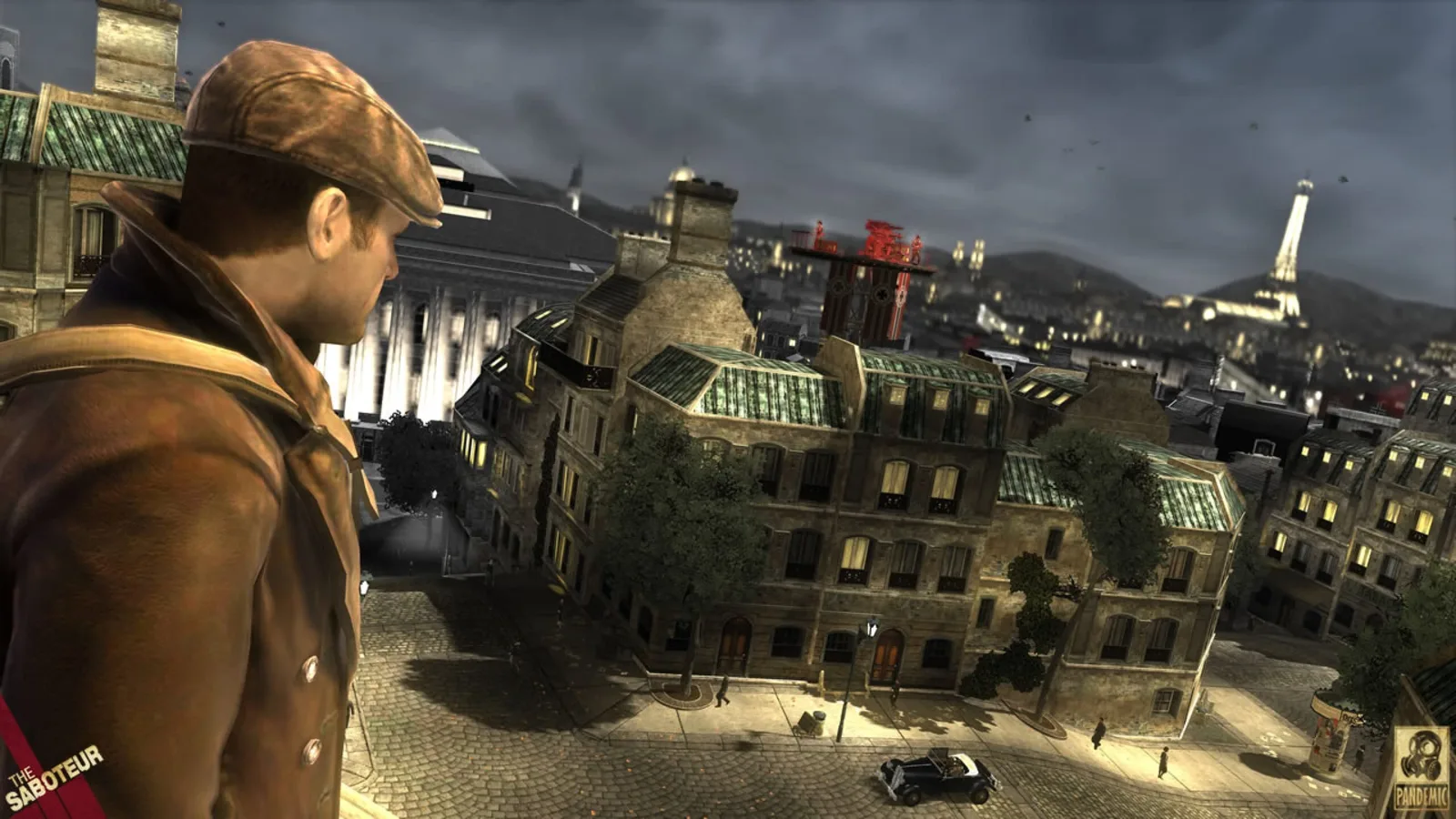
The Saboteur‘s most striking feature was undoubtedly its visual presentation. The game employed a proprietary engine that allowed for dynamic transitions between grayscale and full color, reflecting the player’s progress in liberating Paris. This mechanic wasn’t just aesthetic; it served as a constant reminder of the oppressive Nazi regime and the hope for freedom. The developers leveraged this system to create a powerful visual metaphor, effectively conveying the game’s themes of resistance and liberation. While the graphics themselves might appear dated by today’s standards, the artistic vision behind them remains impactful.
Jouabilité Mechanics and Core Systems
At its core, The Saboteur blended driving, shooting, melee combat, and parkour elements. Players controlled Sean Devlin, an Irish race car driver who becomes embroiled in the French Resistance. The open-world structure allowed for a degree of freedom, but also presented challenges in terms of pacing and mission design. The “black and white” mechanic influenced gameplay; certain areas were inaccessible or heavily guarded until liberated. Sean’s parkour abilities offered unique traversal options, allowing players to bypass enemies and access hidden areas. The driving mechanics, while functional, weren’t as refined as other aspects of the game.
Level Design and World Atmosphere
The game world was divided into distinct boroughs of Paris and surrounding countryside, each with its own visual identity and set of challenges. The level design effectively utilized verticality, encouraging players to use Sean’s parkour skills to navigate the environment. The atmosphere was thick with tension, reflecting the constant threat posed by Nazi forces. Liberating areas not only restored color but also unlocked new missions, shops, and opportunities for interaction with NPCs. However, some critics found the open-world structure somewhat disjointed, lacking a cohesive sense of direction.
Narrative Depth and Character Profiles
The Saboteur‘s narrative centered on Sean Devlin’s transformation from reluctant participant to dedicated resistance fighter. The supporting cast, including members of the French Resistance, added depth and complexity to the story. While the main plot was engaging, some players found certain character arcs underdeveloped. The game explored themes of betrayal, sacrifice, and the moral ambiguities of war. The narrative attempted to portray the human cost of conflict and the resilience of the French people under occupation.
Sound Design and Acoustic Realism
The sound design played a crucial role in creating an immersive experience. Ambient sounds, such as German patrols and Parisian street life, helped to establish the atmosphere. Gunshots, explosions, and vehicle noises were all rendered with a degree of realism that enhanced the sense of danger. The soundtrack, composed by Gabriel Mann and Rebecca Kneubuhl, blended orchestral scores with period-appropriate music, further immersing players in the game world.
Release Expectations and Community Hype
Prior to its release, The Saboteur generated considerable hype due to its unique visual style and promising blend of gameplay elements. However, initial reviews were mixed, citing issues with pacing, level design, and technical performance. Despite these criticisms, a dedicated community formed around the game, appreciating its originality and compelling narrative. The “black and white” mechanic became a defining characteristic, instantly recognizable and widely discussed.
Conclusion: The Future of The Saboteur
The Saboteur, while not without its flaws, remains a memorable entry in the open-world action genre. Its innovative visual style, engaging narrative, and blend of gameplay elements set it apart from its contemporaries. While a direct sequel never materialized, the game’s influence can be seen in subsequent titles that have attempted to replicate its unique combination of stealth, combat, and open-world exploration.
Source: Wikipedia
Galerie


Rejoignez la conversation