

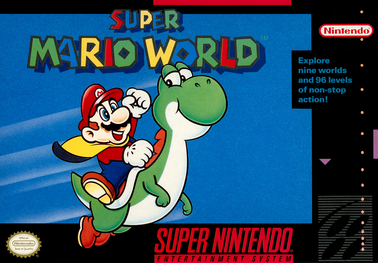
About this game
The Genre Genesis: From Modern Titans to 1990 Pioneers
Non-linear secret world map routing, key-and-keyhole secret exit puzzle design, rideable companion mount physics (Yoshi), cape flight soaring mechanics, and multi-colored switch palaces—from Super Mario 64, Super Mario Odyssey, Yoshi’s Island, Celeste, Rayman Legends, and Super Mario Maker to modern 2D and 3D platformers—trace their undisputed royal genesis to November 21, 1990 with Nintendo’s supreme launch colossus Super Mario World (Super Mario Bros. 4 in Japan).
Directed by Takashi Tezuka and produced by Shigeru Miyamoto with an immortal, dynamic musical score composed by Koji Kondo for Nintendo on the Super Nintendo Entertainment System (SNES), Super Mario World was an earth-shattering technological and artistic landmark: it served as the flagship pack-in system-seller that defined the 16-bit console revolution, selling over 20.61 million copies worldwide.
Platform Context & Gaming Environment: The Seven Worlds of Dinosaur Land
Super Mario World was the crowning launch title for the SNES, showcasing the console’s rich 256-color palette, multi-channel SPC700 stereo audio, and sophisticated sprite scaling. The adventure was set in the prehistoric vacation archipelago of Dinosaur Land: when Princess Toadstool is kidnapped by Bowser during a vacation, Mario and Luigi discover an enchanted egg on Yoshi’s Island that hatches into their loyal green dinosaur companion, Yoshi.
The screen rendered an enormous, interconnected overworld map featuring seven vast geographic realms: Yoshi’s Island, Donut Plains, Vanilla Dome, Twin Bridges, Forest of Illusion, Chocolate Island, and the Valley of Bowser.
Popularity & Cultural Standing: The Greatest Platformer of the 16-Bit Era
Super Mario World was an astronomical commercial and cultural blockbuster, universally celebrated by critics and developers as one of the single greatest, most joyful, and most flawlessly designed video games in human history. It introduced Yoshi into the cultural stratosphere, cementing the friendly dinosaur as an immortal pillar of the Nintendo pantheon.
Gameplay Mechanics & Technical Innovations
Super Mario World established the foundational design blueprint of modern platformers:
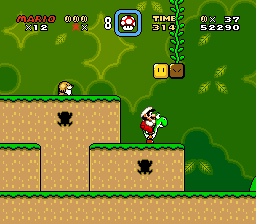
- Yoshi Companion Mount Mechanics: Ride Yoshi to gobble up approaching Koopas, spit fiery fireballs from red shells, grow wings to fly with blue shells, and trigger ground-pounding shockwaves with yellow shells!
- The Cape Feather Flight Physics: Grab the Cape Feather to don a yellow superhero cape, sprinting forward to take flight and rhythmically diving/pulling back to soar indefinitely across the skies.
- 96 Level Exits & Star World Secrets: Discover secret keys and carry them to keyholes to unlock hidden pathways on the World Map, leading to the mysterious Star World and the legendary Special Zone (beating the Special Zone permanently transforms the entire world into Autumn colors!).
- Four Colored Switch Palaces: Infiltrate the Yellow, Green, Red, and Blue Switch Palaces to solidify dotted outline blocks across every stage in the game, providing power-ups and bridge platforms.
- Bowser’s Flying Clown Copter Climax: Infiltrate Bowser’s neon castle fortress in the Valley of Bowser, dueling King Bowser as he pilots his propeller-driven Clown Copter, hurling Mecha-Koopas and dropping giant bowling balls from the clouds!
Historical Legacy & Archival Preservation
Super Mario World is permanently enshrined as a crown jewel of the World Video Game Hall of Fame and the Smithsonian Institution. As Shigeru Miyamoto, Takashi Tezuka, and Koji Kondo’s supreme 16-bit triumph, its legacy in entertainment history is eternal.
.single-share-action-btn:hover { transform: translateY(-2px); box-shadow: 0 6px 20px rgba(37, 99, 235, 0.4) !important; background: linear-gradient(135deg, #0369a1 0%, #1d4ed8 50%, #4338ca 100%) !important; } .single-share-action-btn:active { transform: translateY(0); box-shadow: 0 2px 8px rgba(37, 99, 235, 0.2) !important; } .share-section, .entry-share, .post-share-bar { display: none !important; }Gallery




No comments