



Acerca de este juego
Introduction: The Next Chapter for School Days
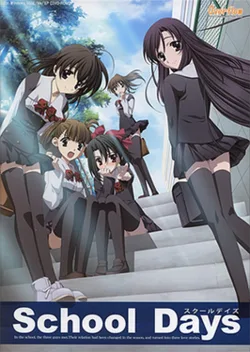
School Days, initially released in 2005 by 0verflow and subsequently ported to various platforms including DVD, PlayStation 2, and PSP, represents a significant milestone in the visual novel genre. While known for its controversial endings, the game’s core appeal lies in its engaging narrative, relatable characters, and innovative use of technology for its time. This deep-dive review will explore the technical achievements, design choices, and lasting impact of School Days, examining what made it a landmark title despite (and sometimes because of) its notoriety.
Visual Direction and Graphics Engineering
The visual style of School Days was groundbreaking for its era. 0verflow utilized animated cutscenes to enhance character expressions and create more immersive scenes. While the graphics may appear dated by today’s standards, the deliberate artistic choices in character design and background art contributed significantly to the game’s unique atmosphere. The use of voice acting further elevated the experience, bringing the characters to life in a way that static images alone could not achieve. (Image: A screenshot showcasing the animated cutscenes from School Days). The engine, while proprietary and unconfirmed in specifics, likely leveraged existing graphics APIs available on Windows at the time, optimized for visual novel presentation.
Jugabilidad Mechanics and Core Systems
School Days operates primarily as a branching narrative experience. Players make choices that influence the storyline and ultimately determine which of multiple endings they will achieve. The core gameplay loop involves reading text, viewing character sprites and animated cutscenes, and making decisions at key moments. While seemingly simple, the game’s strength lies in its ability to create meaningful choices with far-reaching consequences. The replayability is high due to the variety of paths available and the desire to experience all possible outcomes.
Level Design and World Atmosphere
While not a traditional “level design” scenario, School Days excels at creating a believable and engaging high school environment. The game effectively utilizes static backgrounds and character sprites to represent different locations within the school, such as classrooms, hallways, and rooftops. The atmosphere is carefully crafted through visual cues, music, and dialogue, immersing the player in the daily lives of the characters.
Narrative Depth and Character Profiles
The narrative depth of School Days is a key factor in its success. The story explores themes of love, friendship, jealousy, and betrayal, creating a compelling and relatable experience for players. The characters are well-developed and possess distinct personalities, making them memorable and engaging. Makoto Ito, the protagonist, serves as a blank slate onto which players can project their own desires and preferences.
Sound Design and Acoustic Realism
The sound design in School Days plays a crucial role in enhancing the overall experience. The use of background music creates an immersive atmosphere, while voice acting brings the characters to life. Sound effects are used sparingly but effectively, adding realism to certain scenes. The combination of these elements contributes significantly to the game’s emotional impact.
Release Expectations and Community Hype
Upon its initial release, School Days generated significant hype within the visual novel community. The promise of animated cutscenes and voice acting was a major selling point, attracting both seasoned fans and newcomers to the genre. The controversial endings that emerged later fueled further discussion and debate, solidifying the game’s place in internet culture.
Conclusion: The Future of School Days
School Days remains a significant title in the visual novel landscape. Its innovative use of technology, engaging narrative, and memorable characters have cemented its legacy. While the game may be controversial, it undeniably pushed boundaries and influenced subsequent titles in the genre. (Image: A comparison image showing the original School Days visuals next to a fan-made HD remake). The remaster, School Days HQ, demonstrated continued interest in the franchise, and while the original is no longer readily available, its impact continues to be felt.
(Video: A compilation of gameplay footage from various endings of School Days).
Source: Wikipedia
Galería


System requirements
Minimum
Minimum:
OS: Windows 10 或更高
Processor: 1.7GHz Dual Core CPU
Memory: 8 GB RAM
Graphics: NVIDIA GeForece GTX 260, ATI Radeon 4870 HD, or equivalent card with at least 512 MB VRAM
Storage: 5 GB available space
Recommended
Recommended:
OS: Windows 10 或更高
Processor: 3.4GHz Dual Core CPU
Memory: 16 GB RAM
Graphics: NVIDIA GeForece GTX 260, ATI Radeon 4870 HD, or equivalent card with at least 512 MB VRAM
Storage: 5 GB available space
Únete a la conversación