The Genre Genesis: From Modern Titans to 1989 Pioneers
Grid-based deductive logic puzzles, numerical adjacency calculations, flag-marking risk deduction, and speedrun mouse ergonomics—from Hexcells, Tametsi, Sudoku, and modern mathematical puzzle games to desktop casual computing—trace their undisputed royal genesis to 1989 with Microsoft's Minesweeper.
Designed and programmed in C by **Robert Donner** and **Curt Johnson** for **Microsoft** (originally released in the *Microsoft Entertainment Pack 1* before being bundled into **Windows 3.1, Windows 95, 98, 2000, and XP**), Minesweeper was an astronomical cultural phenomenon: it was pre-installed on **hundreds of millions of personal computers across the globe**, becoming an enduring cornerstone of digital office culture and competitive logic puzzle speedrunning.
Platform Context & Gaming Environment: The Windows GUI Showcase
Minesweeper served an ingenious double purpose for Microsoft: beyond its addictive puzzle design, it was deliberately engineered to **train millions of computer users how to use the graphical mouse interface** (specifically mastering left-clicking, right-clicking to flag, and simultaneous dual-button clicking to "chord" clear revealed tiles).
The screen presented three standard difficulty grids (**Beginner 9x9 with 10 mines, Intermediate 16x16 with 40 mines, Expert 30x16 with 99 mines**) alongside a digital seconds clock and the iconic **Yellow Smiley Face** (which wears sunglasses on victory and makes a shocked expression while clicking!).
Popularity & Cultural Standing: The Most Widely Played Puzzle Game
Minesweeper was an astronomical worldwide sensation, played by billions of office workers, students, and competitive puzzlers worldwide (famously captivating Bill Gates so intensely that it had to be removed from his office computer to maintain productivity!). It founded a global competitive speedrunning community with dedicated international ranking boards.
Gameplay Mechanics & Technical Innovations
Minesweeper delivered mathematically sublime, deductive puzzle mechanics:
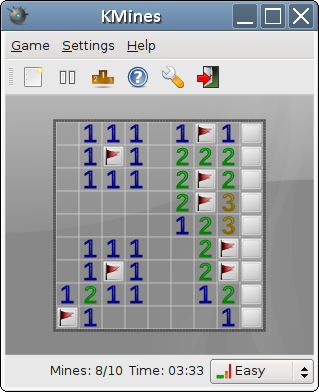
- Numerical Adjacency Matrix Logic: Clicking an unmined square reveals a number (from 1 to 8) indicating exactly how many deadly mines touch that specific tile across all eight adjacent grid squares.
- Right-Click Flagging & Question Marks: Right-click on suspicious squares to plant a protective red warning flag, preventing accidental clicks from detonating the board.
- Dual-Click "Chording" Speed Mechanics: Once the exact number of flags around a revealed number is correctly placed, double-clicking (or pressing both mouse buttons simultaneously) instantly reveals all remaining adjacent unflagged tiles, triggering massive screen-clearing cascades.
- Guaranteed Safe First Click: The game dynamically generates the mine matrix *after* the player's first click, ensuring that the initial click is never an instant-death mine.
Historical Legacy & Archival Preservation
Minesweeper is permanently inducted into the World Video Game Hall of Fame and the Smithsonian Institution. As Robert Donner and Microsoft's supreme logic puzzle triumph, its legacy in digital culture is eternal.