The Genre Genesis: From Modern Titans to 1993 Pioneers
2-player cooperative Japanese folklore action platformers, overworld branching stage route maps, first-person giant mecha cockpit boxing battles, and whimsical Edo-punk humor—from Super Mario World, River City Girls, Kirby Star Allies, Guacamelee!, and Ghost of Tsushima to modern cooperative action games—trace their most creative 16-bit Japanese peak to December 22, 1993 with Konami’s Ganbare Goemon 2: Kiteretsu Shōgun Magginesu (がんばれゴエモン2 奇天烈将軍マッギネス).
Directed by Shigeharu Umezaki with music composed by Konami’s Kukeiha Club (Michiru Yamane, Kazuhiko Uehara) for Konami on the Super Famicom (SNES), Ganbare Goemon 2 holds monumental historical stature: it refined the *Goemon* formula with an open *Super Mario World*-style world map and made video game history by introducing the franchise’s legendary colossal giant mecha, Goemon Impact.
Platform Context & Gaming Environment: The Invasion of General McGuinness
Ganbare Goemon 2 operated on a 16-megabit Super Famicom cartridge. The eccentric Western-obsessed villain General McGuinness (Magginesu) launches a mechanical invasion of feudal Japan to transform the country into a giant Westernized theme park: mystical ninja Goemon, his ninja buddy Ebisumaru, and the robotic clockwork ninja Sasuke set out across eight Japanese provinces to stop him.
Popularity & Cultural Standing: The Super Famicom Classic
Ganbare Goemon 2 was an astronomical commercial and critical blockbuster in Japan, selling over 400,000 copies and earning rave reviews (33/40 from Famitsu). It is universally celebrated as the single finest 2D platforming entry in the entire *Goemon / Mystical Ninja* dynasty.
Gameplay Mechanics & Technical Innovations
Ganbare Goemon 2 delivered delightful cooperative action mechanics:
- Three Distinct Playable Heroes: Play as Goemon (Pipe attacks and throwing ryo coins), Ebisumaru (Ninja fan strikes and throwing shuriken stars), or the swift clockwork ninja Sasuke (Kunai daggers and wall-climbing)!
- Branching Super Mario World-Style Map: Travel across a non-linear world map of Japan, choosing alternate stage paths, visiting traditional Japanese inns, hot springs, and minigame casinos!
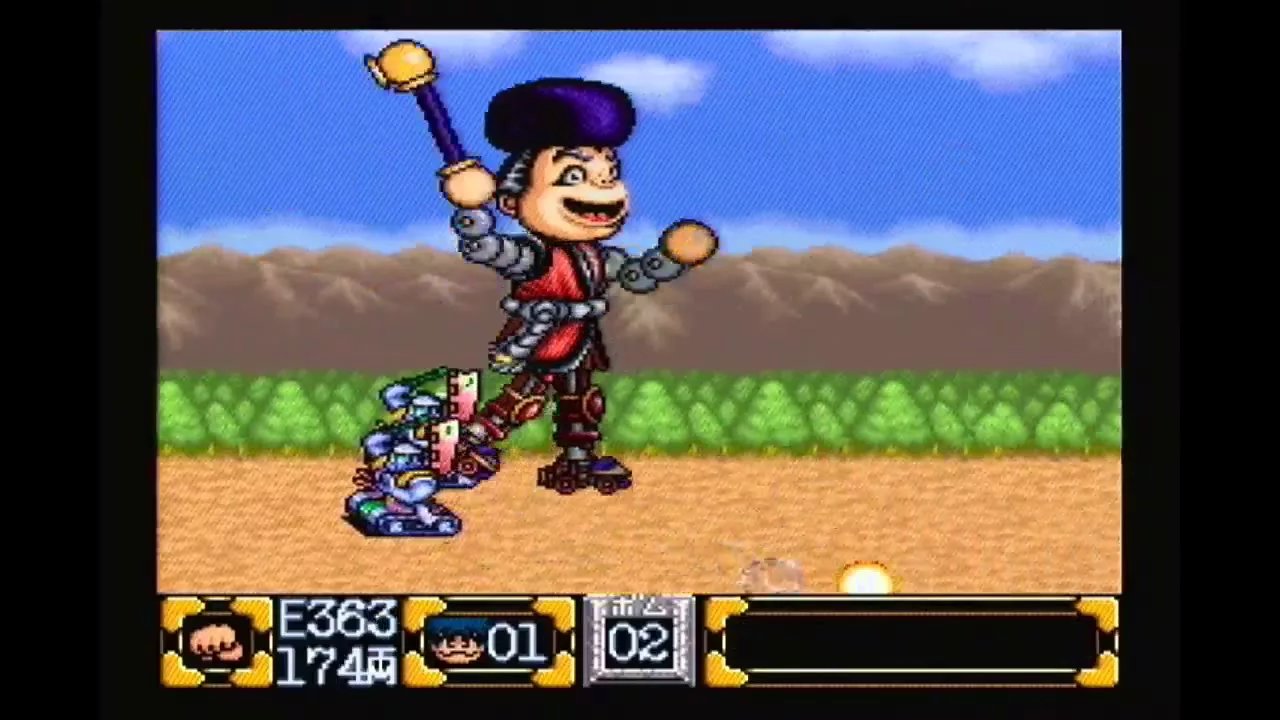
- The Historic Debut of Goemon Impact: Board the gargantuan, roller-skating kabuki giant mecha Goemon Impact for high-speed Mode 7 pseudo-3D destruction runs followed by First-Person Cockpit Boxing Battles against giant enemy robots (punching, laser eyes, and coin bazookas!)!
Historical Legacy & Archival Preservation
Ganbare Goemon 2 is permanently enshrined in Konami’s golden gaming heritage as an immortal peak of 16-bit Japanese action game design.


