
Introduction: The Next Chapter for Call of Duty: Black Ops II
Call of Duty: Black Ops II, released in 2012 by Treyarch and published by Activision, represented a significant evolution within the franchise. Building upon the foundation laid by its predecessor, Black Ops, this installment introduced branching narratives, futuristic weaponry, and a more complex geopolitical landscape. The game’s dual timeline structure, shifting between the Cold War era and a near-future setting, offered players a unique perspective on global conflict and espionage. This Masterclass Deep-Dive will dissect every facet of Black Ops II, from its groundbreaking engine modifications to its compelling narrative and lasting impact on the gaming world.
Visual Direction and Graphics Engineering
Black Ops II leveraged a modified version of the IW 3.0 engine, showcasing impressive graphical fidelity for its time. While not pushing the absolute limits of hardware, Treyarch optimized the engine to deliver consistent performance across various platforms, including the PlayStation 3, Xbox 360, Wii U, and later, enhanced versions for PlayStation 4 and PlayStation 5. The visual direction emphasized a gritty realism, particularly in the Cold War sequences, contrasting with the sleek, futuristic aesthetic of the 2025 setting. Character models were detailed, environments were richly textured, and lighting effects contributed to the game’s immersive atmosphere. (Example: A screenshot showcasing the visual contrast between the Cold War and future settings). The engine modifications focused on improving particle effects, enhancing character animations, and optimizing draw distances to maintain a smooth frame rate even during intense firefights.
Gameplay Mechanics and Core Systems
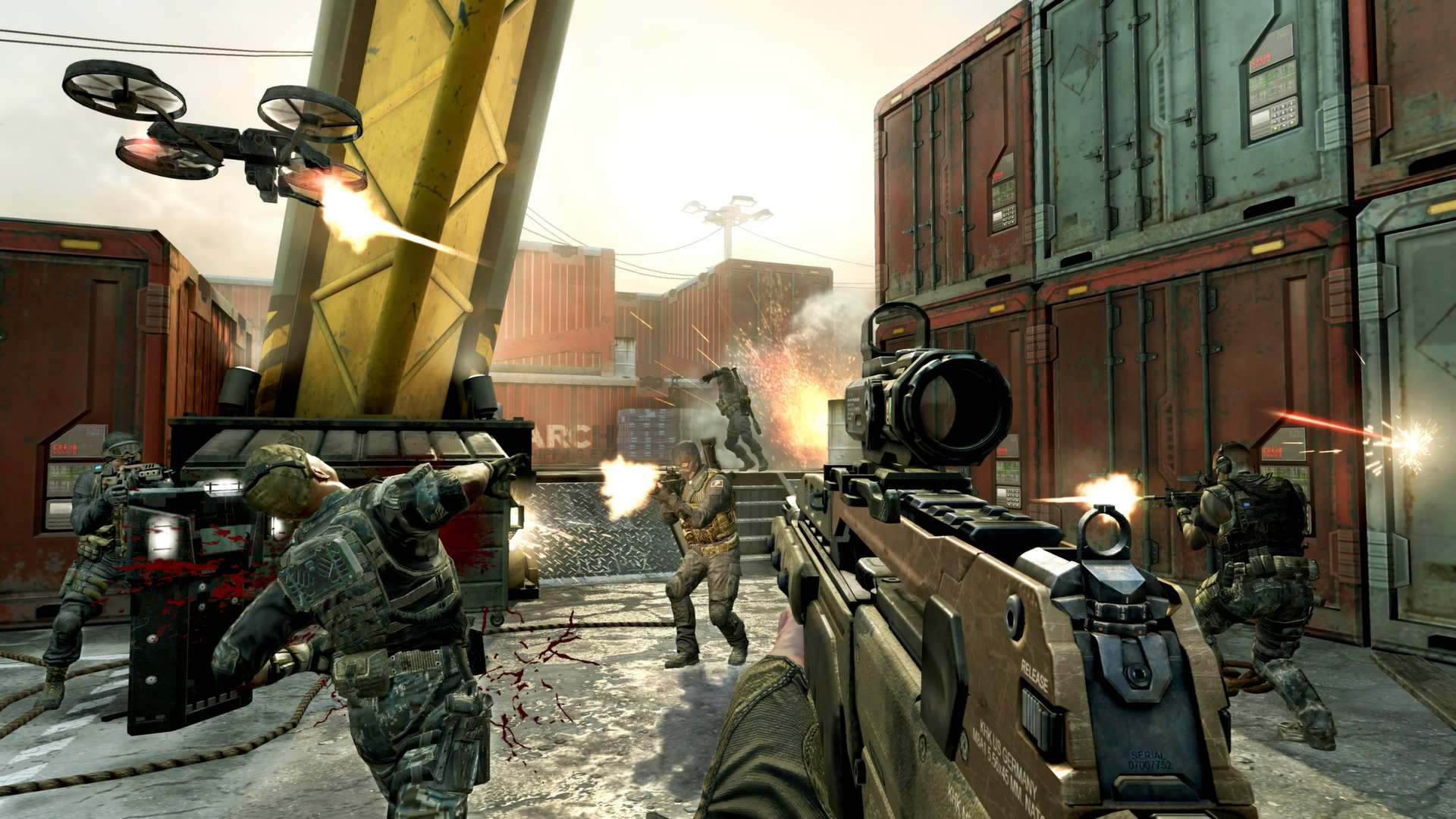
Black Ops II introduced several innovative gameplay mechanics that set it apart from previous Call of Duty titles. The most notable was the branching narrative structure, allowing players to make choices that influenced the story’s progression and ultimately led to multiple endings. This level of player agency was unprecedented in a mainline Call of Duty game and added significant replay value. Furthermore, the introduction of futuristic weaponry, such as drones and advanced assault rifles, provided a unique tactical experience. The core gameplay loop remained consistent with previous installments, emphasizing fast-paced action, precise gunplay, and strategic use of cover. (Example: A screenshot highlighting a futuristic weapon or drone). The game also featured a robust multiplayer mode with various maps, modes, and customization options, catering to both casual and competitive players.
Level Design and World Atmosphere
The level design in Black Ops II was meticulously crafted to create immersive and believable environments. From the claustrophobic interiors of Cold War-era facilities to the sprawling urban landscapes of 2025, each location felt distinct and authentic. The game’s world atmosphere was enhanced by detailed environmental storytelling, with subtle clues and visual cues that hinted at the events that had transpired in each area. Treyarch successfully blended historical accuracy with fictional elements, creating a compelling narrative backdrop for the gameplay experience. The level design also incorporated verticality and multiple pathways, encouraging players to explore their surroundings and utilize tactical positioning.
Narrative Depth and Character Profiles
Black Ops II boasted a complex and engaging narrative that explored themes of espionage, political intrigue, and the consequences of technological advancement. The game’s dual timeline structure allowed for a deeper exploration of character motivations and the long-term impact of historical events. Players once again took on the role of Alex Mason, alongside Frank Woods, in the 1980s, while also controlling his son, David (codenamed “Section”), in 2025. The game’s antagonist, Raul Menendez, proved to be a memorable and compelling villain, driven by a twisted ideology that fueled his actions throughout the story. The narrative depth was further enhanced by well-written dialogue and nuanced character interactions.
Sound Design and Acoustic Realism
The sound design in Black Ops II played a crucial role in creating an immersive and believable gaming experience. From the roar of gunfire to the subtle ambient sounds of each environment, every audio cue contributed to the game’s overall atmosphere. The acoustic realism was particularly noteworthy, with realistic reverb effects that enhanced the sense of space and immersion. The soundtrack, composed by Jack Wall and Trent Reznor, perfectly complemented the game’s tone, ranging from tense orchestral pieces to pulse-pounding electronic tracks.
Release Expectations and Community Hype
Prior to its release, Call of Duty: Black Ops II generated significant hype within the gaming community. The promise of a branching narrative structure, futuristic weaponry, and a compelling storyline was enough to capture the attention of both long-time fans and newcomers alike. Marketing campaigns effectively showcased the game’s key features, building anticipation for what many considered to be the next evolution in the Call of Duty franchise. The release date was highly anticipated, and pre-orders were strong indicators of the level of excitement surrounding the game.
Conclusion: The Future of Call of Duty: Black Ops II
Call of Duty: Black Ops II remains a landmark title within the franchise, remembered for its innovative gameplay mechanics, compelling narrative, and impressive technical achievements. While time has passed since its release, the game’s influence can still be felt in subsequent installments. Its branching narrative structure paved the way for more player-driven experiences, while its futuristic weaponry inspired new design concepts. [[INJECT_VIDEO]] (Example: A retrospective video discussing the legacy of Black Ops II). The game’s enduring popularity is a testament to its quality and its ability to resonate with players on multiple levels.

Source: Wikipedia


