

Про цю гру
Introduction: The Next Chapter for Burnout Revenge
Burnout Revenge, released in 2005 by Criterion Ігри and published by Electronic Arts, wasn’t just a sequel; it was an evolution. Building upon the foundation laid by its predecessor, Burnout 3: Takedown, Revenge amplified every aspect of the adrenaline-fueled racing experience. This Masterclass Deep-Dive will dissect the game’s technical prowess, artistic vision, and lasting impact on the arcade racing genre. We’re not just looking at a game; we’re examining a carefully crafted machine designed to deliver pure automotive mayhem.
Visual Direction and Graphics Engineering
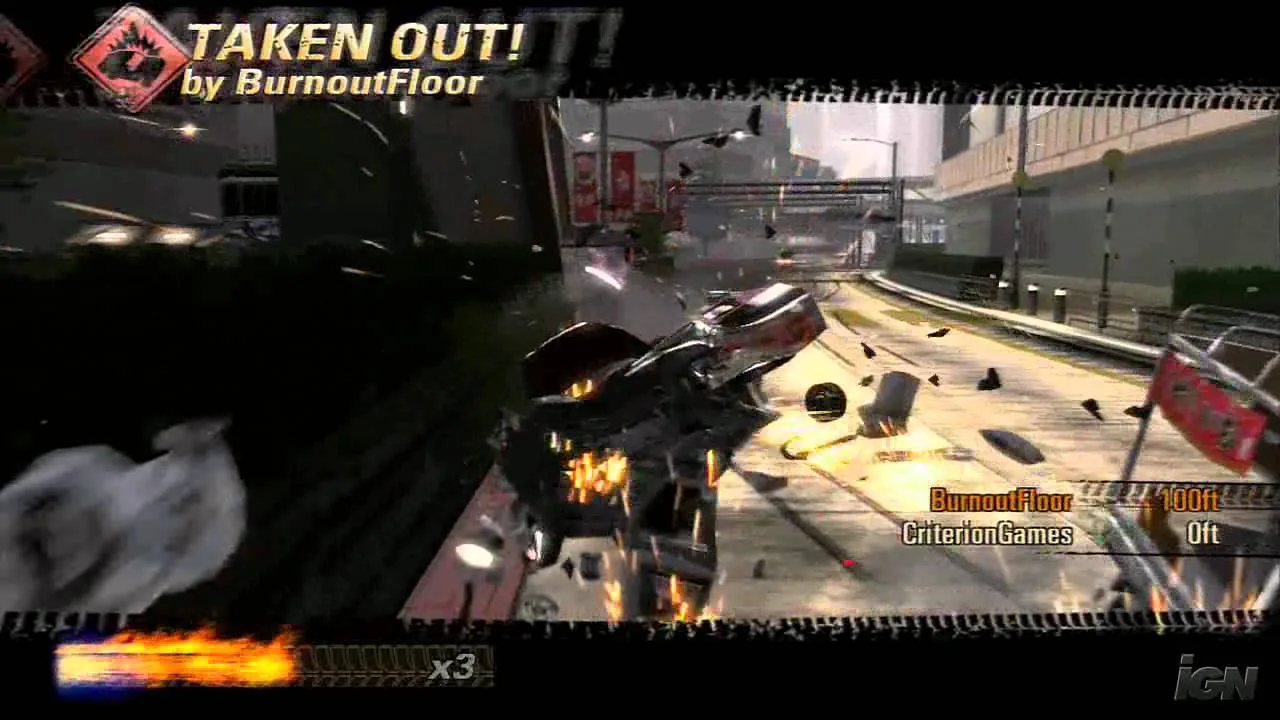
Burnout Revenge leveraged the RenderWare engine, a popular choice for its flexibility and scalability across multiple platforms. While not pushing the boundaries of graphical fidelity by today’s standards, the game achieved a distinct visual style characterized by vibrant colors, exaggerated vehicle designs, and dynamic lighting effects. The developers prioritized performance optimization to ensure smooth frame rates even during intense multi-car pileups. showcases the game’s signature aesthetic: bold lines, eye-catching color palettes, and a sense of controlled chaos. The visual direction aimed for an almost cartoonish quality, enhancing the overall feeling of over-the-top action.
Геймплей Mechanics and Core Systems
The core gameplay loop revolves around high-speed racing punctuated by aggressive takedowns. Burnout Revenge introduced several new features to expand upon the existing formula. “Traffic Checking,” a unique mechanic allowing players to strategically ram traffic moving in the same direction, added a layer of tactical depth. Vertical Takedowns, where players launch their cars off ramps and land directly on rival vehicles, provided spectacular moments of vehicular destruction. The game’s physics engine was finely tuned to allow for both realistic handling and satisfying crashes.
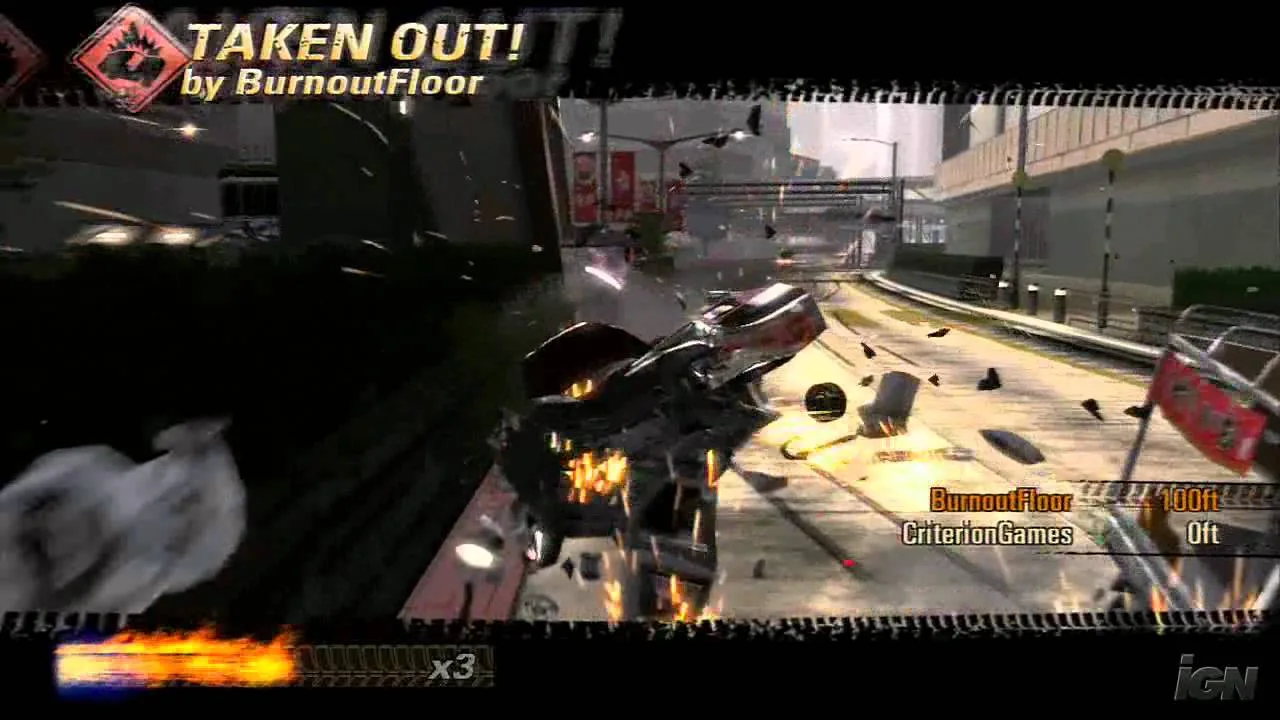
demonstrates the fluidity and responsiveness of the vehicle controls, crucial for executing precise maneuvers during high-speed chases.
Level Design and World Atmosphere
The game features a diverse range of environments, from bustling cityscapes to winding coastal roads. Each track is meticulously designed to encourage aggressive driving and provide ample opportunities for takedowns. The level design often incorporates elements that promote emergent gameplay, such as strategically placed ramps and narrow passages. While the overall atmosphere leans towards arcade-style fun, the developers incorporated subtle details to create a sense of place.
Narrative Depth and Character Profiles
While Burnout Revenge isn’t known for its complex narrative, it does feature a lighthearted story that serves to tie the various game modes together. The player takes on the role of a rising star in the underground racing scene, competing against rival drivers and earning respect through skill and aggression. The characters are largely archetypes, but they contribute to the overall sense of competition and rivalry.
Sound Design and Acoustic Realism
The sound design in Burnout Revenge is crucial to its impact. The roar of engines, the screech of tires, and the crunch of metal all combine to create an immersive auditory experience. The soundtrack features a mix of electronic music and licensed tracks, perfectly complementing the high-octane gameplay. The audio cues are also carefully designed to provide feedback to the player, indicating when a takedown is imminent or when a collision is about to occur.
Release Expectations and Community Hype
Upon its release, Burnout Revenge was met with widespread critical acclaim. Players praised its addictive gameplay, stunning visuals, and overall sense of fun. The game quickly became a cult classic, spawning a dedicated fanbase that continues to celebrate its legacy today. The community actively shared tips, tricks, and custom modifications, extending the game’s lifespan far beyond its initial release.
Conclusion: The Future of Burnout Revenge
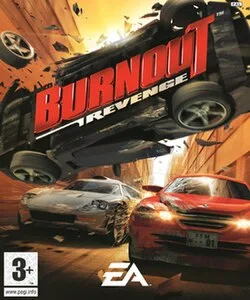
Burnout Revenge remains a testament to the power of arcade racing. Its blend of high-speed action, aggressive takedowns, and addictive gameplay continues to resonate with players today. While the original online servers have been shut down, the game’s legacy lives on through emulation, fan modifications, and ongoing discussions within the gaming community. represents the enduring appeal of Burnout Revenge: a timeless classic that continues to deliver thrills and spills. The game’s influence can be seen in numerous racing titles that followed, solidifying its place as a landmark achievement in the genre.
Source: Wikipedia
Галерея


Приєднуйтесь до розмови