

Tentang game ini
Introduction: The Next Chapter for Assassin’s Creed II
Assassin’s Creed II arrived in 2009 as a pivotal moment not just for the franchise, but for open-world action-adventure games. Building upon the foundation laid by its predecessor, it expanded the scope of gameplay, deepened the narrative complexity, and refined the core mechanics that would define the Assassin’s Creed formula for years to come. This isn’s merely a sequel; it was a significant evolution, setting new standards for player immersion and historical authenticity. The game’s success hinged on its ability to seamlessly blend fictional narratives with meticulously recreated historical settings, offering players an unprecedented level of engagement and discovery.
Visual Direction and Graphics Engineering
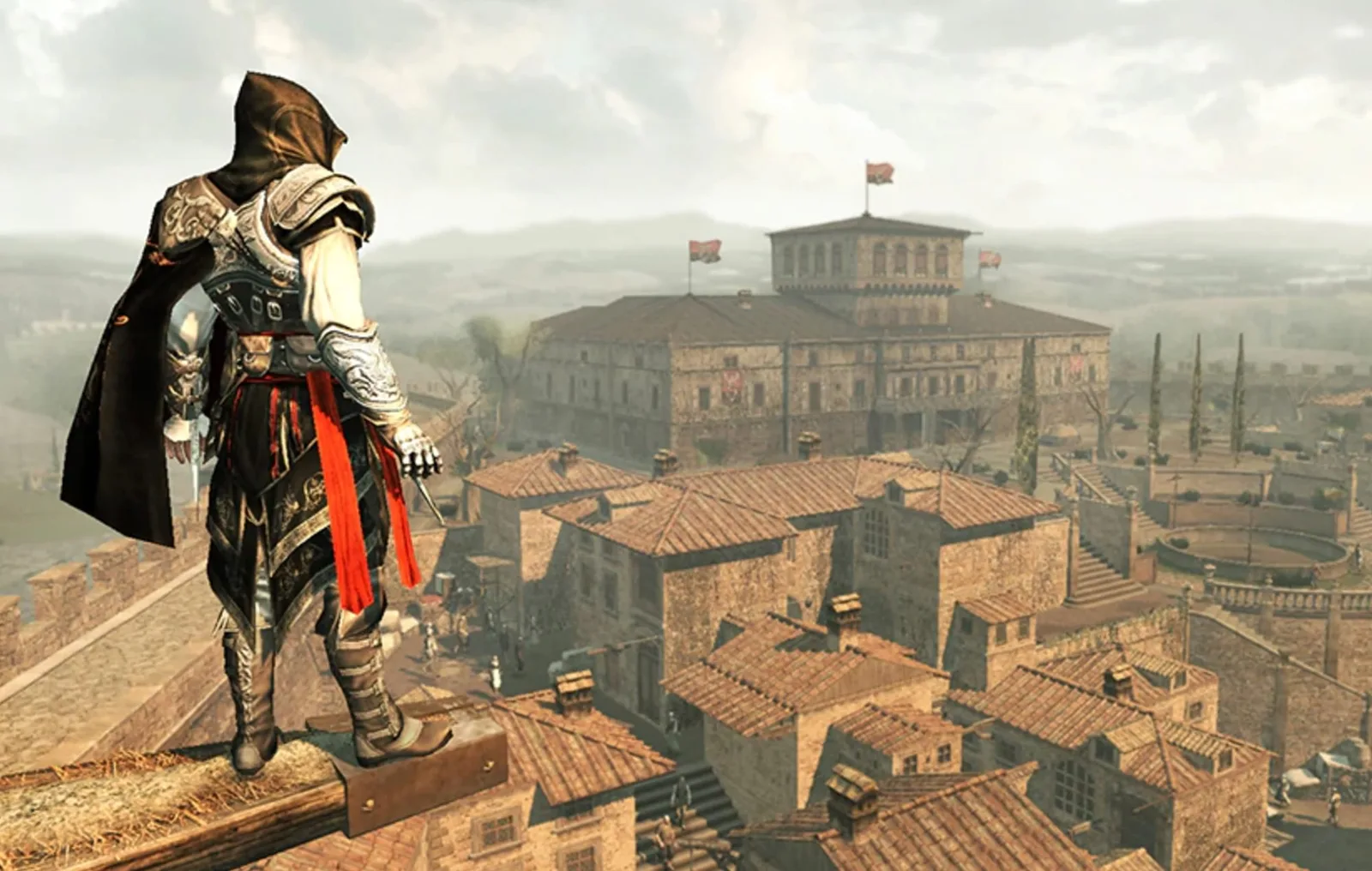
Assassin’s Creed II showcased the power of Ubisoft’s Anvil engine, pushing the graphical capabilities of the PlayStation 3 and Xbox 360. The visual direction prioritized realism and detail, with meticulously crafted environments that brought Renaissance Italy to life. From the bustling streets of Florence to the majestic architecture of Venice, each location was rendered with a keen eye for historical accuracy. The game’s lighting system played a crucial role in creating atmosphere, casting long shadows and highlighting intricate details. While limited by the hardware of its time, Assassin’s Creed II demonstrated impressive draw distances and environmental effects, setting a benchmark for open-world visuals.
Gameplay Mechanics and Core Systems
Assassin’s Creed II refined and expanded upon the core gameplay mechanics introduced in the first game. The free-running system was significantly improved, allowing for more fluid and dynamic traversal of environments. Combat was made deeper with new weapons and techniques, offering players a wider range of options for engaging enemies. The introduction of crafting and resource management added another layer of depth to the gameplay loop. Furthermore, the game introduced “denizen” animations, making NPCs more realistic and responsive to player actions. These enhancements collectively contributed to a more immersive and engaging gameplay experience.
Level Design and World Atmosphere
The level design in Assassin’s Creed II was instrumental in creating a believable and captivating world. Each city – Florence, Venice, Forlì, and others – felt distinct, with its own unique architecture, layout, and atmosphere. The game encouraged exploration, rewarding players who ventured off the beaten path with hidden locations, collectibles, and side quests. The verticality of the environments was also cleverly utilized, offering opportunities for strategic gameplay and breathtaking views. This careful attention to detail created a sense of place that drew players into the world and made them feel like they were truly experiencing Renaissance Italy.
Narrative Depth and Character Profiles
Assassin’s Creed II elevated the narrative complexity of the franchise, introducing Ezio Auditore da Firenze as a compelling protagonist. His journey from a carefree young man to a seasoned assassin was both engaging and emotionally resonant. The supporting cast was equally well-developed, with memorable characters like Leonardo da Vinci and Niccolò Machiavelli adding depth and intrigue to the story. The game’s framing device, which connected Ezio’s memories to Desmond Miles in the present day, added another layer of mystery and suspense. This intricate narrative structure kept players invested in the overarching plot while simultaneously providing a captivating historical experience.
Sound Design and Acoustic Realism
The sound design in Assassin’s Creed II played a vital role in creating an immersive auditory landscape. The game featured a dynamic soundtrack that seamlessly blended orchestral scores with period-appropriate music, enhancing the atmosphere of each location. Environmental sounds, such as the bustling streets of Florence or the gentle lapping of water in Venice, added another layer of realism. Furthermore, the sound effects for combat and parkour were meticulously crafted to provide satisfying feedback to the player. This attention to detail created a truly believable auditory experience that further enhanced immersion.
Release Expectations and Community Hype
Prior to its release, Assassin’s Creed II generated significant hype within the gaming community. The promise of a new protagonist, expanded gameplay mechanics, and stunning historical settings fueled anticipation for months. Early previews and trailers showcased the game’s visual fidelity and hinted at the depth of its narrative. This pre-release buzz translated into strong sales upon launch, solidifying Assassin’s Creed II as a major success for Ubisoft. The community embraced the game wholeheartedly, praising its improvements over the original and celebrating its rich historical setting.
Conclusion: The Future of Assassin’s Creed II
Assassin’s Creed II remains a landmark achievement in gaming history. Its blend of compelling narrative, refined gameplay mechanics, and stunning visuals set a new standard for open-world action-adventure games. While technology has advanced significantly since its release, the game’s core strengths – its immersive world, engaging characters, and satisfying gameplay loop – continue to resonate with players today. Assassin’s Creed II not only cemented the franchise’s place in gaming history but also laid the groundwork for future installments, shaping the direction of open-world games for years to come. [[INJECT_VIDEO]]

Source: Wikipedia
Galeri
Bergabunglah dalam percakapan