

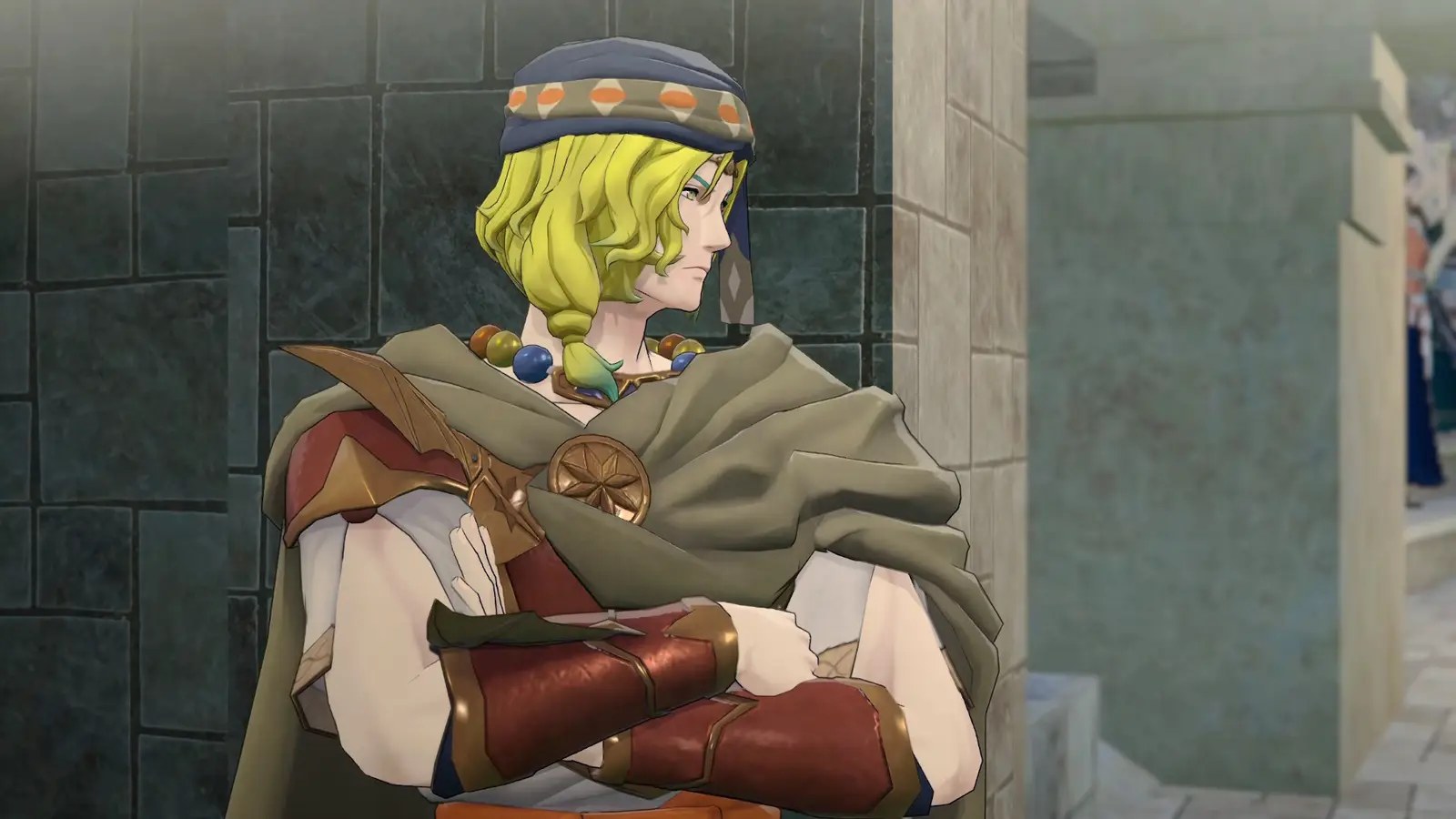
Intelligent Systems’ new Fire Emblem: Fortune’s Weave is drawing attention from critics and players for the way it handles religion, a theme that role-playing games have long treated with a heavy hand. Released for Nintendo platforms, the latest entry in the long-running tactical series has been noted for weaving real-world religious and historical concepts into its narrative in ways that move well beyond the familiar trope of the corrupt church as an obvious villain.
The observation comes from a critical examination of the game’s story, which reviewers have found unusually willing to engage with faith, doctrine, and mythology as serious thematic material rather than as decorative villainy. Where countless role-playing games lean on recognizable religious imagery as shorthand for evil, Fortune’s Weave appears to be doing something considerably more deliberate, according to analysis of its third act.
A Departure from Genre Conventions
The connection between role-playing games and religion has become something of a well-worn trope, and rarely a flattering one. In countless titles, the moment something goes wrong, players are nudged toward suspecting the local clergy, and the narrative eventually pushes them to confront or overthrow a god in the name of saving the world. Franchises including the Tales series, Breath of Fire, and Falcom’s Trails series have all borrowed liberally from real-world doctrine to lend weight to their stories.
Intelligent Systems itself has toyed with religious and mythological symbols across the Fire Emblem franchise, though mostly in service of a cool-sounding name. The Church of Seiros in Three Houses stood out as an exception, presenting a hierarchical religion built on ritual, liturgy, and faith that abused its position to maintain order. Even so, that setup could be swapped for any oppressive institution and yield the same dramatic result.
According to reviewers, Fortune’s Weave takes a markedly different approach, particularly toward the end of a character named Dietrich’s route. The shift arrives during a brief exchange in which Fabio, a key ally, explains the origin and mechanics of the Crest Stones — the items that in Three Houses conferred supernatural powers on their bearers before ultimately driving them to madness.
The Science Behind the Divine
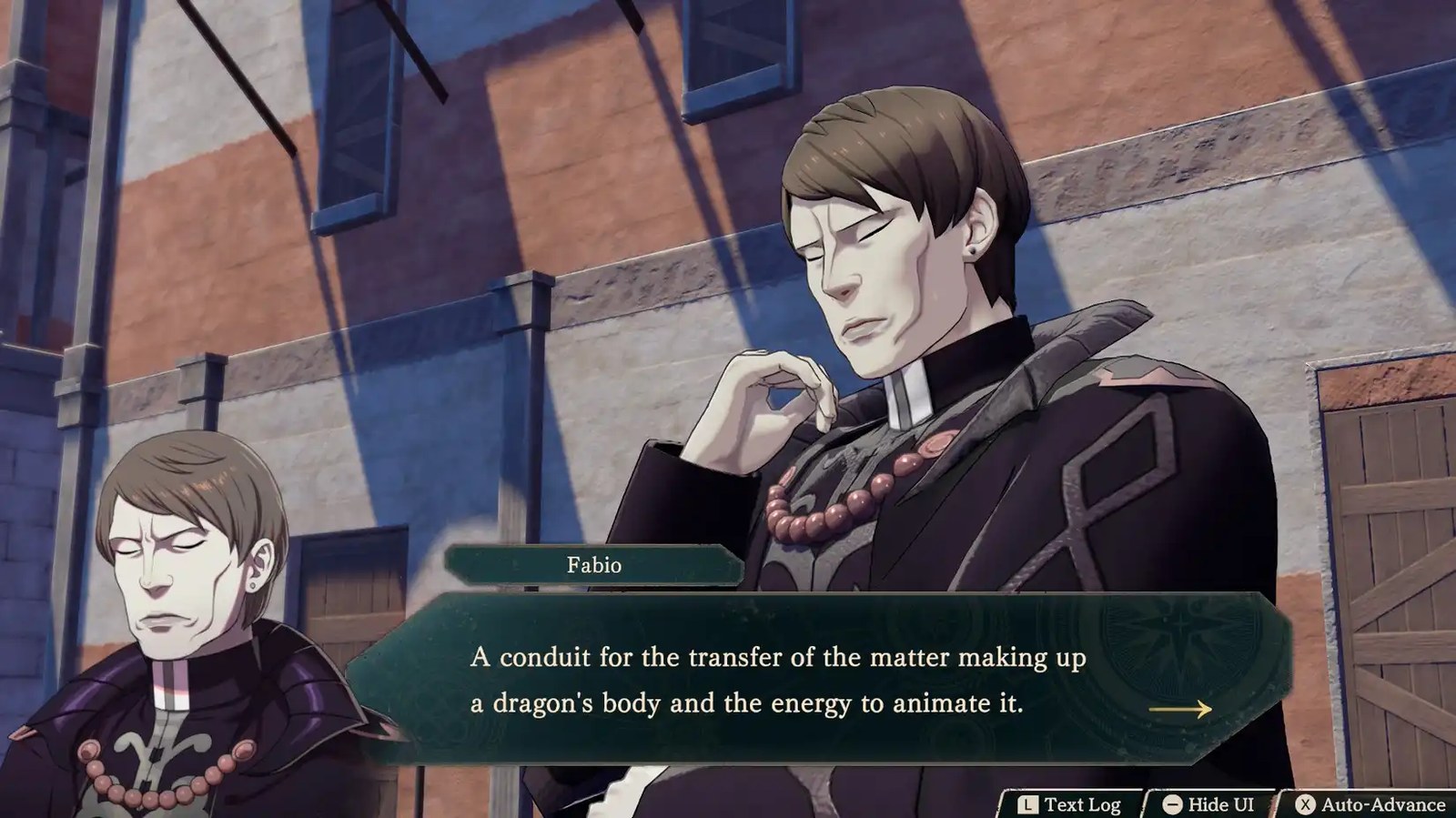
Within the game, Fabio reveals that the Crest Stones operate less like simple magic and more like a piece of cosmic technology. “The very structure of the Crest Stones is truly shocking,” Fabio says. “They contain a conduit to hyperspace.” He goes on to describe them as “a conduit for the transfer of matter making up a dragon’s body and the energy to animate it,” drawing on a minor detail from Three Houses in which the deity Sothis descended upon the world from outer space.
The Crest Stone takes divine energy from outer space and transforms it into something that elevates the humans it touches into something beyond their base natural condition — a process that closely mirrors the Roman Catholic doctrine of transubstantiation, in which priests are believed to transform bread and wine into the body and blood of Christ.
Analysis of Fire Emblem: Fortune’s Weave
The parallel is not a perfect one. The game’s Crest Stones ultimately corrupt their bearers, turning them into monsters, whereas the real-world belief involves no such physical transformation. But reviewers note that Intelligent Systems appears to be treating these references with clear intention rather than as throwaway Easter eggs.
History Reforged for Fiction
The game’s worldbuilding extends beyond theology into a carefully reworked history. The storyline surrounding the People of the White Egg — in which the ruler Dagda murders thousands out of fear — loosely parallels Rome’s brutal conflicts with the Carthaginians during the second and third centuries BCE. Within the game, the Dagdan pantheon treats this genocide as a turning point toward paranoia and cruelty in Dagda’s rule over the country of Dagsion.
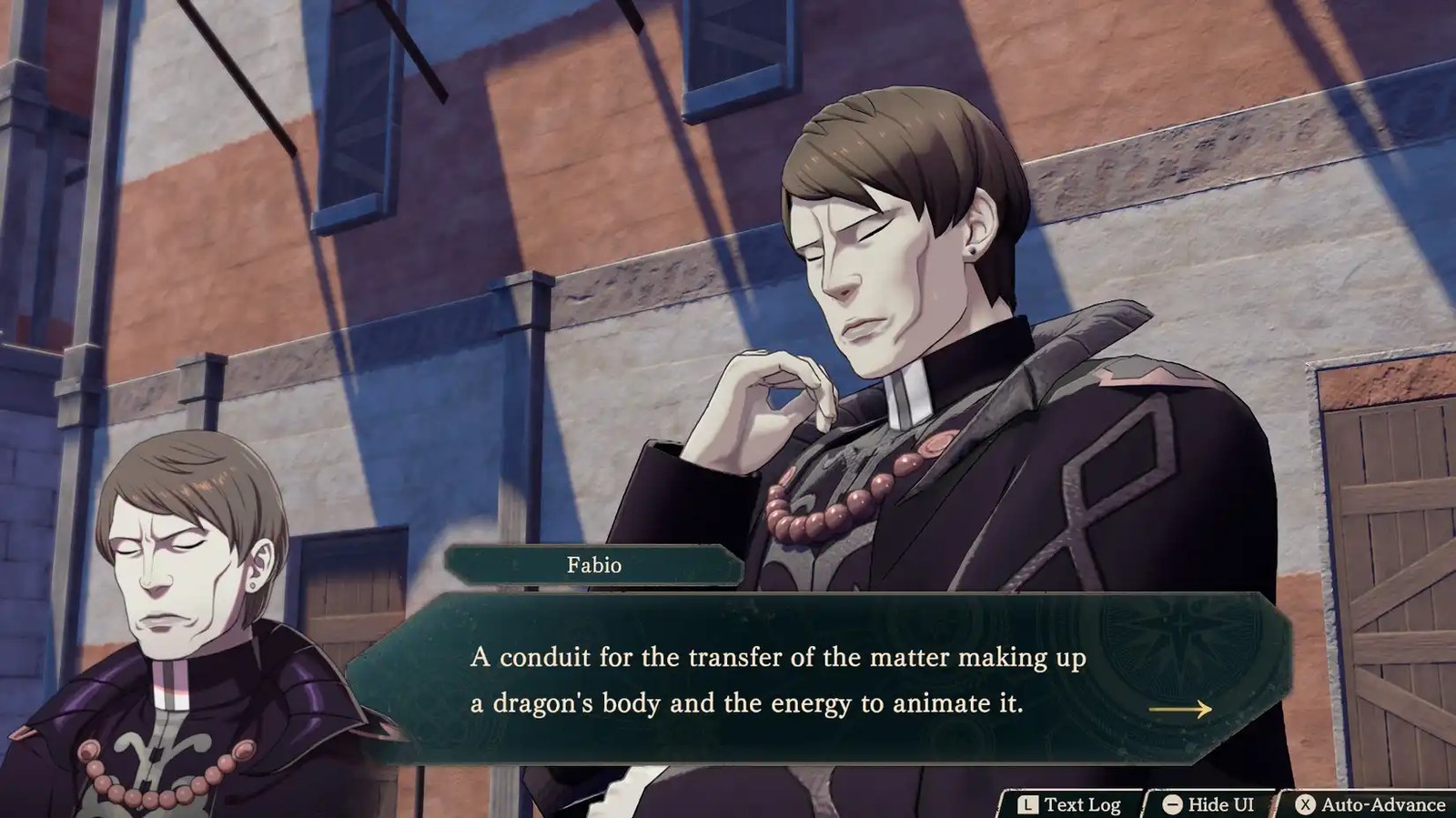
The historical echo is reinforced by deliberate details, including a high-tech underground structure encountered in Dietrich’s route named Hannibal, who rides an elephant. In real history, the Carthaginian general Hannibal was famed for marching an army of elephant riders over the Alps to strike at Rome.
Through these layers, the game develops a philosophy shared by Fabio and, as players discover, the less fanatical members of the Dagdan pantheon. They envision a world in which people are not dependent on gods and do not define themselves through their relationship with the divine — a conclusion echoed by Yang Jie, a wandering monk whose years of devotion and doubt make his recruitment to Dietrich’s party a fitting payoff.
Looking Ahead
While the message of self-sufficiency is hardly novel, critics argue that the thematic unity and the careful use of religion to reinforce it is what makes Fortune’s Weave stand out — particularly in a medium that is either too cautious to acknowledge religion or too shallow to do anything meaningful with it. For the series and the genre alike, the game represents a rare and welcome step toward treating faith as substantive storytelling material rather than as a convenient stand-in for evil.



1 comment