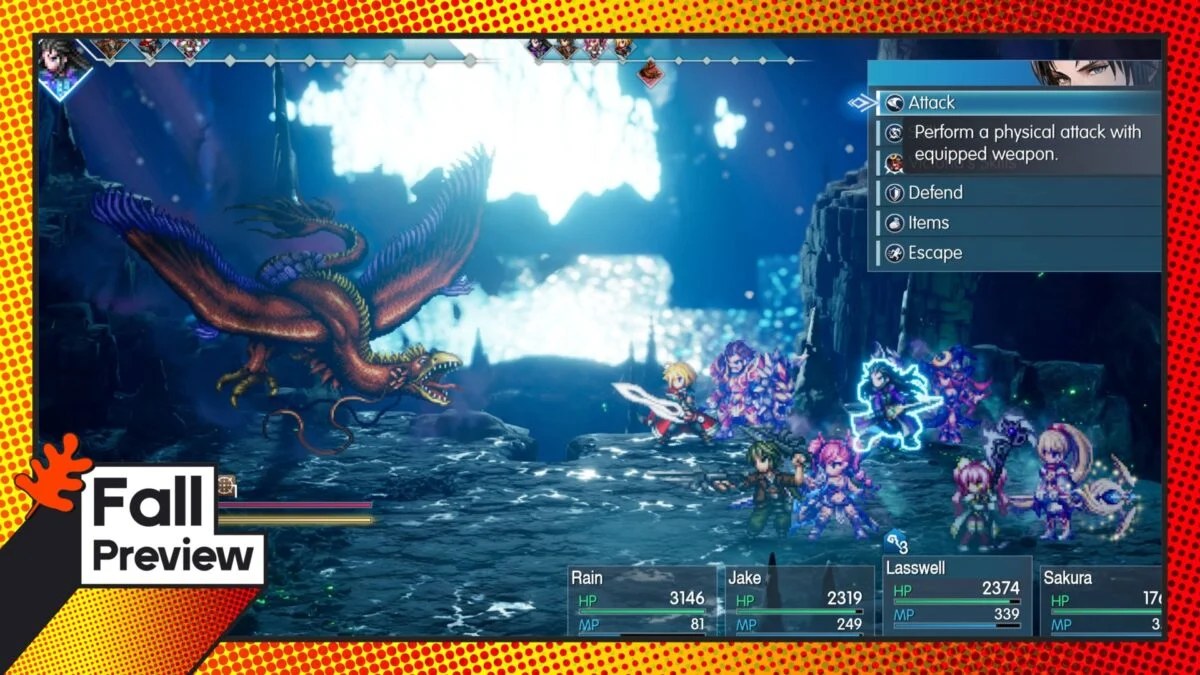
After years of the Final Fantasy franchise leaning toward action-oriented combat and nostalgic homages, Square Enix is steering back to its turn-based roots with Final Fantasy Resonance, a single-player adaptation of the mobile title Brave Exvius that launches on October 22. Co-developed by Team Asano, the studio behind the HD-2D visual style, the game pairs a reworked job system drawn from Final Fantasy 5 with the distinct character identities established in Final Fantasy 6—an approach the developers describe as an deliberate “experiment” meant to honor the series’ legacy while feeling fresh.
The announcement arrives at a pivotal moment for the franchise. While Final Fantasy games have long given players countless renditions of characters like Cid, varied job classes, and Limit Breaks, recent installments have increasingly looked backward for inspiration. Resonance marks one of the first turn-based single-player entries in years, following in the footsteps of Octopath Traveler: Crescent Moonless Path, itself an adaptation of a mobile game. Like its predecessor, it embraces Team Asano’s signature HD-2D aesthetic—a blend of retro 16-bit sprites and modern graphical effects.
A Combat System Built on Legacy
The heart of Resonance lies in its battle system, which the developers approached as a calculated experiment. Rather than simply reviving an existing formula, the team wanted to test how two beloved systems might interact when combined. According to producer Keisuke Nakashima, this required genuine research and innovation.
“The first concept we had in mind, simply put, is what if we take the job system from Final Fantasy 5 and the unique characteristics of each character in Final Fantasy 6, what would that look like?” says Nakashima. “This type of experiment hasn’t been done in the past, so it required a bit of research and innovation. We took the stagger system, and we reexamined everything and incorporated it all together. It ultimately formed into what you see now, where you have these distinct characteristics, but it also allows for that additional customization element.”
Keisuke Nakashima, Final Fantasy Resonance Producer
The result is a system that preserves the customizable job-based gameplay fans expect while giving each character their own identity. This balance between familiarity and novelty reflects the broader challenge facing any modern entry in such an established franchise.
Bridging History and Modern Sensibilities
Director Hiroto Furuya explains that the team’s approach to Resonance was shaped by both deep knowledge of the series’ history and their own experiences as contemporary gamers. This dual perspective informs not just combat, but also one of the game’s most ambitious features: the Visions system.
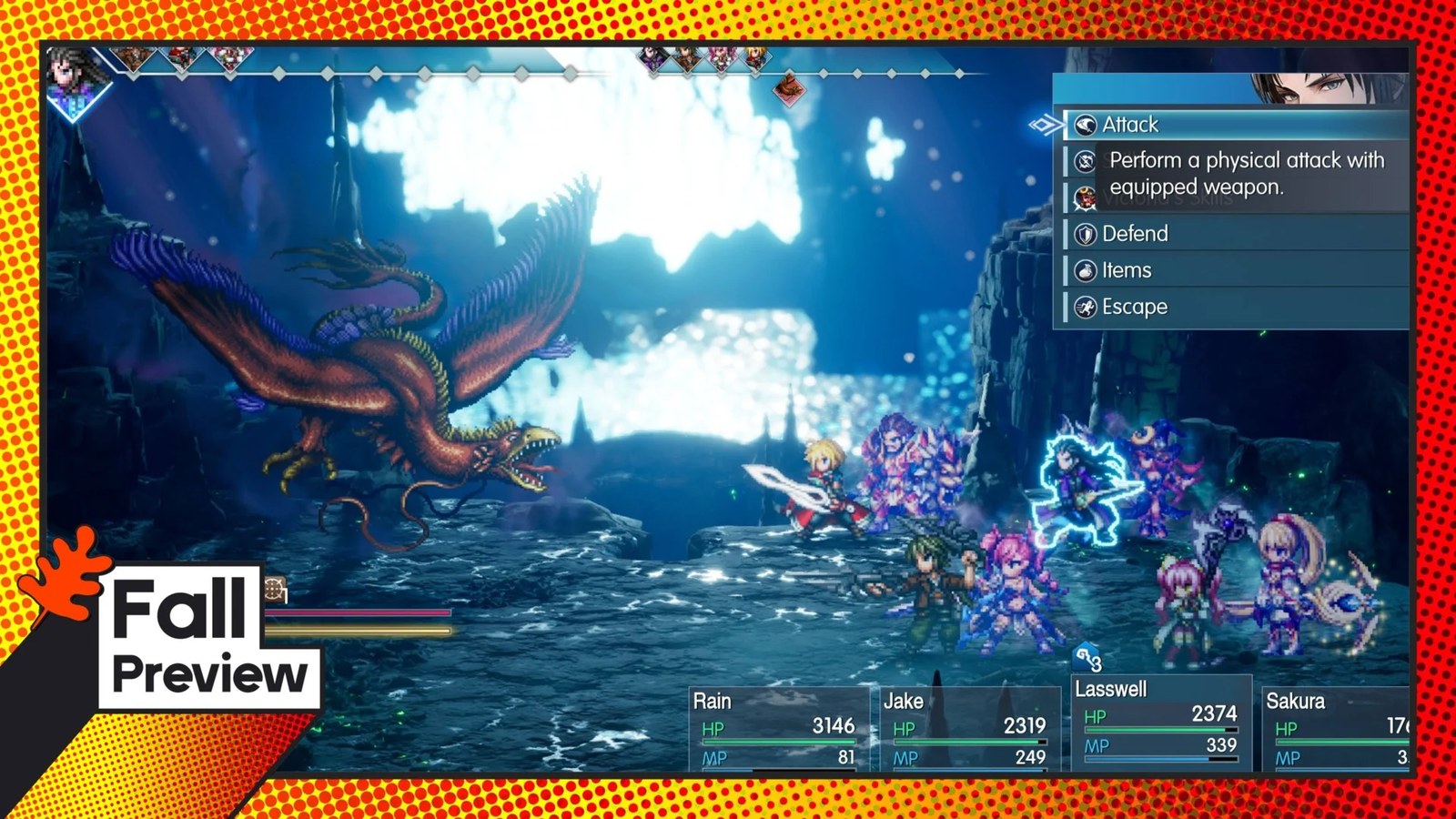
Visions are equipable summons that let players call upon characters from across the entire Final Fantasy series in battle—one for each entry from the original through Final Fantasy XVI. These Vision characters first appeared in Brave Exvius and carry a narrative justification, but they nearly didn’t survive the transition to single-player development.
“There was a time in development where we explored leaving the Final Fantasy series characters out. However, we ultimately landed on incorporating them, even though there is difficulty in intermixing their worldview with ours,” says Furuya. “When you go back to the point of how cool it would be to use Cloud’s Cross-Slash, and the bombastic CG sequences, it really delivers on the spectacle and fun that we were drawn to.”
Hiroto Furuya, Final Fantasy Resonance Director
Reworking a Mobile Story for Console Players
While the team considered substantial cuts during development, they instead adopted an additive approach. The core story of Brave Exvius remains intact, though certain events have been reorganized for better flow, some locations made grander, and new scenes added. Producer Nakashima notes that the original mobile game was known for its grim tone, featuring numerous “negative” moments.

“We’ve maintained the overall storyline,” says Nakashima. “However, we’ve incorporated more neutral scenes or positive scenes and interspersed them to kind of balance it.”
The team also had to solve a structural challenge: Brave Exvius used separate “character episodes” for its gacha-based roster, but Resonance needed to weave those details directly into the main narrative. Esper Siren and the Grandshelt knight Emma serve as examples—characters whose emotional beats have been integrated into Chapter 1 rather than siloed off from the central story.
A New Visual Benchmark for HD-2D
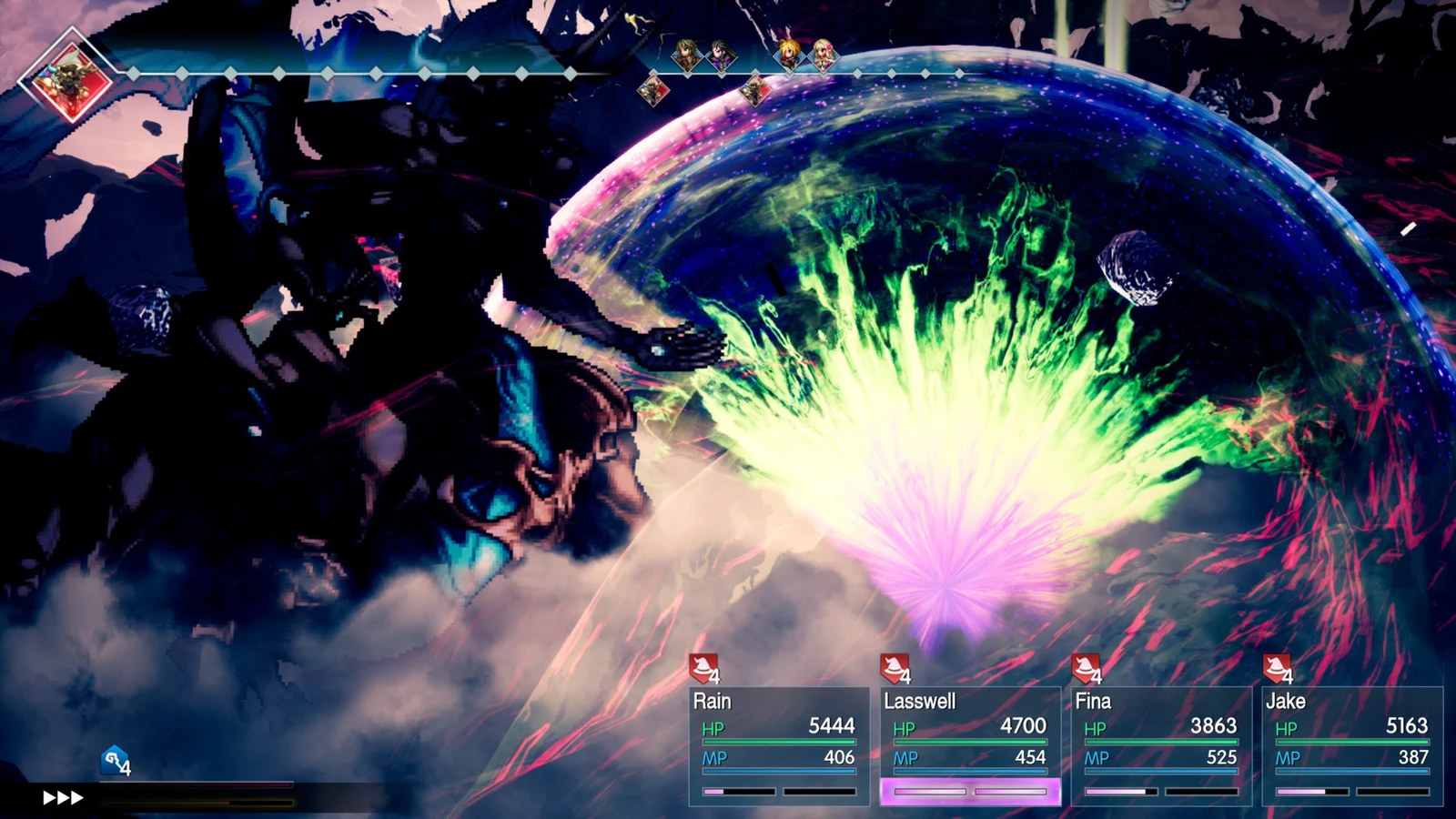
The most visible new addition is a set of lavishly animated cutscenes for key story moments. These sequences are noticeably higher quality than the game’s standard scenes and were designed to evoke the CG cutscenes of older Final Fantasy games. The demo opens with one such sequence—large in scope and tone-setting—and the team used an unusual technique to achieve its dynamic look.
“We created it in a way where, following the character movements, we replaced the pixels so it would kind of match the movement of the cameras to create that dynamic 3D feel,” says Furuya. “Once we have the motion, the scene set in place, then we apply post effects like lighting, blur, or shadow. We fully utilized technology for 3D and applied it to these cutscenes, which ultimately resulted in that unique pixel/3D blend you see.”
Hiroto Furuya, Final Fantasy Resonance Director
Because Resonance is built on Brave Exvius, it carries a distinct appearance compared to other HD-2D titles. When asked whether this might signal the future of the visual style, the developers declined to claim such significance—though Nakashima admits their event scenes may create some friendly pressure.
“When we’re looking at the HD-2D team, or teams working on those titles, none of us believe that we should replicate the same visual experiences, meaning we need to provide fresh, new experiences,” says Nakashima. “However, when we’re looking at the event scenes we’ve introduced for Final Fantasy Resonance, I feel it does add a little pressure to HD-2D games.”
Final Fantasy Resonance launches on October 22 across current and previous-generation consoles and PC.























Join the conversation