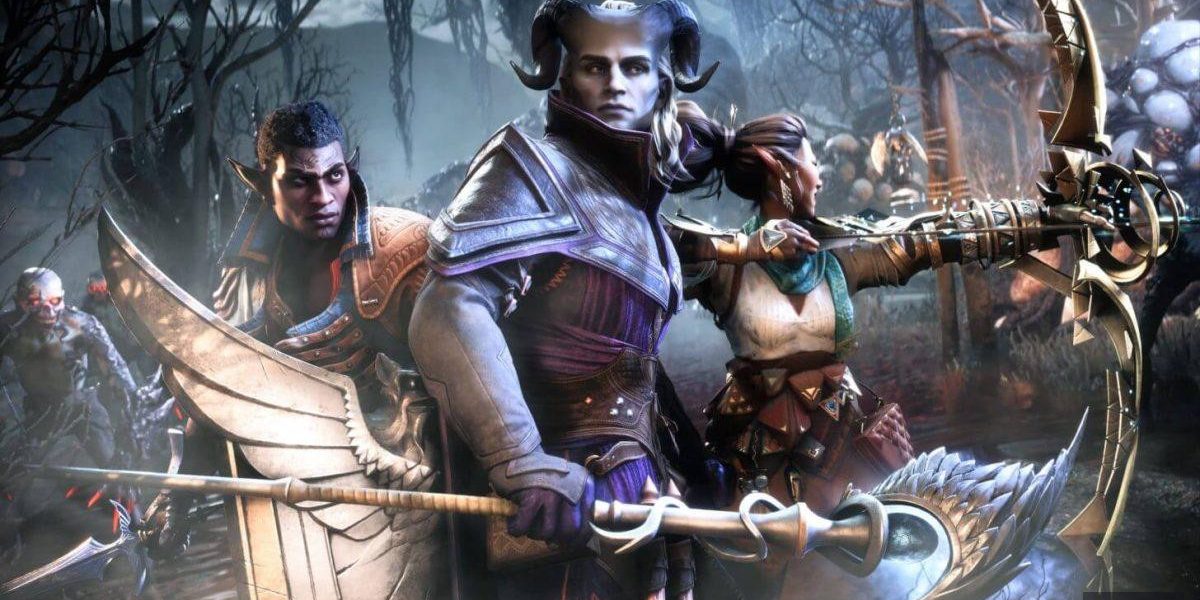
In a recent interview, David Gaider— the original architect behind the Dragon Age saga—announced that he will never touch the latest entry, Dragon Age: The Veilguard. The new title is poised to become the franchise’s final chapter, as its release has sparked far more controversy than even EA could manage.
Gaider’s pedigree is rooted in the early days of Bioware, where he contributed to Baldur’s Gate 2 spin‑offs Throne of Baal and Shadows of Amn, as well as Neverwinter Nights and Star Wars: Knights of the Old Republic. He later forged the world of Thedas, the cornerstone of Dragon Age, and served as lead writer on Origins, 2, and Inquisition.
Speaking to PC Gamer, Gaider explained that he would never engage with The Veilguard because Dragon Age was his “baby” and he could not stomach seeing others alter his vision, regardless of the outcome.
He added, “Whether the game succeeded or not, it inevitably diverged from my own choices. The team took the reins and produced their own rendition, and I simply cannot bear to witness the changes. It’s selfish, but I refuse to see what they’ve done with my creation, good or bad.”
I truly empathize with him. Dragon Age once stood as a masterful fantasy saga, rich with moral dilemmas and a meticulously crafted medieval setting. The Veilguard, however, turned into a platform for overt political messaging, leveraging a beloved franchise to dictate player viewpoints with little subtlety.
The experience lacked the moral depth and high stakes that once drew players in; the narrative felt flat and uninspired, offering nothing to truly engage the audience.
Gaider’s reluctance was less about the game’s craftsmanship and more about the constraints imposed by Electronic Arts, which seemed to set the development team up for failure from the outset.
‘Electronic Arts really did a number on them in terms of setting them up to fail, honestly. From everything I’ve been told about the game, it seems like that’s exactly what happened,’ he remarked.
The game failed to spark creative innovation, Gaider noted, and it fell short of sales expectations—an outcome that, according to him, is the ultimate yardstick in EA’s business model. When a title doesn’t hit a predetermined sales threshold, it is branded a flop, and the publisher effectively writes it off.
In light of this reality, BioWare appears to be skating on thin ice. The studio has not produced a blockbuster in over a decade, and its most recent triumph was a remastered collection of its own classics. I sincerely hope the team has absorbed past lessons and can prove that it still possesses the creative firepower to thrive.
❓ Frequently Asked Questions (FAQ)
Why did David Gaider refuse to play Dragon Age: The Veilguard?
David Gaider, the original creator of the Dragon Age universe, said he would never play The Veilguard because he considers the franchise his "baby" and feels uncomfortable seeing others alter his original vision. He stated that the game inevitably diverged from his choices and that he cannot bear to witness those changes, whether positive or negative.
What impact could Gaider's stance have on future Dragon Age projects?
Gaider’s refusal to engage with The Veilguard highlights a growing tension between original creators and modern IP holders. It could pressure publishers to involve original talent more closely in future projects or risk alienating the core fanbase, potentially reshaping how legacy franchises are managed in the industry.
How has the community reacted to Gaider's decision?
The community has expressed a mix of empathy and frustration. Many fans appreciate Gaider’s honesty and respect his attachment to the series, while others feel disappointed that the original creator will not endorse the latest entry, fearing it may affect the series’ legacy and future direction.
News Source: Destructoid
Comments
Be the first to comment.