


Remedy Entertainment’s Control Resonant has drawn sharp criticism for its overwhelming delivery of lore, with reviewers warning that the sequel’s flood of notes and audio logs disrupts the fluid action that defined its 2019 predecessor. Released in September 2024, the paranatural third-person shooter trades the contained Brutalist office of The Oldest House for the Hiss-infected streets of Manhattan, yet critics argue the game’s most ambitious worldbuilding has become its most glaring flaw. The core complaint centers on pacing: as players progress, lore is doled out at an accelerating rate, and audio logs that should autoplay are inadvertently cut short whenever nearby story dialogue triggers, forcing players to pause and manually resume them.
A World Built on Paperwork
For many, Control’s enduring legacy lies in its lore. The original game’s setting—a sprawling government facility riddled with documents covered in blacked-out redactions—turned exposition into atmosphere, and its secrets felt scattered deliberately across a bureaucratic labyrinth. Control Resonant doubles down on that tradition, and the result is a world where narrative motivation abounds. A simple tuning-fork puzzle in a subway station is enriched by notes depicting a research team growing frustrated as they repeatedly teleport around a mystery. Every fragment, the reviewer argues, feels narratively earned rather than bolted on for gameplay’s sake.
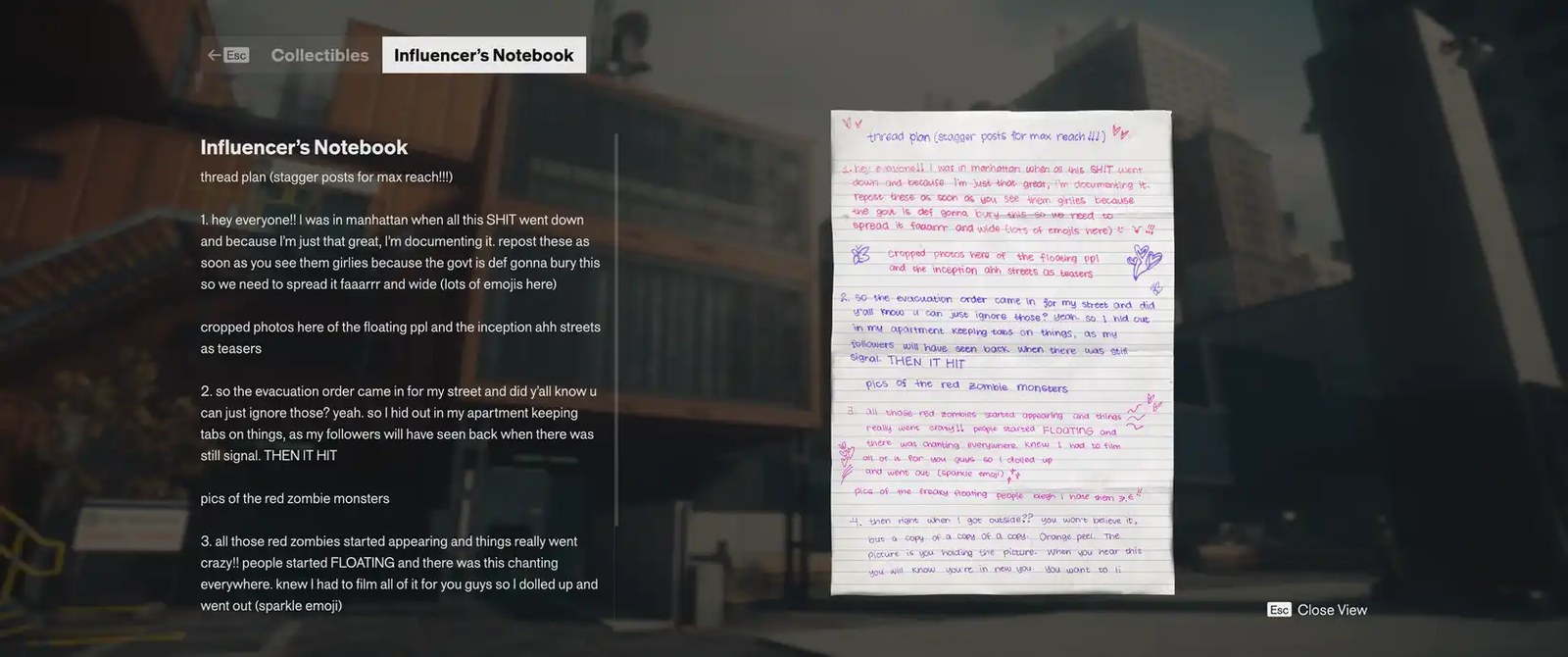
That is not, however, a criticism of Remedy’s writing. The issue is pace. Early in the game, lore logs arrive at a steady, digestible clip. The volume escalates sharply as the story deepens, and the glut becomes overwhelming. In one mid-game mission set within an underground labyrinth, protagonist Dylan Faden encounters a series of FBC test sites spread across a liminal space, each packed with text and audio logs stacked one after another. The reviewer described the experience as relentless: “As soon as I finished reading one, I’d walk two steps and find another.”

“When used sparingly, lore floods can give a world more color and make it feel lived in. But it can just as easily be a momentum killer in action games that repeatedly force you to put down the controller for a minute or two to watch a character stand in place and listen to a tape recorder.”
The Reviewer
The Autoplay Paradox
That poses less of an issue than the audio logs themselves. When a log is picked up, it begins playing automatically, theoretically allowing players to listen and move rather than stopping to read. In practice, however, the logs stop playing if the player triggers story-related audio nearby. In a dialogue-heavy game like Control Resonant, those triggers sit close enough to the logs that a casual step can interrupt playback, leaving players to pause and manually resume the recording. To let a log finish uninterrupted, the reviewer notes, one effectively has to stand still.
Less About the FBC, More About the Heart
Is any of this a deal-breaker? Not really, the critic concedes. All of the lore is optional, and players can engage with it at any point. The concern is that the game leans too heavily on a tell-don’t-show approach that undermines the pacing of a title built around fluid movement and action. The excess also feels less narratively harmonious than it did in the original. Control, largely concerned with the inner workings of a government agency, was set in an office building where loose paperwork naturally suggested the FBC were handling sensitive secrets carelessly. Control Resonant shifts focus toward a more personal story between Jesse and Dylan, and the reviewer argues that the mountain of scattered documents distracts from that emotional core.
The phenomenon is not unique to Remedy. Lore floods have become a fashionable design choice across the industry, appearing in compact titles like Pragmata as well as open-world behemoths. When applied judiciously, they enrich a world; when overused, they stall momentum. The reviewer ultimately champions environmental storytelling over exposition, expressing a fondness for the real Manhattan that the game draws on—a city where the strangest sights linger as unsolved mysteries long after one has walked away.
Looking Ahead
With the immediate release window behind it, attention now turns to whether Remedy will address the pacing concerns through future patches or additional content. The studio has not yet issued a public statement on the criticism, leaving the community to weigh in on whether the lore deluge represents a defining weakness or a signature ambition. For players who, like the reviewer, grew attached to Control’s intricate mythology, the question is whether Resonant’s worldbuilding will be embraced as a hallmark of the series or trimmed to keep the momentum alive.



Join the conversation