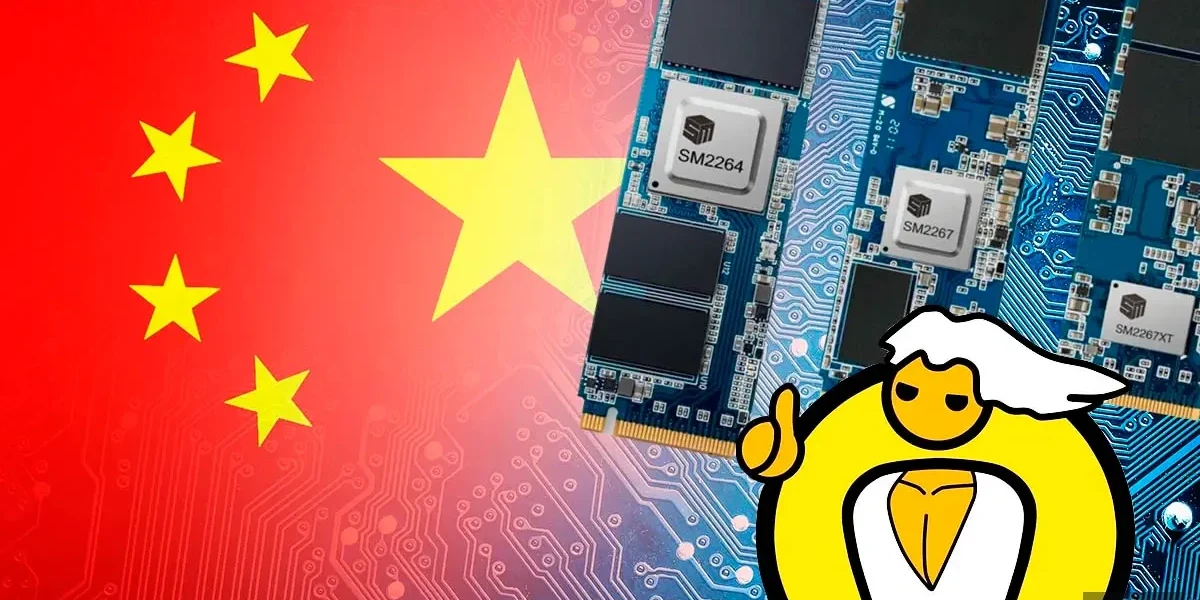
In a development that could bring much‑needed relief to PC aficionados and other tech users—especially those in the Asian nation in question—industry insiders report that Chinese memory and SSD manufacturers are securing a surprising advantage over their U.S. and Taiwanese competitors.
While global giants are laser‑focused on fueling the AI boom and chasing the lucrative margins it promises, Chinese firms are following a clear directive from their government: channel resources toward domestic device makers. This strategic pivot is reshaping the consumer tech landscape, as the three leading memory players shift their attention to data‑center demand, leaving mainstream PC and smartphone manufacturers exposed. The Chinese state is stepping in, compelling local factories to prioritize domestic sales, thereby securing supply chains, stabilizing prices, and safeguarding hundreds of thousands of jobs in its electronics sector.
The shift was highlighted by Nelson Duann, a senior executive at Silicon Motion, a global leader in NAND flash controller design and manufacturing. In an interview, Duann emphasized that Chinese memory producers measure success not merely by profit, but by the positive ripple effects within their own communities. He noted, “China has local NAND and DRAM producers, and its strategy differs from that of foreign memory suppliers.”
He also noted that, because they receive government backing, they carry a duty to sustain the local market’s vitality. This becomes pivotal as everyday tech purchases grow prohibitively expensive for consumers, especially after the three global memory giants chose to prioritize high‑margin sales to AI firms over mainstream PC brands.
As the rest of the globe grapples with shortages and soaring prices, Beijing’s agenda diverges sharply, focusing on more than just cutting‑edge software or cloud services. The official explained that foreign suppliers chase the most lucrative prospects, channeling much of their output to data centers, whereas Chinese vendors are steered by the state to back specific domestic sectors.
Ultimately, titans like CXMT and YMTC employ thousands, but the assembly plants that produce phones and PCs staff hundreds of thousands directly. For officials, keeping that vast workforce employed and earning a steady wage outweighs abstract tech ambitions, because unemployment inflicts a far harsher social blow than a missing AI model.
The newfound supply security has accelerated the tech business landscape, forcing even the most renowned global brands to make unprecedented choices to avoid stock shortages.
Even highly respected and beloved gaming brands such as Corsair and Patriot Memory are now incorporating Chinese‑origin storage components into their flagship products, successfully sidestepping the worldwide shortages that have plagued traditional suppliers.
What began as a policy directive aimed at safeguarding a nation’s domestic economy has evolved into a sweeping reconfiguration of the tech market, where prudence and stability appear to be outpacing the relentless pursuit of AI‑driven profits.
❓ Frequently Asked Questions (FAQ)
How will China’s focus on domestic SSD and memory production affect PC gamers in the region?
By prioritizing domestic sales, Chinese manufacturers are stabilizing supply chains and keeping prices lower for local consumers. PC gamers can expect more consistent availability of memory and storage components, potentially reducing wait times and price spikes that have plagued the market during global supply disruptions.
Will this shift give Chinese memory makers an advantage over U.S. and Taiwanese competitors in the gaming market?
Yes. The state‑driven realignment pushes Chinese firms to concentrate on domestic demand and data‑center needs, allowing them to capture a larger share of the local market. This focus can translate into better pricing, faster delivery, and more tailored solutions for Chinese gamers, while U.S. and Taiwanese rivals may face reduced market share and increased competition.
What impact could this have on the global supply of gaming GPUs and other high‑performance components?
As Chinese memory makers shift resources toward data‑center and domestic device production, mainstream PC and smartphone manufacturers—including those that supply GPUs—might experience supply constraints. This could lead to higher component costs or longer lead times for gaming hardware worldwide, prompting manufacturers to seek alternative suppliers or invest in local production to mitigate the impact.
News Source: Tarreo





Comments
Be the first to comment.