

 •
•Charles Schulz’s decision to end Peanuts caught the world somewhat by surprise. After a period of declining health, Schulz announced on Dec. 14, 1999 that he would retire the beloved comic strip. He could no longer see clearly, had been diagnosed with colon cancer, and needed to focus on his wellbeing.
The result was a relatively sudden stop nine weeks later, once newspapers worked through Schulz’s existing backlog of strips. Schulz passed away in his sleep on Feb. 12, 2000—the day before the final Peanuts strip ran. Over its run spanning roughly 49 years and four months, the strip produced a total of 17,897 installments. Throughout that time Schulz never took a sabbatical or employed assistants.

Because his retirement came so abruptly, the final weeks of Peanuts unfolded as “business as usual.” Fans had speculated for years about what might unfold in the strip’s closing days, given how much of its humor revolved around failure-themed running gags. Would the Great Pumpkin finally appear? Would Charlie Brown finally kick the football? Might the often-mentioned but never-shown red-headed girl make an appearance, or would Charlie Brown guide his team to a winning baseball game?
None of those possibilities materialized. Forced to retire sooner than he had imagined, Schulz gave Peanuts no organized conclusion—it simply stopped. A handful of strips in the final run can be read as carrying subtext on the subject, most prominently Peppermint Patty’s last appearance, but Schulz never had time to set anything up.
In his last televised interview, Schulz recounted drawing the final Peanuts strip to Al Roker and recalled an uncharacteristic wave of regret. “All of a sudden, I thought, ‘You know, that poor, poor kid, he never even got to kick the football!'” Whether he might have done something with that idea had he more time remains unknown.
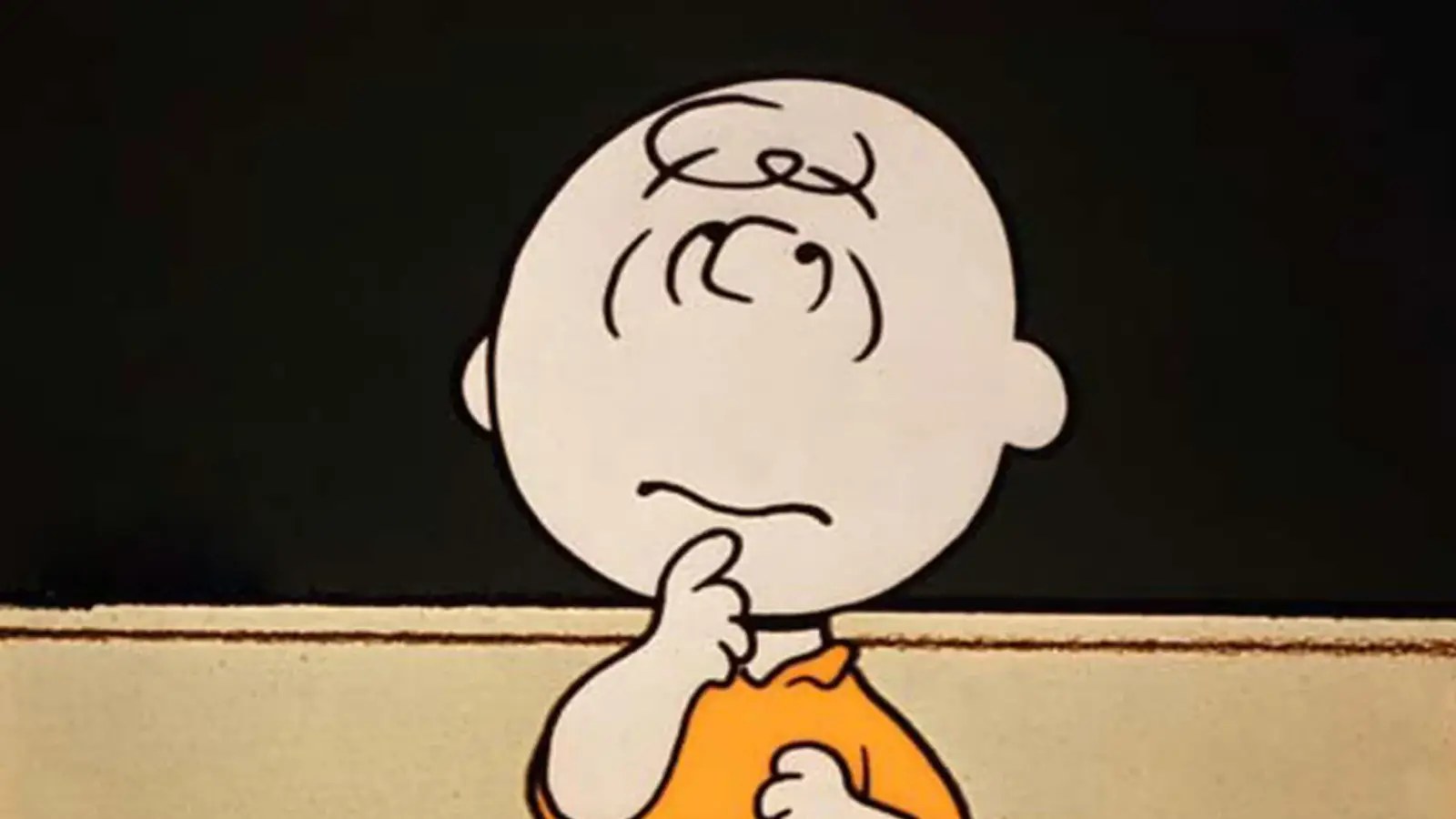
Charlie Brown and Snoopy’s final appearances technically occur in the first two panels of the Feb. 13 strip—a brief introduction to Schulz’s farewell message rather than a substantial scene. In American newspapers, those opening panels are often treated as disposable throwaway gags that a local paper’s layout team can rearrange or drop.
The last full Peanuts strip ran on February 6, 2000, marking the final appearance of Sally Brown and Charlie Brown’s last starring role. As a Valentine’s Day installment, it followed the strip’s usual focus on Charlie Brown wrestling with his lack of romantic success.
In one of Peanuts‘ sadder running gags, Charlie Brown waits once again outside his mailbox to see whether he receives any love letters. Naturally, he does not. This time, however, he scrubs the box clean first. “The inside of a mailbox should always be kept clean in case you get a love letter,” he tells Sally just before a sudden storm drives them both indoors.
Once they are dry, Charlie Brown continues explaining how such things work to Sally, including why he won’t venture back out into the rain. “When it’s raining, the only letters you get are those that say, ‘I never want to see you again!'”
“You seem to know a lot about love letters,” Sally replies.
“If I ever got one,” Charlie Brown says, “I don’t know what I’d do.”
Barring how late in the strip’s run it appeared, this would simply be another self-effacing installment about Charlie Brown’s permanent losing streak. It also leans on one of Peanuts‘ core pillars: the way children sometimes invent their own “rules” on the fly. Here Charlie Brown serves as Love Expert, explaining how everything works despite not actually knowing—he sounds certain nonetheless.
There is an added layer of pathos to this particular strip. Charlie Brown leaves the world much as he entered it—doing his best to stay positive in a setting built around his own misery.























1 comment