


 •
•Castlevania: Belmont’s Curse, the first entry in Konami’s series in over a decade, is a modern reinterpretation that stands on its own while remaining far from a perfect evolution. Developed by indie studios Evil Empire and Motion Twin — those behind roguelike Dead Cells, including its Castlevania-themed DLC — it manages to be something new without relying on what came before.
The game follows Rose Belmont, the next generation of the legendary vampire hunters, who spends her life trying to step out of the shadow of Trevor Belmont. As a review by Rock Paper Shotgun observes, she “will not rely on, or be saved by, what came before” — this is her story, not his’s.

Rose is something new: the next generation of the legendary vampire hunters spending her life trying to step out of Trevor’s shadow, to be seen as the self-reliant woman she is.
Rock Paper Shotgun
The reviewer notes that while it “feels a little like Dead Cells in its movement,” it is not, to clarify online confusion, a roguelike. Instead, it stands as a modern interpretation of a classic series.
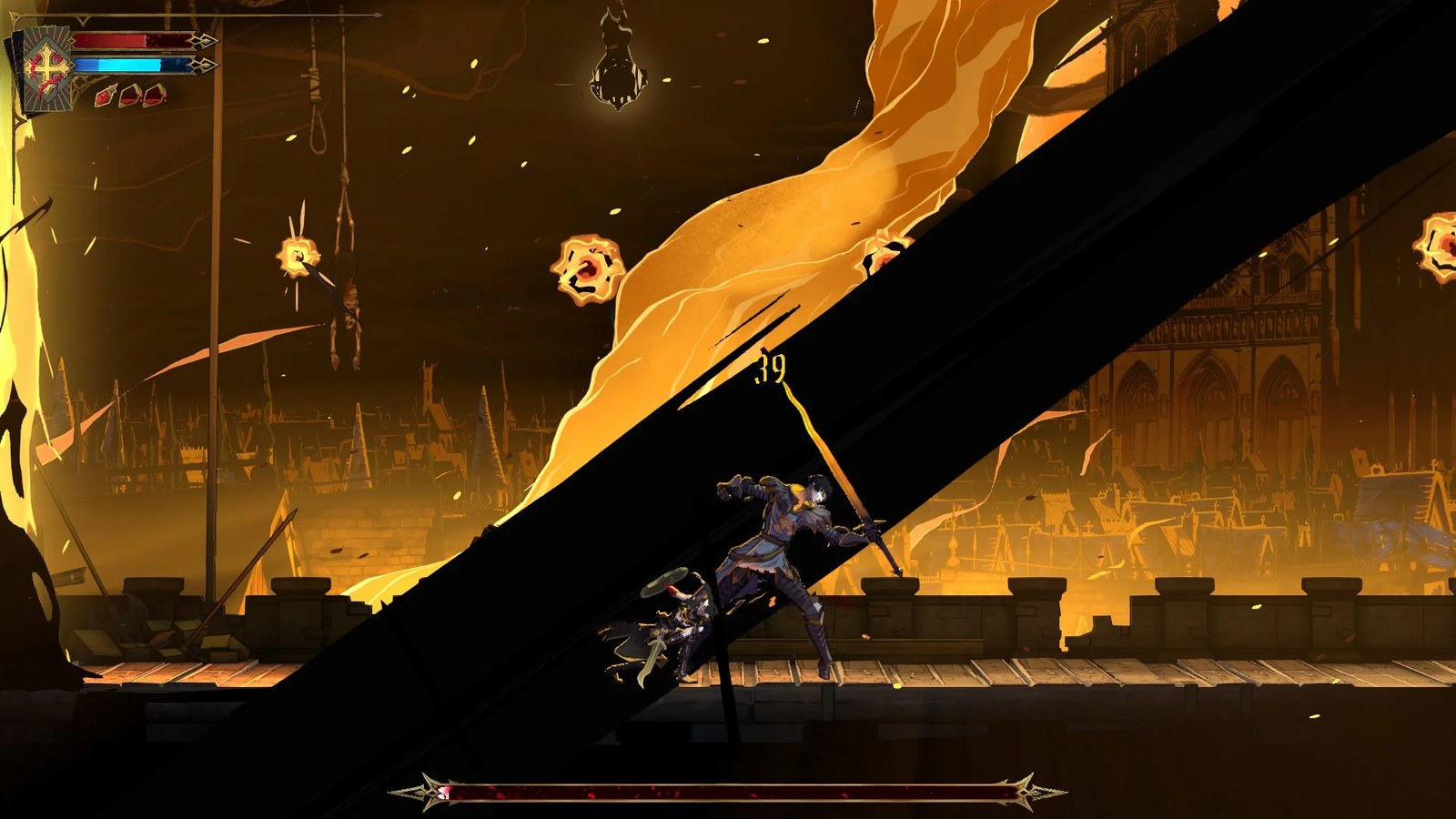
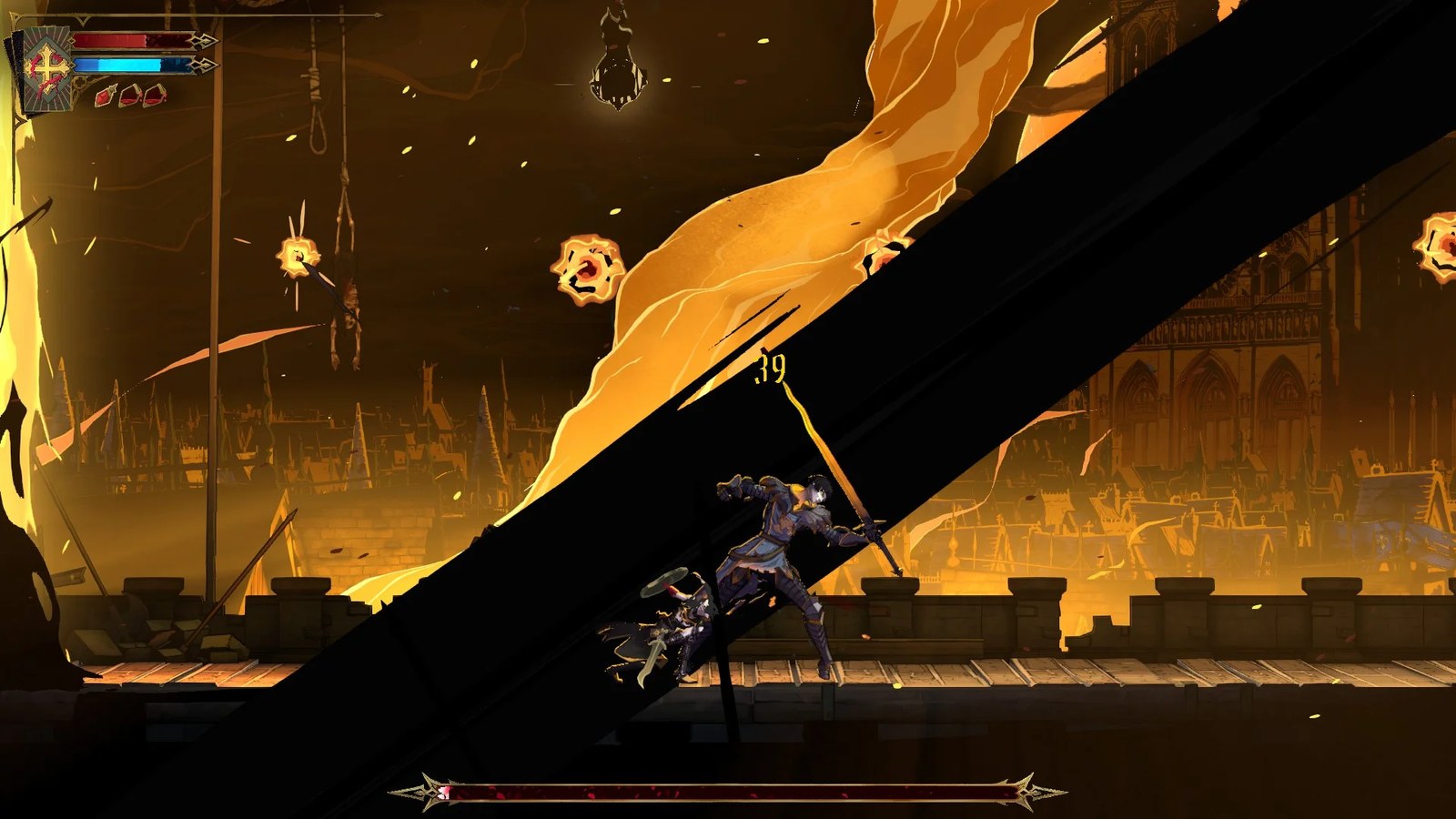
The world earns consistent praise for its ambient beauty — from the crushing atmosphere of Dracula’s castle to the vibrant serenity of the cemetery. The animations are described as “a wonder to look at,” with Rose bearing an incredibly pretty animation set and a backdash that, in the reviewer’s view, rivals Alucard’s own from Symphony of the Night.
Rose’s movement and combat are equally lauded, with the series-staple whip doubling as a grappling hook for both traversal and enemy engagement. The “whip-hook” is called the single best aspect of the game, opening up combat and exploration at once by allowing Rose to fly across and between enemies while dodging projectiles.
Her arsenal extends beyond her base sword and whip-hook to include a lance and metal gauntlets, granting players real choice in how they approach combat. Arcana — cards that function as spells — let Rose equip one at a time for attacks such as the classic holy cross, a grounded shockwave, and a petrifying glare.
The bosses draw from a variety of cultures, ranging from the fictional Medusa to the very real Joan of Arc. Each is described as exceptional, requiring several tries to learn their patterns while rarely feeling truly unfair despite hitting hard. The reviewer adored the choice to keep some bosses in Rose’s head after defeat as a sort of Greek chorus offering commentary, describing their bickering and occasional agreement as where “the writing shines.”
As a Metroidvania entry, defeating bosses and acquiring new abilities forms the core structure — gaining Joan’s holy light to dissipate barriers or Talos’s empowered stomp to shatter blocks. But while combat is stellar in isolation for its call-and-response rhythm, the reviewer feels it creates “an unintended, sour dissonance with the search-action aspect.”
The review notes that not all combat encounters are fair: it is common to die in rooms that lock behind you and flood the screen with enemies at once. Rose’s sole healing comes from a limited number of potions regainable only upon death or finding a save room, which can leave players “doomed to drown.” Save rooms are described as sparse across the map.
The game does not offer traditional difficulty settings but instead lets players modify stats individually — damage taken or dealt, how many potions Rose can carry, and whether she respawns outside boss doors. These are called a nice touch that will help those who struggle with base difficulty design, though the reviewer feels handing control over to players is “something of an admittance that the combat balance wasn’t quite nailed.”
The review also criticises the game’s RPG level-up system as standardised and empty-feeling, noting some weapons are simply worse than others. In all playtime, the reviewer could not find a situation where using the “immensely slow greatsword” was ever preferable to the faster sword or lance.
Attempts to sequence break or go off the implied golden path are met with barriers that essentially tell players they will play it as intended. The review describes one particularly baffling moment — which contains story spoilers — where Rose enters a boss room despite warnings she is not strong enough, only for the game to allow a fakeout phase in which the boss ‘dies’ before switching to a cutscene showing Rose’s death without any button being pressed.
The progression-locked boss that doesn’t reveal it’s locked until after an automatic failure left the reviewer “in utter bewilderment.” The review concludes that Castlevania: Belmont’s Curse is ultimately an action game that “really doesn’t want to be a Metroidvania,” fighting itself each time it leans into non-linearity.
“Where Rose is weighed down by the expectations of proving herself as a Belmont, Castlevania: Belmont’s Curse is weighed down by seemingly needing to prove itself as a Castlevania game in more than name.”























Připojte se k diskusi