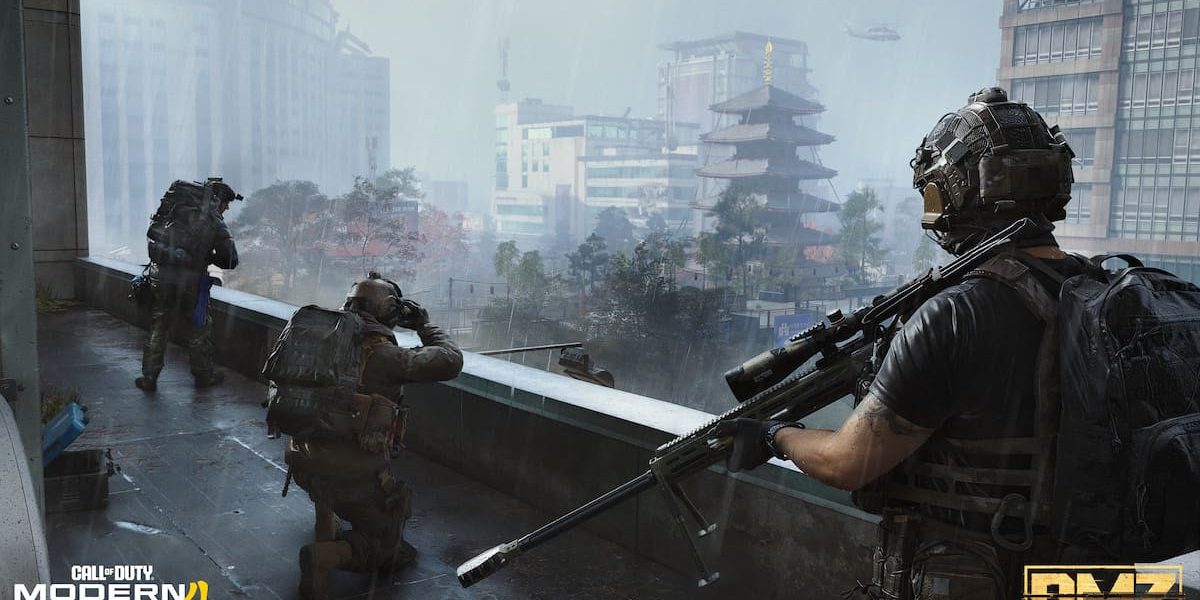
Call of Duty’s DMZ mode has re‑emerged in Modern Warfare 4, marking a significant evolution in the extraction shooter landscape that has unfolded over the past four years.
After the DMZ beta debuted in 2022’s Modern Warfare II, the genre exploded into mainstream popularity. While Escape From Tarkov sparked the trend, titles such as ARC Raiders, Marathon, The Hunt: Showdown, Gray Zone Warfare, and Delta Force have expanded the genre into a robust, competitive arena.
During a recent visit to Infinity Ward, I had the opportunity to preview several of MW4’s multiplayer modes and attend a presentation on the revamped DMZ. Though the newest version wasn’t playable, conversations with developers revealed a promising direction that feels truly exciting.
Unlike the experimental nature of MW2’s DMZ, the latest iteration is being positioned as a fully integrated extraction experience within MW4—potentially as intricate and engaging as the Black Ops series’ iconic Zombies mode.
Immerse yourself in a narrative-driven saga set within a dynamic sandbox, replete with escalating AI threats, perilous losses, intricate environmental puzzles, and raid-like operations – all at the core of Modern Warfare 4’s (MW4) new mode, DMZ. The progression system remains central to this exhilarating experience.
The battleground for MW4’s DMZ is a map named Hajin, an exclusion zone birthed from the aftermath of the game’s main campaign. This war-ravaged, radiation-polluted landscape serves as both a battlefield and an active warzone, teeming with AI adversaries, rival players, overhead air traffic, and vehicle convoys traversing the terrain. Intriguingly, Infinity Ward reveals that Hajin encompasses regions from not only North and South Korea but also Russia.
Stealth plays a significant role in DMZ, as it allows you to engage with enemy players without immediate combat. If you prefer to avoid confrontation or wish to reposition, you can opt for stealth tactics, such as going prone or seeking cover. This new mechanic provides an opportunity to evade detection, much like Solid Snake, thereby helping maintain your star rating.
In contrast to previous iterations, being spotted by AI no longer triggers an immediate onslaught. Instead, you can choose to disengage by assuming a prone position or finding cover, potentially evading detection and preserving your star rating.
As you eliminate enemies and complete quests, your star rating escalates, making encounters with tougher adversaries and other players increasingly challenging.
Infinity Ward has revealed an array of formidable enemies that players will encounter as their star rating increases in the upcoming Multiplayer mode, Warzone 2.0’s DMZ. These adversaries range from common grunts to perilous lieutenants, menacing roaming command units such as heavy tanks, agile helicopters, drone swarms, and imposing seven-foot-tall juggernauts. Each of these enemies presents a unique challenge, escalating the intensity of conflicts.
Moreover, DMZ introduces a dynamic weather system for each match, adding an element of unpredictability. Players may find themselves spawning into rain, fog, or sunny conditions, with the likelihood of severe weather increasing as matches progress. This could potentially force players to extract or risk losing all their hard-earned gear and high-level operators. The ever-changing weather conditions serve to heighten the tension and immerse players deeper into the gameplay experience.
It’s worth noting that death in DMZ is not a permanent setback. A new M.I.A. system has been implemented, allowing players to rescue lost operators. However, the higher the operator’s level, the more expensive the rescue operation becomes, utilizing in-game currency. This system adds an additional layer of strategy and resource management for players seeking to reclaim their favorite characters.
Lastly, DMZ offers a rank system, Traits, and forward operating bases (FOBs). Players can unlock and progress more features at their FOB, such as a 3D printer for crafting items and gear. These additions further enrich the extraction shooter experience in Warzone 2.0.
The core mechanics of DMZ’s base of operations mirror those found in titles like ARC Raiders, offering a familiar hub where players can restock supplies, purchase new equipment, and manage their resources. The forward operating base (FOB) features a tiered upgrade system, complete with vendors and a gunsmith, that evolves as you climb levels—transforming the once rudimentary extraction gameplay of MW2 into a richer, progression‑driven experience.
Looting in DMZ is intentionally streamlined. Players can easily locate essential items such as enhanced armor carriers, upgraded weapons, backpacks, and killstreaks. In addition, scattered caches and containers across the map provide raw materials and crafting components, all of which funnel into a central stash. This allows you to maintain a unified progression pool and strategically allocate gear to specific operators once you’ve crafted or looted them.
The Traits system introduces a layer of depth by granting operators unique skill trees that boost survivability. Each operator functions as an individual character, similar to the original DMZ, enabling you to tailor them to distinct playstyles. However, should you lose an operator in combat, you forfeit their accumulated experience and progress unless you can repurchase them through the M.I.A. system.
For those inclined to unleash chaos across Hajin, DMZ now incorporates a PvP bounty mechanic. The more enemy players you eliminate, the higher your bounty climbs. Opponents can then target you, extract with your “Wanted” dog tags, and reap substantial rewards for doing so.
News Source: Destructoid

Comments
Be the first to comment.