

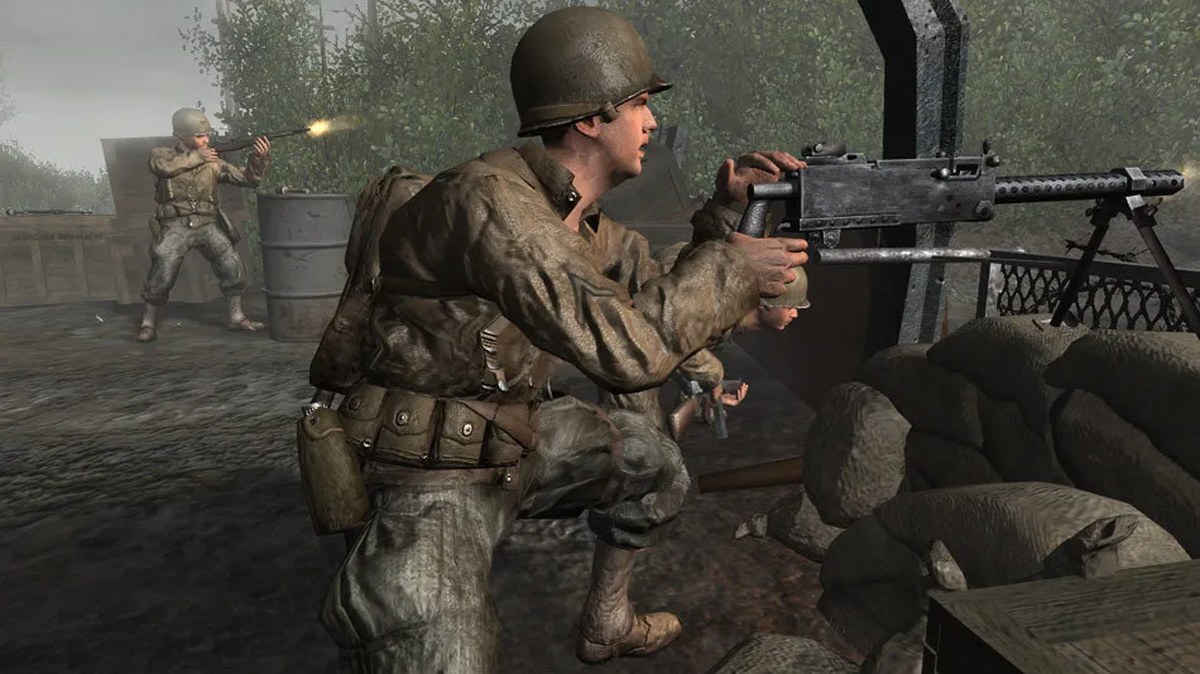
As Microsoft prepares to celebrate Xbox’s 25th anniversary, veteran gaming journalist Ryan McCaffrey has reflected on how Call of Duty 2 reshaped the landscape of console shooters during a pivotal moment in gaming history. The game, which launched as one of the day-one titles for the Xbox 360 in late 2005, arrived at exactly the right time to challenge Halo’s dominance and signal what would eventually become the end of the Master Chief’s reign over multiplayer console combat.
McCaffrey, who spent a decade writing for Official Xbox Magazine from 2002 to 2012 before joining IGN as “the Xbox guy,” recalls that Call of Duty was not always the gaming behemoth it is today. The original game released exclusively on PC in 2003 and earned solid praise as an excellent World War II military first-person shooter, but its sequel carried far greater weight given its placement among the new console’s launch lineup.
A Launch Title That Grew On Journalists
In the lead-up to the Xbox 360’s release, McCaffrey and his colleagues at Official Xbox Magazine felt excitement about Call of Duty 2, though it was not necessarily the most anticipated title in a lineup that already included strong contenders like Project Gotham Racing 3 and Conemned: Criminal Origins. In hindsight, nothing truly matched up to the killer-app status that Halo: Combat Evolved enjoyed with the original Xbox’s debut.
That cautious anticipation shifted dramatically during a summer 2005 visit to Infinity Ward while researching a cover story on the studio. As McCaffrey was shown an early campaign mission, one technical element immediately captured his attention.
The volumetric smoke effects jumped out at me right away. With the increased horsepower of the Xbox 360, smoke grenades mattered more than ever during gameplay, as tossing them to obscure the enemy’s vision while you darted across the path was integrated directly into the mission design.
Ryan McCaffrey, IGN
The way the game wove these new capabilities into the action, combined with excellent surround-sound audio work that leveraged the console’s full 5.1 capability, pushed McCaffrey to look forward to Call of Duty 2 more than any other title in a substantial launch lineup.
A Tight-Lipped Review Process
By fall 2005, with the new Xbox imminent, magazines faced their usual production realities. Because print publications are made well in advance to allow time for printing and shipping to hundreds of thousands of subscribers, reviewers typically received review builds roughly two months before launch. During that era, submission builds sent to certification were usually near-final, as the age of day-one patches had not yet arrived.
Call of Duty 2 broke from that pattern, however. With security kept tight around both the new console and the game itself, McCaffrey traveled to Infinity Ward in southern California to spend several days playing the finished product on hardware directly.

He began with the campaign before moving into multiplayer against QA testers and the development team who held a distinct advantage having played dozens or even hundreds of hours. The result confirmed his growing enthusiasm, as the Xbox 360 campaign delivered significantly more action, drama, and tension than its PC predecessor at a time when multiplayer had not yet become the primary reason players purchased each new release.
The Beginning of the End
While the campaign impressed, McCaffrey notes that multiplayer was equally compelling. It offered multiple game modes, fast target-kill times by today’s standards, striking graphics, and arrived during an era before Party Chat when players relied on the bundled Chat Headset to communicate with teammates.
Looking back, he views Call of Duty 2 as marking the beginning of the end of Halo’s reign as king of console shooters. Halo 2 remained heavily played after the Xbox 360 launched, and both Halo: Combat Evolved and Halo 2 became the first backward-compatible titles for the new console, with that compatibility baked directly into the hardware out of the box.
Halo 3 would enjoy its own moment two years later, but McCaffrey observes it came right before Infinity Ward’s next project, Call of Duty 4: Modern Warfare, took the crown from Halo permanently. He describes Call of Duty 2 as simply the right game at the right time for Xbox 360, demonstrating what the new console could accomplish while standing as a stellar title regardless of platform.
Looking Ahead
Maffrey acknowledges that the game probably would not hold up by today’s standards, but he insists it represented a genuinely remarkable moment in Xbox history for those who experienced it firsthand. His reflections form part of an ongoing series marking the platform’s first quarter-century, drawing on memories from its most influential eras.
Maffrey currently serves as IGN’s executive editor of previews and hosts the publication’s weekly Xbox show while co-hosting additional coverage of console developments. Through these anniversary features, he continues to share insights into the titles that shaped the platform’s legacy for both longtime fans and newer readers who may not remember a time when Call of Duty was not one of the biggest franchises in all of gaming.























1 comment