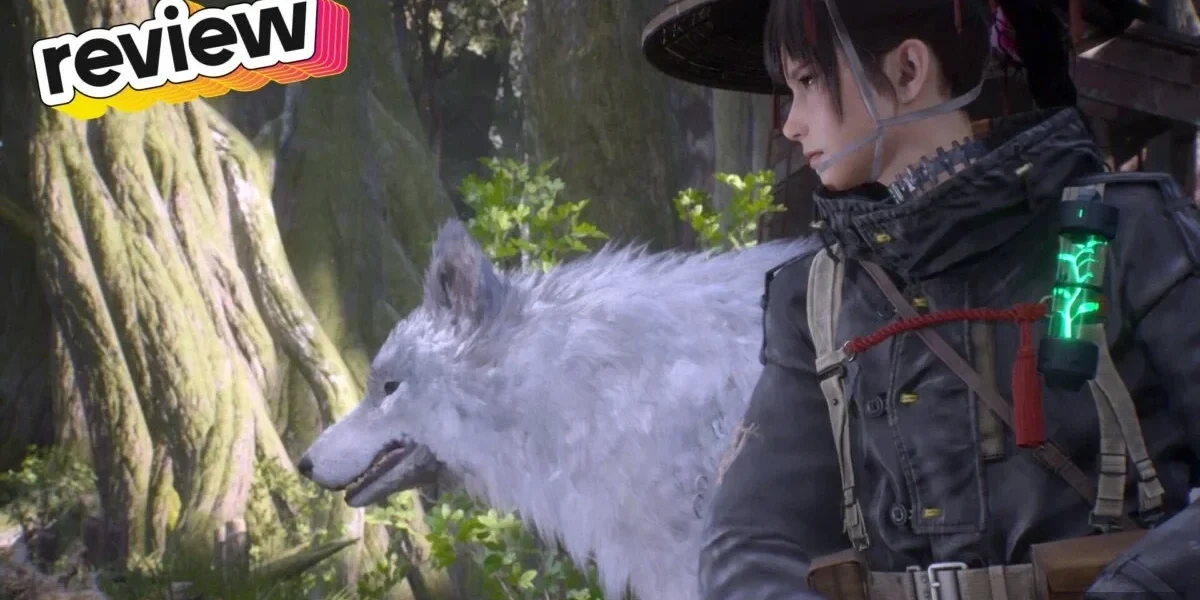
Beast of Reincarnation stands as a testament to a title that sets lofty ambitions and delivers solid concepts, yet it struggles to keep players fully engaged from start to finish. Game Freak, best known for the Pokémon franchise, has never tackled a project of this scale before. With the help of external studios, the company has crafted a competent Souls‑style experience that injects fresh originality into a genre that has become oversaturated over the past decade, while offering a less intimidating, more approachable difficulty curve than many of its peers. Though the game remains brutally hard, its harsh, post‑apocalyptic setting equips players with tools that adapt to diverse playstyles. Nonetheless, at a certain point, Game Freak’s whimsical, nature‑centric vision of a Souls‑like seems to run out of fresh ideas even as the journey continues.
Souls‑like games are defined by foes that strike with force, require precise timing, and can overwhelm if you misstep. Beast of Reincarnation delivers this in abundance, placing you against both blighted wildlife and decaying remnants of human tech, sometimes simultaneously. Emma, a young woman raised in isolation by one of the few surviving human colonies in 4026 Japan, is among the few who can absorb the blight that has overtaken animals and decimated humanity. Consequently, locals use her as a weapon against colossal, plant‑like monsters called malefacts, while simultaneously shunning her for her “blight‑stained” nature.
The surviving fauna in Beast of Reincarnation, like Emma, are cloaked in overgrowth that has eradicated most other life on Earth. Though only a handful of enemy types exist, Game Freak’s long history in creature design shines through as it seamlessly blends plant life with animal skeletons. The gigantic beings roaming the ruined Japanese cities are so overgrown that they appear to have emerged from the thick vegetation that envelops buildings, as if they had been trapped inside for centuries awaiting reemergence. The blight‑adapted animals vary in form and pose unique challenges—birds that peck and claw from above, massive bears that charge with ferocity. Add a few deranged robots from humanity’s last desperate attempts at self‑preservation, and you have a diverse roster that forces even seasoned players to exercise caution when traversing the world.
Even the weakest foes in Beast of Reincarnation can overwhelm you if you’re cornered for a split second. Initially, the optimal response to any enemy is a timed parry, whose window is shorter than you might expect. Emma’s sidestep dodge barely evades danger until you progress far enough in the skill tree to acquire a true dodge roll that actually relocates her safely. This enforced reliance on parrying serves as a valuable lesson, because dodge rolls alone won’t grant you the upper hand against the game’s formidable bosses. Only those who have mastered the parry system can truly defeat them. The satisfying “clank” of Emma’s sword as she deflects a giant horse‑like monster or a fowl’s attack is endlessly rewarding.
The formidable enemies in Beast of Reincarnation compel players to approach combat with caution, making the moments when you finally achieve a rhythmic flow with an adversary all the more gratifying.
Emma’s unique power to siphon blight from her foes lets her grow stronger with every boss vanquished. Each time she defeats a formidable malefact, the enemy’s essence is absorbed and added to her own arsenal, turning once‑hidden attacks into permanent additions on her skill tree. By the time the campaign concludes, the sheer range of abilities at Emma’s disposal is staggering, and many players find themselves relying on a handful of muscle‑memory combos rather than attempting to unleash the full spectrum of boss‑derived powers in late‑game battles.
One of the most compelling aspects of Beast of Reincarnation is its traversal system, which harnesses Emma’s blight‑laden braid to elevate her above the battlefield. Pressing the jump button lifts her several feet into the air, allowing her to bypass swarms of enemies and reach higher platforms with ease. From this aerial position she can extend a bridge of roots across gaps or descend upon foes for a stealthy strike. This mechanic transforms a traditionally daunting genre into a more approachable experience, granting players the freedom to navigate the world on their own terms and set up combat encounters strategically.
Despite its strengths, the title does suffer from occasional control quirks. Spamming the up button on the d‑pad to deploy a healing item sometimes fails, and attempting to slow time with L3 and R3 to unleash a flurry of strikes can be unresponsive. In a game where split‑second timing can decide the outcome of a fight, such inconsistencies can be frustrating, especially when they appear sporadically after long stretches of flawless gameplay.
Had Emma been the sole combatant, these glitches could have been catastrophic, particularly in later chapters where enemy numbers swell. Fortunately, she is not alone. Her blighted wolf companion, Koo, provides a vital counterbalance, ensuring that the game’s challenge remains manageable without handing players an unfair advantage during the most chaotic skirmishes.
Koo, like Emma, absorbs blight and grows more powerful with each boss defeated. While he operates autonomously and can hold his own in battle, players can also issue commands to activate his abilities, which synergize with the game’s elemental themes and status effects. This dynamic allows for tactical depth, as players can pause to strategize, giving them a moment to regroup before reengaging.
When Koo’s abilities are called upon, they can decisively tilt the balance in the player’s favor. The act of pulling up the command menu also slows time, providing a brief respite to assess the battlefield and plan the next move. Though it won’t save a player from a relentless onslaught, the ability to summon Koo for a tactical pause is a welcome feature that adds strategic layers to the combat system.
In Beast of Reincarnation, the bond between Emma and Koo serves as a central pillar, yet it pales in comparison to the fragile, almost absurd connections Emma shares with the other human survivors. The ensemble of wanderers battling the malefacts is largely composed of recluses, each struggling to communicate. Emma has spent her entire life cut off from society due to her blight‑stained condition; Kagura, the crew’s young cook, has lived in servitude for most of her days; and Brad, the gruff elder who pilots their walking vehicle, has deliberately shunned people for years, now left to look after two girls and their massive wolf companion.
The game presents a stoic, almost emotionless journey, with performances that mirror its subdued tone. Yet the subtle exchanges between Emma, Kagura, and Brad carry their own weight. Emma, devoid of human emotions and intuition, responds to Kagura’s simple questions with cold, analytical observations, describing a new ally purely in terms of hair length and combat prowess, offering no insight or empathy.
These attempts at mundane conversation, hampered by a lack of vocabulary and understanding, underscore the gradual erosion of humanity within the game’s world. Far from the decaying architecture or ancient robots, it is the characters’ loss of basic decorum, hope, and the ability to envision a future that is most striking. Their childlike perception of the world, coupled with Brad’s pityful gaze and withheld knowledge, highlights how much of human culture has vanished over millennia.
Emma’s limited life experience compels her to seek guidance from Brad and Kagura, hoping to grasp what drives a person to aspire beyond being merely a weapon.
Set in a post‑apocalyptic landscape, Beast of Reincarnation blends Souls‑like combat with skillful swordplay and the strategic use of an animal companion, delivering a unique and challenging experience.
The game delivers unforgettable boss battles, showcases some of the genre’s most fluid mobility mechanics, and weaves a compelling blend of existential and science‑futuristic storytelling.
However, the title tends to recycle its boss encounters, the controls can feel twitchy at times, and overall performance remains uneven.
These solid building blocks could have made Beast of Reincarnation a standout entry in the Souls‑like canon. Unfortunately, the game overstays its welcome. Despite its robust foundation, it runs out of fresh ideas and stretches itself too thin. Midway through, I was ready to tackle new, demanding bosses, only to find a slightly tougher version of a fight I’d already conquered. A chapter later, another familiar boss appeared, employing the same tactics and attacks, allowing my muscle memory to carry me through. Returning to the mobile base, Emma, Koo, and Kagura revisit identical themes, ask the same questions, and wonder if they’ll discover new answers. The game clocks in at roughly 24 hours on a first playthrough, and while I wasn’t physically drained by the end, the realization that the game was padding its length with repeated encounters dampened my momentum. This sense of relying on old tricks to artificially extend gameplay stemmed not only from duplicated boss fights but also from chapter bookends that featured nearly identical conversations among the cast. Beast of Reincarnation could have been more concise, tighter, and its most striking moments more resonant, yet it instead rehashes familiar tropes and questions.
It’s also important to note that Game Freak, the studio behind the title, has admitted to outsourcing much of the development while maintaining a primarily directorial role. The company’s track record of technical hiccups on recent releases such as Pokémon Scarlet and Violet may raise concerns among players. I tested Beast of Reincarnation on a PS5, and while the endgame saw noticeable frame‑rate dips as enemy numbers swelled, the performance mode kept the experience largely smooth. I’ve also heard from PC and Xbox players who reported significant issues on those platforms. Although I haven’t personally played those versions, I feel it’s essential to mention these reports. Overall, my experience on PS5 featured minimal performance problems, and the occasional late‑game lag did not detract from the majority of my playtime.
❓ Frequently Asked Questions (FAQ)
What makes Beast of Reincarnation stand out in the Souls‑like genre?
Beast of Reincarnation blends Game Freak's renowned creature‑design expertise with a less intimidating, more approachable difficulty curve, offering fresh originality in a genre that has become oversaturated. Its post‑apocalyptic setting and adaptive tools give players diverse playstyles while still delivering the brutal challenge expected of a Souls‑like.
How does the game handle difficulty compared to other Souls‑like titles?
While Beast of Reincarnation remains brutally hard, it softens the learning curve by providing tools that adapt to different playstyles and a less intimidating progression. This makes the game more accessible than many peers, yet it still demands precise timing and strategic combat.
Why might the game feel repetitive after a certain point?
The whimsical, nature‑centric vision that defines the game starts to run out of fresh ideas as the journey continues, leading to repetitive encounters and a sense of stagnation despite the initial originality and solid concepts.
News Source: Kotaku






Comments
Be the first to comment.