

Kane Parsons’ liminal-space horror Backrooms has officially arrived on HBO Max, debuting today, September 25, as the streaming platform’s most ambitious home-viewing release of 2026. The film, which stars Chiwetel Ejiofor as a struggling furniture-store owner who stumbles into an infinite, fluorescent-lit maze beneath his shop, transforms the internet’s most viral horror meme into a box-office-shattering theatrical event. Born from a solitary 2019 4chan post about “noclipping” out of reality, the project scales the eerie familiarity of empty office architecture into pure existential dread, and Parsons has now expanded that web-native mythology into a full cinematic narrative.
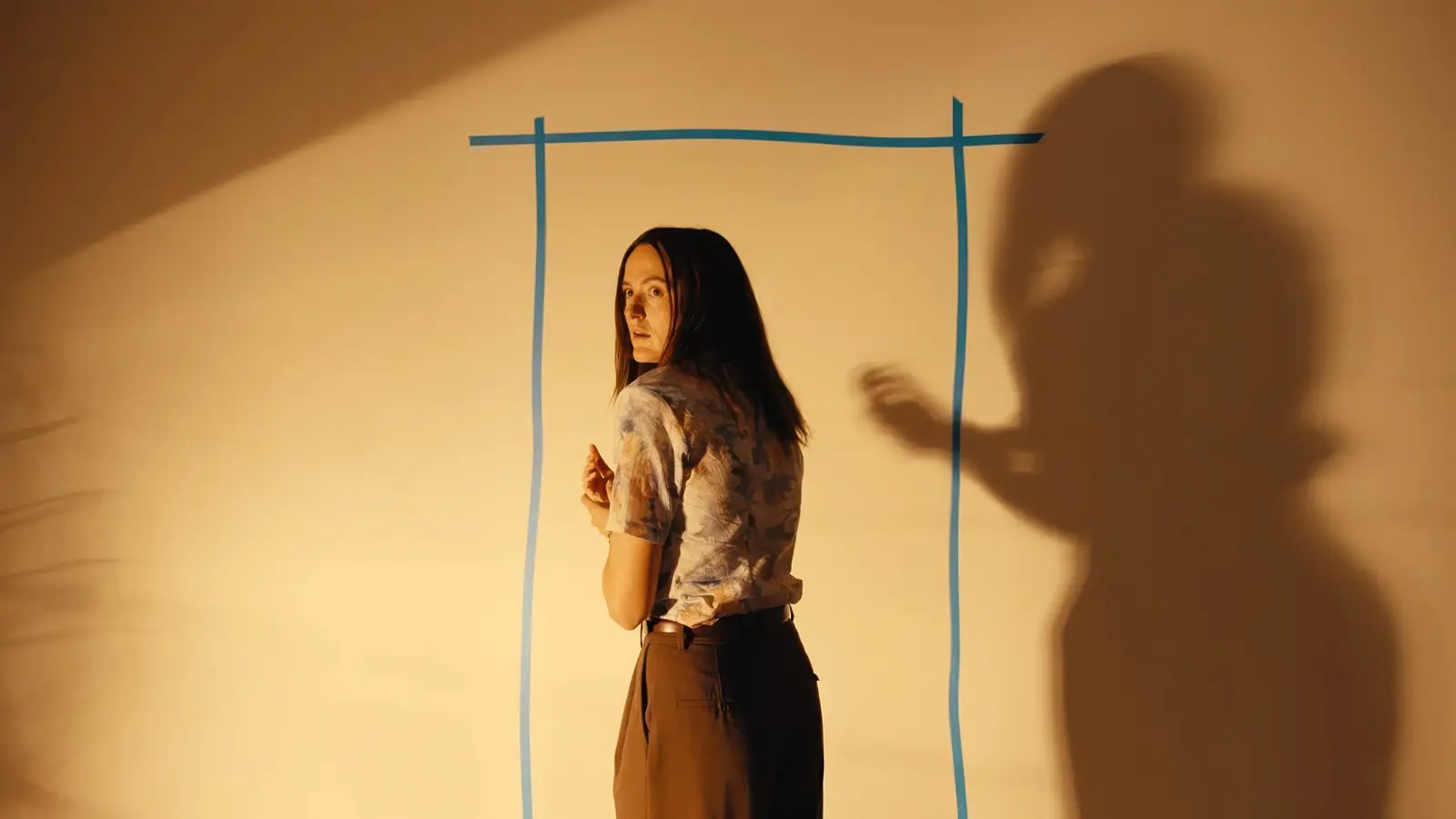
Chiwetel Ejiofor anchors the story as Clark, a man whose life has not gone quite the way he expected. During an exploration of the basement beneath his store, Clark discovers a strange crack in the wall that leads into a seemingly infinite maze of interconnected spaces. At first, the discovery feels almost like an impossible gift. Clark begins documenting and mapping the space, stealing some of the furniture within while attempting to understand the strange world he stumbled into. But the deeper Clark goes, the clearer it becomes that the Backrooms are not simply an architectural curiosity.
From a 4chan Post to a Cinematic Universe
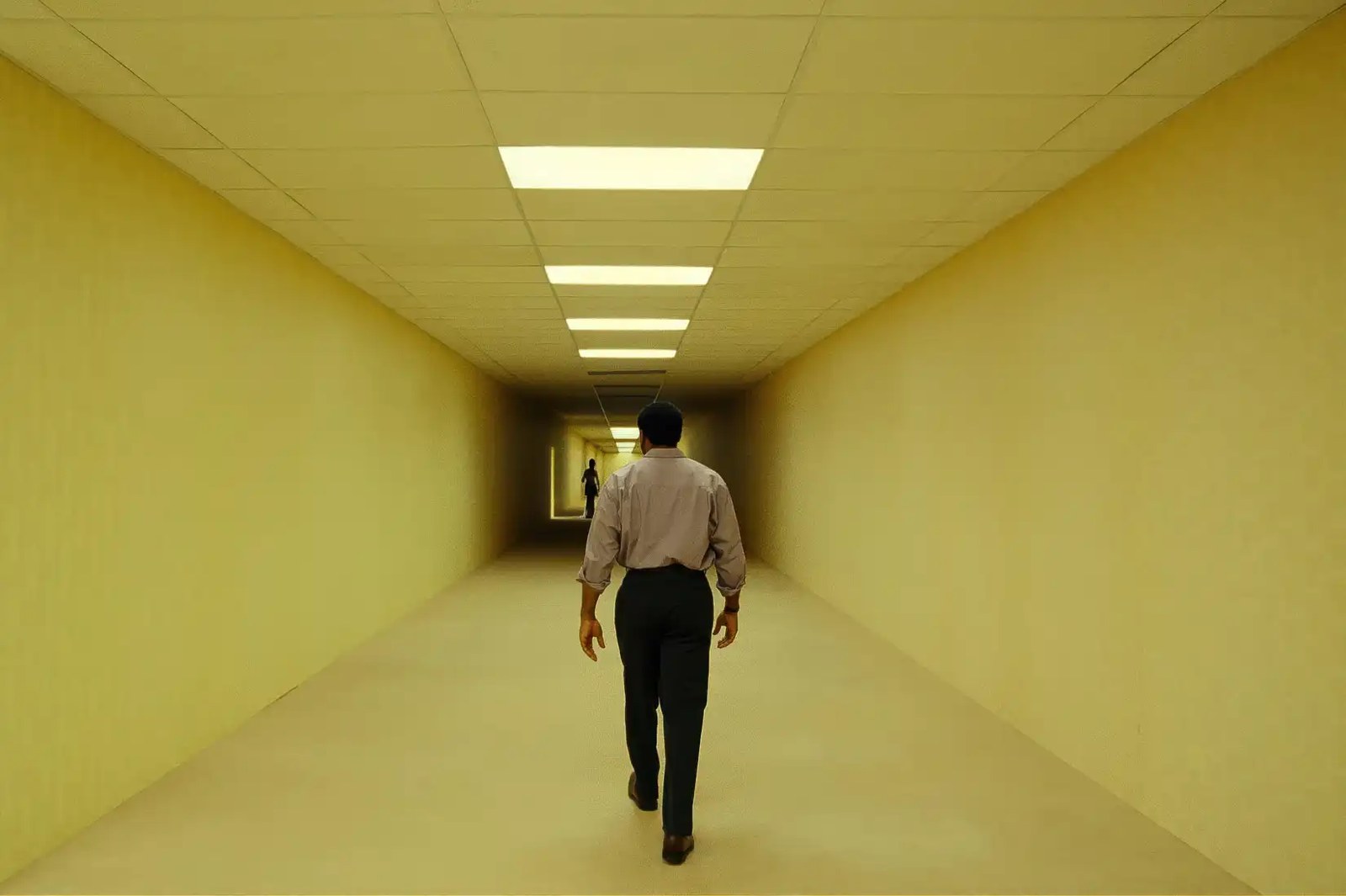
Based on Parsons’ viral Kane Pixels web series — which itself was born from a solitary 2019 4chan post about “noclipping” out of reality — the film takes the strange appeal of liminal spaces and expands it into an ambitious thriller. The original internet mythos was little more than a static image of a windowless yellow room, but Parsons’ YouTube shorts breathed terrifying life into it. He engineered a sprawling analog-horror universe, utilizing degraded VHS textures, faux-documentary framing, and a shadowy 1990s research initiative to document expeditions into an infinite, non-Euclidean labyrinth. Parsons’ original videos were already remarkably good at turning empty rooms, flickering fluorescent lights, and ugly office carpeting into sources of existential dread.
“The Backrooms are frightening precisely because they are so ordinary. We recognized the cheap synthetic carpet, the faded wallpaper, and the sickening yellow tint of the fluorescent bulbs — but their purposeless arrangement creates a profound uncanny valley, and that’s where the terror lives.”
Kane Parsons, director
The feature film takes that same lo-fi terror and scales it into a massive cinematic narrative, building an entire mythology around that feeling while advancing the story Parsons had already begun telling online. More importantly, the film understands that the Backrooms are frightening precisely because they are so ordinary. As Clark documents his expeditions deeper into that maze, Parsons occasionally returns to the degraded VHS textures that made his original YouTube uploads so hypnotic. There aren’t many of these sequences in the movie, but they’re remarkably effective at imbuing the film with an unsettling found-footage quality that made the original Backrooms videos so memorable.
A Renaissance Year for Horror
Backrooms arrives as the undisputed crown jewel of an unusually stacked 2026, a year in which horror filmmaking has fired on all cylinders. Earlier in the year, Curry Barker dissected modern intimacy through the nightmare lens of Obsession, while Damian McCarthy built a masterclass in spatial dread and folklore with Hokum. Nia DaCosta expanded Alex Garland’s post-apocalyptic mythos with a riveting second entry to 28 Years Later, and Zach Cregger turned raw survival panic into a cinematic art form with Resident Evil. Yet none of those entries have topped the liminal nightmare of the Backrooms, which has already proven itself the essential home-viewing release of the season for horror aficionados.
Looking Ahead
Beyond its masterclass in spatial dread, Backrooms succeeds because it treats its web-native origins not as a novelty to be flattened, but as a foundational mythology to be expanded. Parsons’ original YouTube project captured the internet’s imagination by melding found-footage aesthetics with a sprawling pseudo-history that involved a web of corporate bureaucracy, hidden scientific experiments, and anomalous incidents around the world. The feature film functions less like a streamlined reboot and more like a high-budget chapter in that ongoing lore. It rewards long-time followers with subtle archival callbacks while giving newcomers a grounded, human anchor through Clark’s journey. Rather than neatly wrapping up the anomaly or over-explaining the geometry of the void, Parsons leaves enough terrifying blank spaces on the map to keep the conspiracy alive, signaling that this theatrical release is merely the cornerstone of a much larger narrative. Backrooms is streaming on HBO Max.



No comments