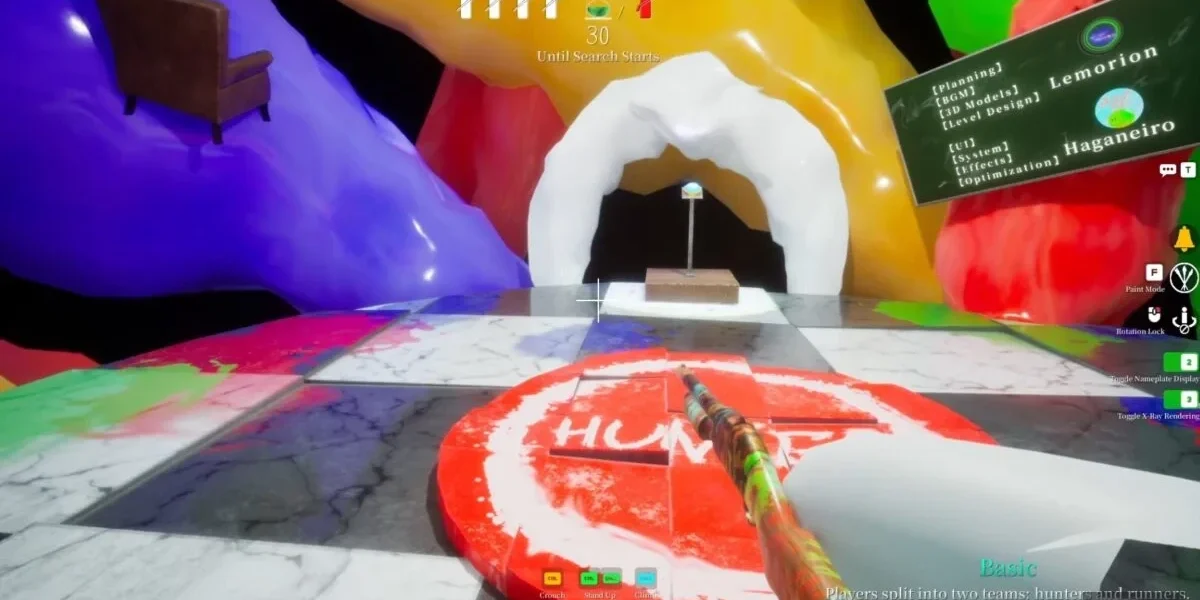
Meccha Chameleon, a game that borrows the hide‑and‑seek mechanics of Garry’s Mod’s Prop Hunt, lets players disguise themselves as ordinary objects using simple, MS Paint‑style tools. The title exploded upon release, selling 15 million copies in its first month and peaking at over 340,000 concurrent players—though that number has since settled around 100,000. Despite the dip, it remains one of Steam’s most popular titles.
However, the game’s meteoric rise has also become a double‑edged sword. Almost immediately, a wave of near‑identical clones appeared on platforms like Roblox and Fortnite, where user‑generated content thrives. According to Reddit user RoWatcher, the combined concurrent player counts of these imitators now eclipse Meccha Chameleon’s current figures. Titles such as Paint and Seek!, Paint or Seek, Paint to Hide, Paint or Die, and dozens more have each attracted tens of thousands of players, with some boasting over 50,000 concurrent users.
Among the current favorites, the clone titled [BACKROOMS] Chameleon! tops the charts with nearly 50,000 concurrent players, followed by Paint Or Seek at 37,000. Other replicas hover around one to two thousand concurrent users.
Pricing also plays a pivotal role: Meccha Chameleon retails for $6, whereas its free counterparts sit on a platform that millions of users access daily—particularly children who may never discover the original. These clones monetize through in‑game purchases such as coins that unlock essential tools like an eyedropper for color matching, providing a steady revenue stream for the developers behind the copycats.
Roblox’s policy on derivative titles remains murky, yet the platform thrives on a culture of inspiration—games that echo Steam or console experiences, and even those that mirror each other. The ecosystem benefits from this trend, and Kotaku has reached out to Roblox for clarification.
While Roblox already hosts a plethora of clones, a noticeable surge of “friendslop” titles is emerging. Games such as R.E.P.O, Peak, Lethal Company, and Among Us have spawned less polished counterparts on the platform. This month, a second Steam sensation, Clean the Library, has climbed the Roblox charts, drawing from the Steam hit Librarian: Tidy Up the Arcane Library. The Steam original now boasts just over 7,000 active players, whereas the Roblox adaptation attracts 26,000. Clean the Library has peaked at 83,591 concurrent players and accumulated 70 million visits. Librarian: Tidy Up the Arcane Library sold a million copies, as announced by developer ArtRising in June. Though other clones exist, Clean the Library remains the most prominent.
The game’s core concept is straightforward, making it an ideal fit for Roblox. Players must tidy a library littered with books, satisfying the same urge that games like Powerwash Simulator tap into. The satisfaction of arranging items methodically is amplified when you collaborate with friends in the Roblox rendition, which mirrors the original’s aesthetic. And, being free on a platform already popular with children, it offers an accessible entry point.
Joseph Drennan, a Roblox developer from Retro Shrimp who co‑created Clean the Library, told Kotaku that the team drew inspiration from Librarian: Tidy Up the Arcane Library—information also displayed on the Roblox page. He expressed reluctance to label Clean the Library as more successful than its source. “I’m grateful for the inspiration, but at this point I think the games have gone in different directions and offer different experiences,” Drennan said. “I’m just happy people have enjoyed what our team at Retro Shrimp has created.”
While Clean the Library introduces multiplayer elements, its core design and gameplay mechanics closely echo those of the popular title Librarian: Tidy Up the Arcane Library.
According to developer Drennan, the game’s triumph stems from its free‑to‑play model and social focus. “Many players use it as a mental breather, a casual companion during conversations with friends,” he explained. “It’s essentially a phone call with a lighthearted backdrop, and that blend has struck a chord with the community.”
In line with titles such as Paint and Seek, Clean the Library offers optional in‑game purchases—speed‑boosting upgrades that accelerate the cleaning process.
Clean the Library’s popularity has sparked a wave of derivative titles, ranging from supermarket aisles to toy stores, museums, bakeries, and even a shop dedicated to dumpling squishies. While the game and several Meccha Chameleon clones openly acknowledge their inspirations on their Roblox pages, the line between homage and imitation remains blurred. At best, these acknowledgments reflect genuine appreciation; at worst, they may serve as a strategic gesture to curry favor amid striking similarities.
Developers have previously taken legal action over similar disputes, typically pitting one Roblox creator against another. By 2025, the United States has seen over six such lawsuits filed nationwide. Most of these cases resolve through out‑of‑court settlements or dismissals, leaving the ultimate legal outcome uncertain.
Adam Starr, the chief legal officer at Do Big Studios, publisher of Grow A Garden, clarified that copyright does not cover game concepts or genres, but only the unique creative expressions that bring those ideas to life.
Starr emphasized that merely sharing similar concepts or gameplay mechanics does not automatically constitute infringement. He illustrated this with chess: while the game’s core idea is unprotected, Nintendo could legally produce a Mario‑themed chess set featuring its own characters. Copyright would safeguard Nintendo’s distinct artistic elements, yet it would not bar other developers from crafting their own chess variants with fresh artwork.
Starr added that determining infringement hinges on a close examination of each work’s expressive components, especially when comparing adaptations of similar genres such as hide‑and‑seek. Merely claiming inspiration does not alter the legal assessment.
These platforms increasingly blur the distinction between iterative design and intellectual theft. Roblox thrives on, and monetizes, iterative development, which diminishes the company’s motivation to clamp down on the flow that turns Steam best‑sellers into Roblox successes.
❓ Frequently Asked Questions (FAQ)
Why did Meccha Chameleon inspire so many clones on Roblox and other platforms?
Meccha Chameleon's simple, MS Paint‑style disguise mechanics and its huge popularity made it easy for creators to replicate the core gameplay. The low barrier to entry, combined with the popularity of user‑generated content on Roblox and Fortnite, encouraged many developers to create near‑identical titles.
How have the clones impacted Meccha Chameleon's player numbers?
The clones have drawn a significant portion of the player base, with combined concurrent counts now eclipsing Meccha Chameleon's current peak of around 100,000. Some clones regularly reach over 50,000 concurrent users, diluting the original's market share.
What strategies can the original developers pursue to stay competitive?
They can focus on unique features that the clones lack, introduce new monetization models such as premium skins or expansions, engage the community with events and updates, and emphasize the quality and polish that set the original apart from free, copycat versions.
News Source: Kotaku





Comments
Be the first to comment.