

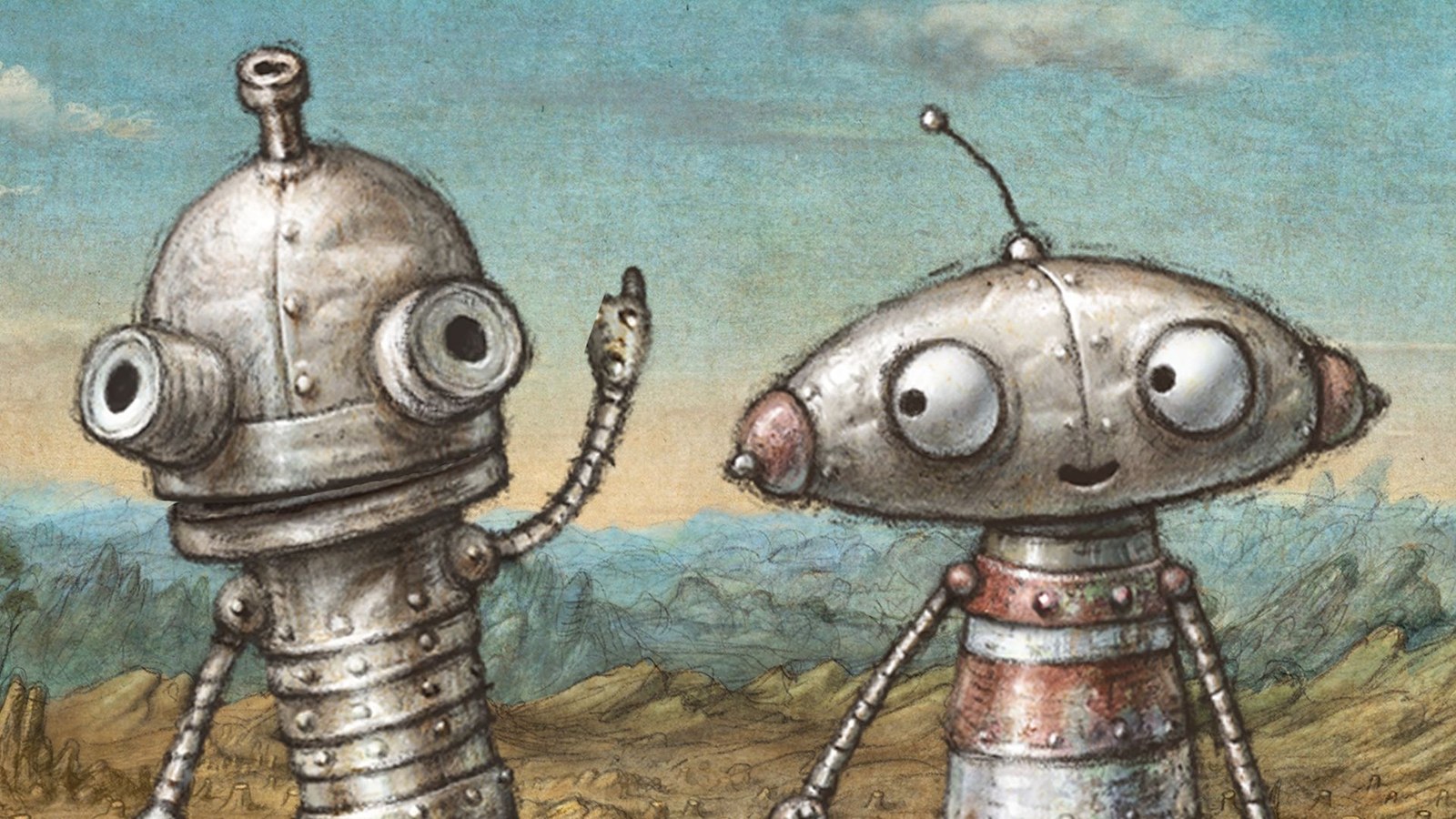
Seventeen years after its original release, the crumbling city of robots is calling once again. Czech studio Amanita Design has officially confirmed that Machinarium 2 is in development, bringing back Josef and Berta for a new point-and-click adventure. The announcement arrived alongside a fresh trailer and developer interviews led by CEO and lead designer Jakub Dvorský, who offered an unvarnished explanation for why the studio finally decided to return to its most iconic world after more than a decade of silence.
The original Machinarium, released in 2009 as Amanita Design’s first full-length standalone game, was a wordless tale of love set within a decaying metropolis of gears and rust. It earned an enduring cult following and established the studio’s signature hand-drawn aesthetic. Since then, the developer has delivered several critically acclaimed titles, yet never offered even a hint that its flagship robot world might return.
A valley of two dying robot tribes
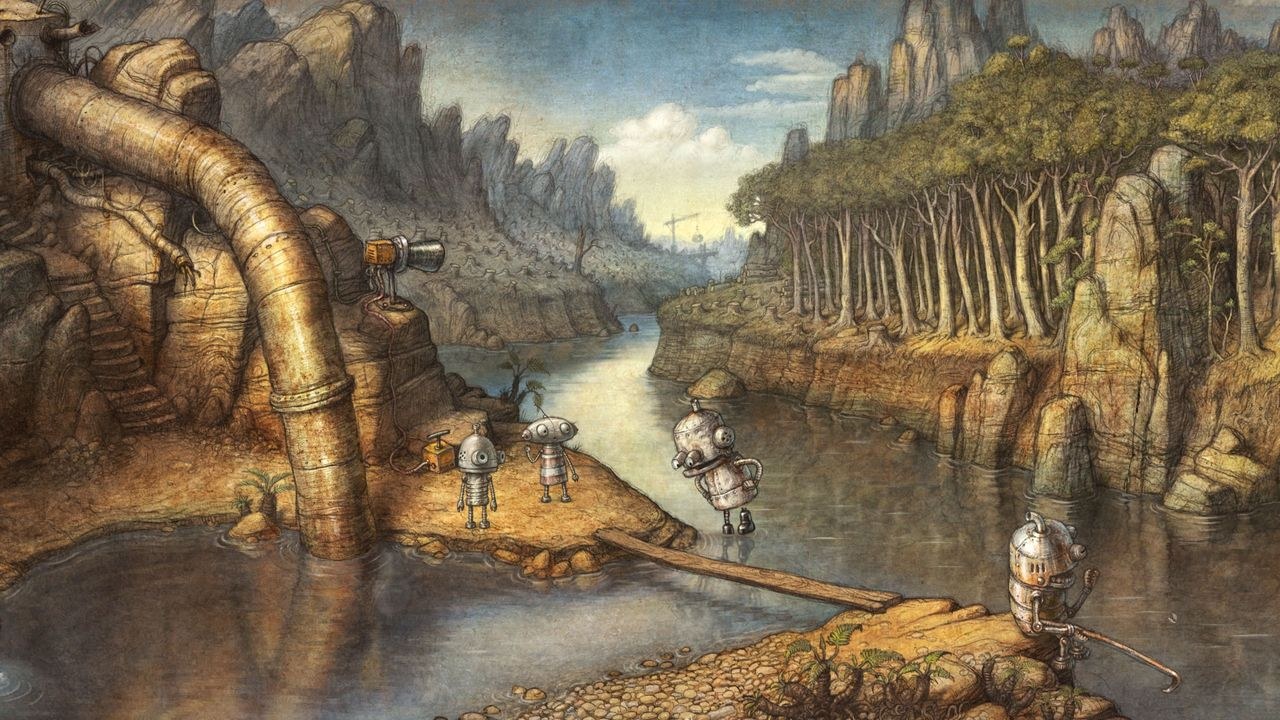
The new game continues directly where the original left off. Having escaped the crumbling city, Josef and Berta crash-land in a hidden valley inhabited by two rival robot cultures: the Elektrona monastery and the oil-soaked city of Oilton. Both communities face a grim fate as their power sources slowly run dry, setting the stage for a fresh puzzle-driven journey.

Machinarium 2 promises to preserve the same deliberate point-and-click puzzling that defined its predecessor, though it introduces an important structural change. For the first time, both Josef and Berta are fully playable and can be swapped at will, forcing players to coordinate between the two characters in order to solve the game’s puzzles.
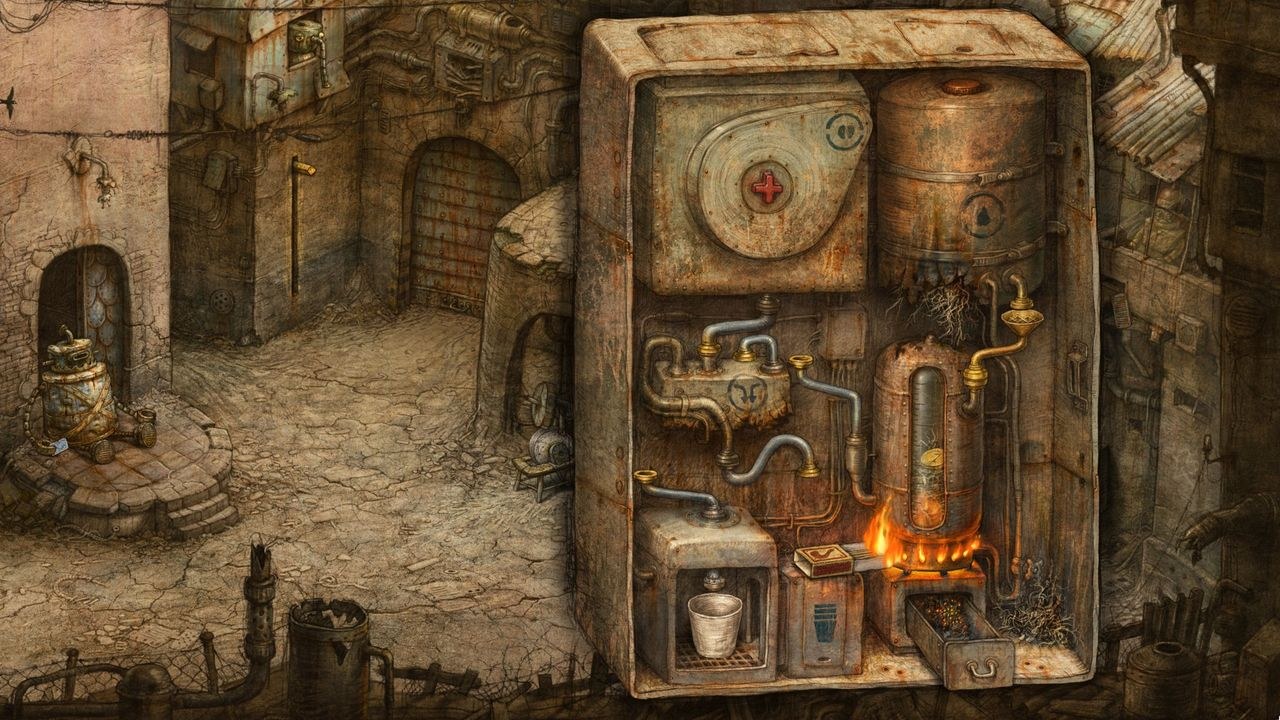
The studio’s distinctive visual style returns as well, described by early looks as perhaps a touch sharper than the original while retaining its hand-crafted charm. Also returning is Tomáš Dvořák—better known by his stage name Floex—the composer whose evocative soundtrack helped make the first Machinarium so instantly recognizable and emotionally resonant.
The sound of a robot world, revisited
Dvořák’s music has long been considered one of the defining elements of the Machinarium experience, and his involvement in the sequel removes any lingering doubt about whether the series’ sonic identity would survive its return. Speaking on his approach to the new score, he emphasized a deliberate effort to balance familiarity with growth.
“When I composed the first Machinarium soundtrack years ago, I never anticipated such a huge response. I was simply trying to have fun and enjoy the creative process—and I believe that is the exact same approach I need for the sequel.”
Tomáš Dvořák (Floex), composer
The composer acknowledged the inherent difficulty of following up a beloved original, admitting that doubts occasionally surface when comparing new work to the old. Yet he insists on resisting that comparison, drawing instead on the influence of Machinarium’s visuals as inspiration.
“It’s more ‘a beautiful project [that] provides a great opportunity to create a specific kind of music… The visuals have an incredible influence on the music universe I create. Machinarium is exactly the kind of environment where things grow very naturally for me.”
Tomáš Dvořák (Floex), composer
Dvořák noted that he set specific goals to differentiate the new score, aiming for something “more melodic and musical” achieved through greater simplicity—an approach he concedes is actually the hardest part of his craft. He also observed that age has shaped his work, describing the new music as simply more mature because he himself is older.
A decision made by instinct
Beyond the creative details, Dvorský was candid about the intuitive nature of the studio’s choice to return to Machinarium after so long. He described leaning on feeling rather than logic when making such calls, and offered a wry but pointed rationale for timing the announcement now.
“We’re not getting any younger, and the world seems to be ending, so if we were ever going to make Machinarium 2, now is the right time. We’re also grateful to every player who waited patiently all these years. We couldn’t have done it without them.”
Jakub Dvorský, CEO and designer at Amanita Design
In a separate conversation, he elaborated on that instinct-driven process, describing the world of robots as something that had been “knocking on the door, asking to come out again.” What began as a vague feeling gradually turned into genuine excitement for the studio.
Looking ahead
Machinarium 2 does not yet have an official release date, but it is already available to wishlist on Steam. In the meantime, fans can revisit the series through the Machinarium collection—which includes the original game—offered at discounted pricing until October 15.
The announcement has reinvigorated longtime supporters who remember being won over by Amanita Design’s debut title. While subsequent releases have consistently met the high bar set by that first adventure, many players carried a lingering affection for the robot world that defined the studio’s origins. With Machinarium 2 now confirmed, that chapter of the studio’s history is finally set to continue.























Join the conversation