

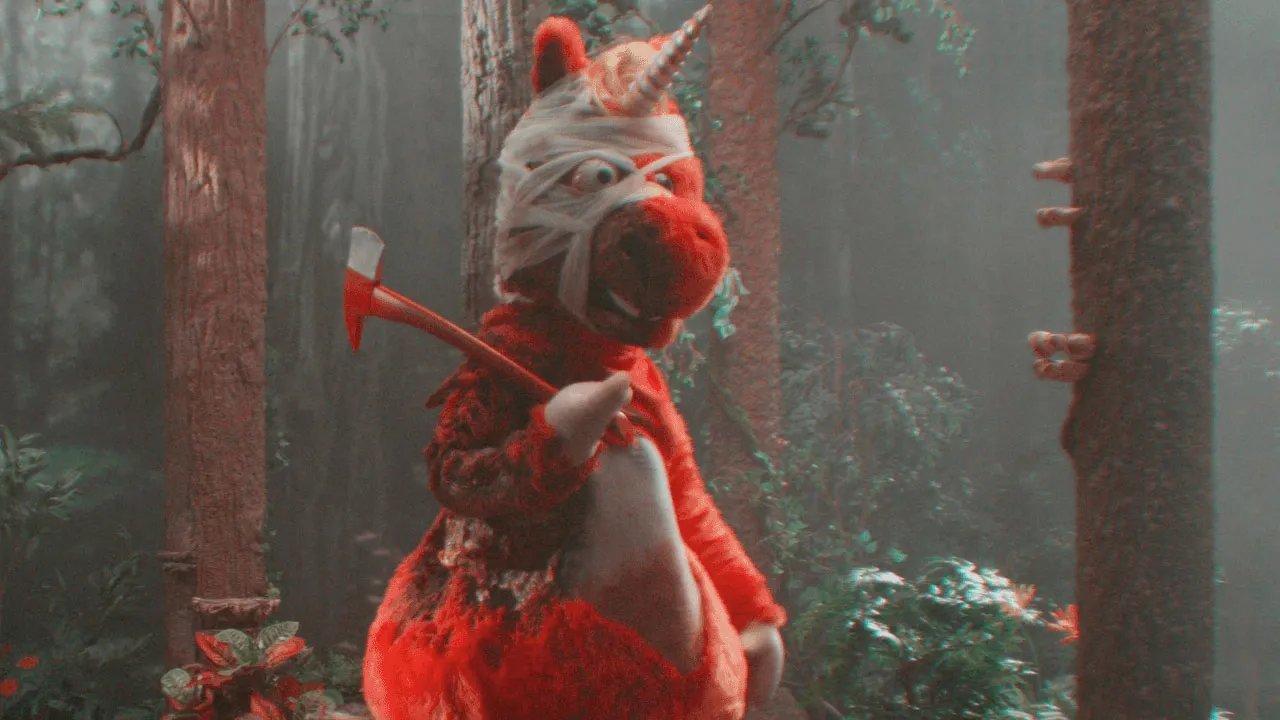
Buddy: A Descent into Madness Disguised as a Children’s Show
Get ready for a wild ride because “Buddy,” set to hit theaters on August 28th, is unlike anything you’re likely to see this year. It takes the subversive brilliance of Adult Swim’s “Too Many Cooks” and cranks it up to eleven, delivering a surrealist nightmare wrapped in the deceptively innocent packaging of a children’s program.
The Sweet Deception
Just like “Too Many Cooks,” which exploded onto the scene with zero warning back in 1990, “Buddy” initially presents itself as an episode of a lost children’s enrichment program. Think Barney & Friends, but with a sinister twist. Keegan-Michael Key voices Buddy the Unicorn, a seemingly benevolent character who dotes on the kids at the clubhouse. The film masterfully uses this saccharine aesthetic to lull you into a false sense of security before plunging you into an unsettling and clever descent into madness.

The first act expertly reinforces the gradual erosion of the kids’ naive worldview. Keegan-Michael Key’s vocal performance as Buddy is crucial here, modulating the character’s sweetness with subtle hints of danger. These moments are surprising and unsettling, perfectly setting the stage for the film’s darker elements.
A Descent into Darkness
The film quickly reveals its central conceit: Buddy’s seemingly innocent facade hides a more sinister agenda. One of the kids tires of Buddy, triggering a chain of events that draws the attention of Freddy (Delaney Quinn). Quinn delivers an impressive performance, expertly controlling her tone and never overacting. The other kids in Buddy’s gang have their moments to shine, but Freddy emerges as the most developed character.
The true highlight of “Buddy” is its masterful use of tone. The undercurrent of wickedness that slowly permeates the film is brilliantly managed, a testament to director Casper Kelly’s signature style. While “Too Many Cooks” has inspired countless imitations, “Buddy” proves that Kelly remains at the top of his game when it comes to weaponizing seemingly innocent positivity into a dark and twisted funhouse.
The film introduces us to a cast of memorable anthropomorphic characters like Strappy (Patton Oswalt), Mr. Mailbox (Eric Bauza), Charlie the Train (Michael Shannon), and explores their relationship with Buddy. Oswalt’s Strappy is particularly enjoyable, adding another layer of complexity to the narrative. Even Michael Shannon gets in on the action, delivering a memorable cameo that perfectly encapsulates the film’s unique brand of insanity.
A Few Hiccups
While “Buddy” excels in its tone and performances, it’s not without its flaws. The film’s adherence to the visual language of children’s shows can feel repetitive at times, leading to pacing issues. At 96 minutes, the film occasionally feels longer than it needs to be, particularly during scenes where the kids question Buddy’s true nature.
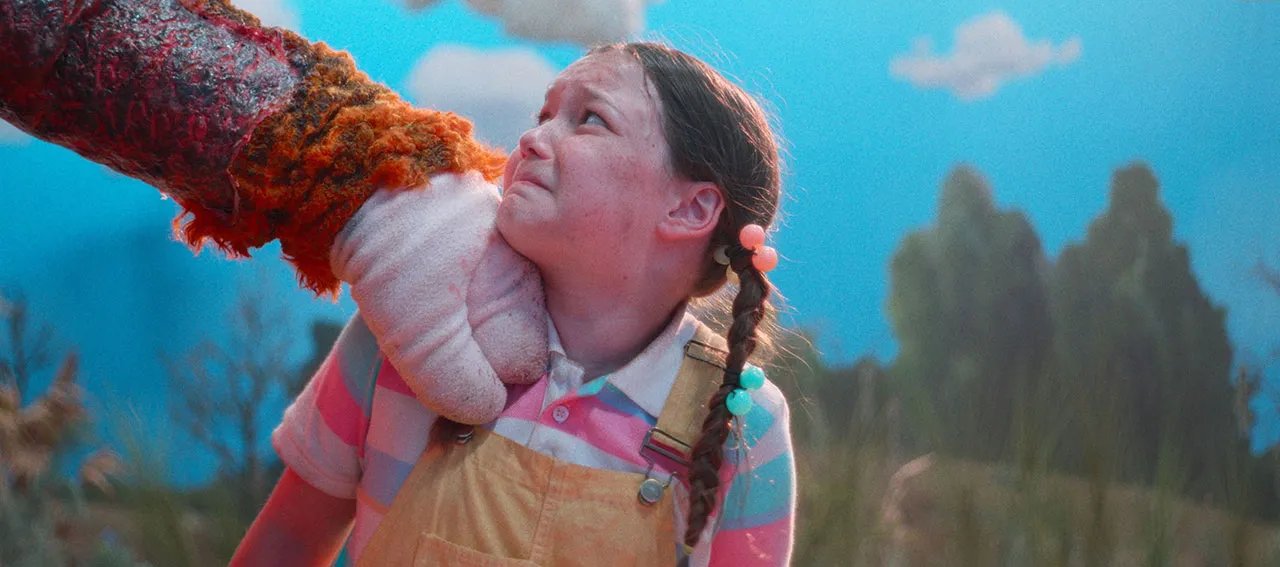
Furthermore, the film’s commitment to its high concept sometimes leads to minor inconsistencies that break the audience’s immersion. For example, the shift between the 4:3 aspect ratio of the “Buddy” TV show and the widescreen TVs displaying it can be jarring. While these are relatively minor issues, they highlight the challenges of maintaining a consistent visual language throughout the film.
A Masterpiece of Tone
Despite its flaws, “Buddy” remains a remarkable achievement. The performances are uniformly excellent, with Keegan-Michael Key and Delaney Quinn delivering particularly memorable turns. Cristin Milioti and Topher Grace add depth to the narrative as more grounded characters, and their interactions with Buddy are often deeply unsettling.
The film’s exploration of toxic positivity and its dangers is both timely and relevant. In a world saturated with saccharine content, “Buddy” serves as a reminder that appearances can be deceiving. While the ending may feel somewhat predictable, the journey to get there is filled with enough twists and turns to keep you engaged.
The production design by Anna Kathleen and the puppet design by Devon Hawkes Ludlow are also noteworthy. The film’s visual style perfectly captures the unsettling juxtaposition of innocence and darkness that lies at its core. The sing-songy ditties composed by Shawn Coleman, who also wrote for “Too Many Cooks,” further enhance the film’s unique atmosphere.
Ultimately, “Buddy” is a must-see for fans of subversive comedy and horror. It’s a film that will stay with you long after the credits roll, prompting you to question the seemingly innocent world around you. Just be prepared for a wild ride – this is one children’s show you definitely don’t want to watch with your kids.
Source: IGN























Join the conversation