

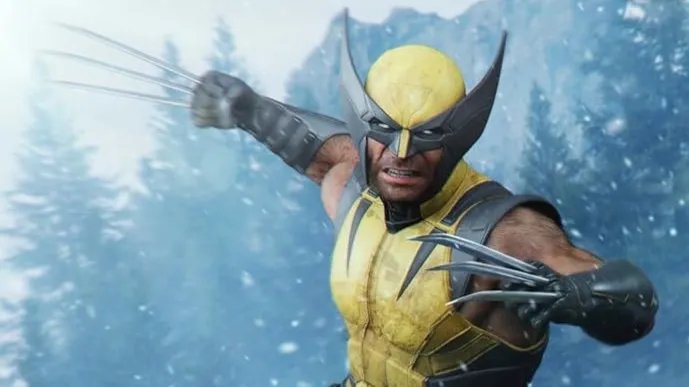
Marvel’s Wolverine: Deep Dive with Insomniac
[Engaging, punchy, click-worthy English headline]
We recently had the exclusive opportunity to sit down with developers from Insomniac Games to discuss their upcoming PlayStation 5 title, Marvel’s Wolverine. We learned a great deal about the studio’s approach to crafting this game, what fans can expect, and which features are—and aren’t—included. Our interview with Mike Fitzgerald, head of technology, and Jess Reiner-Reed, senior project director, is below. We also got hands-on time with Marvel’s Wolverine, and you can check out our impressions ahead of its release on September 15, 2026.
Wolverine’s Suit: Healing Power
One of the most talked-about aspects revealed during the June State of Play gameplay showcase was Logan’s suit healing alongside his body. This sparked considerable debate within the community, with some fans questioning its visual impact. We asked Insomniac about this.

We asked Insomniac why
Sabretooth: A Classic Rivalry
Sabretooth, a notorious figure in the Marvel universe, is even more of a pain when Wolverine is around. The long-standing rivalry between these two mutants is legendary, and Insomniac brings it to life by forcing them to team up.
Here’s how it works
Replayability in Marvel’s Wolverine
Insomniac shared details about the features designed to keep players engaged long after the credits roll. One feature, in particular, sounds like a proper nightmare.
One in particular sounds like a proper nightmare
The Absence of X-Men
Don’t expect to see the X-Men in Marvel’s Wolverine—they don’t exist at this point in Wolverine’s story. But why? Insomniac explains.
Insomniac explains
Performance on PS5
Marvel’s Wolverine offers both performance and fidelity modes, as expected. The performance mode on PS5 is particularly impressive.
Here’s why
First Impressions: Hands-On with Marvel’s Wolverine
We went hands-on with Marvel’s Wolverine. Here’s what we thought.
Here’s what we thought
The Full Interview with Insomniac
Below is the full transcript of our interview with Mike Fitzgerald and Jess Reiner-Reed:
IGN: I just want to get the general reaction to what the moment was where you learned that Wolverine was going to be your next project. What excited you about the project, and was there anything you foresaw being a challenge that you’d eventually have to overcome?
Jess Reiner-Reed: Yeah. So I started working on Marvel’s Wolverine right as we were shipping Spider-Man: Miles Morales in November 2020. And it was beyond exciting to be able to think about what are we going to now work on with this character? You’re telling a whole new fresh Logan-centric story. I had been working on Spider-Man 1 and Miles Morales for years at that point. So being able to think about, we’re going to now be making a rated mature game, going to have claws and killing enemies, and exploring a character with a lot of depth. He’s a quiet dude with a lot of mystery behind him. Yeah, I was nothing but excited when I found out we were working on Wolverine.
Mike Fitzgerald: Yeah. I think there was a little bit of, we’d been working with Spider-Man and Ratchet and Clank. These are really positive, warm and fuzzy characters. Warm and fuzzy are not two adjectives I would use for Logan. So it was a fun exercise for the studio to find, what is there about this character that matches the Insomniac spirit? What is his flavor of heroism that’s different from those guys and how do we identify with that?
Jess Reiner-Reed: Yeah. He’s not somebody who’s going to be quipping nonstop and having fun jokes at the end of every fight. So yeah, like Mike’s saying, it was really exploring what’s that story we want to tell with this character?
IGN: So you just talked about the differences of going from Spider-Man to Wolverine. Were there any design lessons or decisions that you were able to carry over from your work on Spider-Man and bring them to Wolverine? Or did you see Wolverine as an opportunity to do a clean slate and do something different in the superhero space?
Mike Fitzgerald: I think the main lesson you could say we took through is that understanding the character deeply, what makes that character resonate with people. Even people who’ve experienced different versions of that character over time, finding the core of it and putting the player in a position to fulfill that fantasy thoroughly is the most important goal you can have. So learning about Wolverine, working with the folks at Marvel Games to understand, what about this character is core to him and making sure we live up to that.
Jess Reiner-Reed: Yeah. I think going back to your earlier question about what was that kind of early development learning about Wolverine? Obviously rated mature, violent. I was just remembering, I think realizing that Spider-Man doesn’s kill enemies. All the enemies get webbed to the side of the buildings. Now Logan can actually take out enemies. So you can have that battlefield aftermath and really get to explore what that combat space can be. That was fantastic early on.
IGN: Was that kind of like a liberating feeling to not have to worry about enemies dying?
Jess Reiner-Reed: It was nice to be able to finally knock an enemy off a roof and have them die! Yeah, definitely. But I’d say, game development is a very iterative process. We get better at what we’re doing over the course of every single game. So there’s always learning lessons, not to sound too corny, but there’s always learning lessons from each game that we can take. So there’s a lot of Insomniac DNA in Marvel’s Wolverine from what we learned from Spider-Man. But it was also, what would Logan do was really the core question we were asking every time. Not like, “Oh, how can we repurpose something from Spider-Man?” No, what would be right at the foundation for Logan?
IGN: Combat is obviously a huge part of this game. When it came to designing Wolverine’s combat, what were some of the core pillars of design that you wanted to make sure that you nailed in terms of it being the power fantasy of being Wolverine?
Jess Reiner-Reed: So when working on the combat in Wolverine, you want to make sure that it feels brutal. You want to make sure that it feels aggressive. Wolverine’s somebody who, he’s not going to go run and hide in the corner and wait for his health to go up or anything. You’re incentivized to have that aggression and keep fighting different enemies. We wanted to make sure to get his rage. So that’s a core part of Logan, is he has this animalistic berserker rage and we wanted to make sure that came across in our game mechanics in combat. I hope you got to play part of that today where, when you get to rage tier three, you are just taking out enemies. He’s almost blinded with rage and all he can see is the enemies in front of him.
The other parts we wanted to make sure to get right as far as Wolverine is his enhanced senses. So he’s a tracker. He can, especially in stealth situations, you can start to see where enemies are, where a normal human wouldn’t be able to notice that. Obviously his claws and adamantium skeleton. His healing, that was one of the things early in development of like, cool, how do you make a game around a guy who can constantly be healing? And I think that really came across in what we built.
Logan’s good at fighting one enemy. He can probably take two enemies out. Once he starts to get swarmed and there’s a hoard of enemies, that’s where things start to be a problem for Logan. So we see that in our gameplay.
Mike Fitzgerald: Over the course of development, I think we learned a lot to say, okay, healing factor. I think on the surface that feels really easy to do in a video game. Yeah, you have a health bar and so the health bar is going to go up a bunch. But really trying to think about, okay, this is a unique piece of our character. What can we do in the gameplay that reflects that in a unique way? So players are thinking about, oh yes, this would only be in a Wolverine game. So something like the last stand moment where you use that rage you’ve built up during gameplay to sort of regenerate. You can see his body regenerate. You can see the damage he takes over the course of combat and sort of feeling that push and pull of his healing factor as you play.
IGN: Speaking
Source: IGN Gaming























Join the conversation