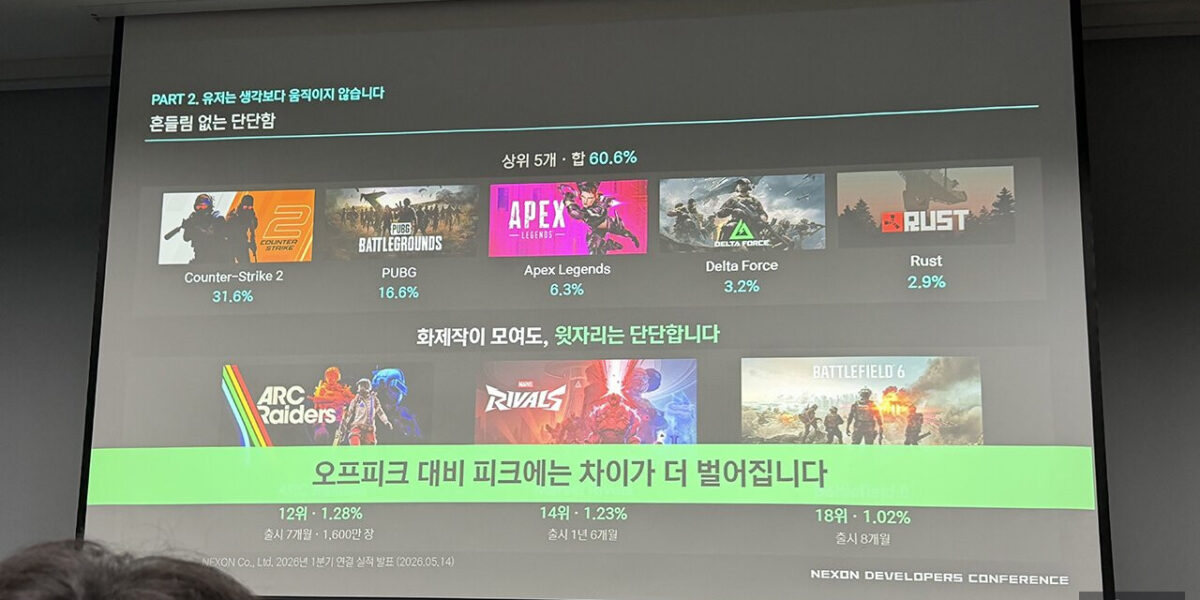
In a recent keynote, Nexon Korea’s team leader, Seo Soon-gi, revealed how the company is turning the vast data trove of Steam into a strategic playbook for global game launches.
Seo highlighted that the global market’s fragmented user demographics make it notoriously difficult to gauge player preferences. To bridge this gap, Nexon’s shooter division has turned to Steam’s publicly available data, which encompasses tens of thousands of titles and millions of player interactions.
He outlined four key insights gleaned from the Steam ecosystem that can dramatically boost a game’s chances of success. The first insight centers on the critical importance of first impressions. Seo pointed out that a game’s initial reception can be a decisive factor, citing that only 1.6% of titles that initially received fewer than ten reviews and a recommendation rate below 50% managed to flip the trend and achieve a 70% or higher recommendation rate later on.
Seo also explained how Steam’s “Playtest Reviews” feature can serve as a pre-launch barometer. By analyzing the correlation between recommendation rates during the playtest phase and those in the first month after release, he found a striking 0.77 correlation coefficient, suggesting that early player feedback can reliably forecast long‑term reception.
Seo also delved into player inertia, noting that the top shooter accounts for 31.6% of the market share, while the top five titles command 60.6%. He emphasized that 87% of players stick to one or two games, and that two out of three gamers rarely change their main title even after a week.
He warned that half of the 20,000 new Steam releases each year receive no reviews at all, underscoring the challenge of breaking through the noise. The takeaway? Targeting the right niche audience and understanding competitive positioning are essential.
To help developers identify their core audience, Seo suggested clustering the 20 or so tags left by players on the Steam store page, which can reveal which game families a new title aligns with.
He also advised that cross‑play affinity analysis—examining which games players tend to pair together—can uncover hidden synergies and inform marketing strategies.
Seo concluded by stressing the importance of listening to both positive and negative feedback. He categorized players into four groups: G1 (recommended and stayed), G2 (recommended but left), G3 (not recommended but stayed), and G4 (not recommended and left). He argued that G3 and G4 players are especially valuable, as they often provide deep insights into gameplay flaws or onboarding issues.
Finally, Seo reminded developers that the market already offers a plethora of competitors, each with established UI/UX, controls, and patch cadence. To succeed, a new title must at least match these baseline expectations before attempting to introduce truly novel mechanics.
❓ Frequently Asked Questions (FAQ)
Where can I find more details about Unlock Steam's Secrets: Dominate the Global Game Market!?
Further details and updates can be followed through official game channels and the source link provided in the article.
News Source: Co






Comments
Be the first to comment.