
Final Fantasy has spanned more than 100 games since the series began in 1987, including 16 mainline entries plus countless sequels and spinoffs. Within that vast catalog are forgettable mobile titles and flash-in-the-pan releases players can no longer access — but there are also hidden gems, fascinating experiments, and underrated entries that deserve far more recognition than they have received.
Here is a look at seven Final Fantasy games that critics consider underappreciated.
Final Fantasy 10-2
Released in 2003, Final Fantasy 10-2 follows Yuna as she searches for Tidus, the now-missing protagonist of 2001’s Final Fantasy 10. It was the first — and only — game in the series to feature an all-female main cast, and one of the few entries with multiple endings.

Where FF10 was somber and serious, FF10-2 is unabashedly feminine and lighthearted: the world has been saved, but Yuna and her friends have unfinished business. Its story and art style drew from the magical-girl and idol anime subgenres of the late ’90s and early 2000s, as well as Western pop icons like the 2000 Charlie’s Angels reboot starring Drew Barrymore, Lucy Liu, and Cameron Diaz.
The game’s take on the series’ job system is the Dressphere, which can dramatically change a party member’s fighting style. Several are familiar RPG fare — black mage and thief — while others are wholly unique, with hilarious costumes and abilities like Lady Luck and mascot classes.
Where to play: Nintendo Switch, Switch 2, PS4, Windows PC, and Xbox One
Theatrhythm Final Bar Line
Just as the Star Wars saga lives on its music, Final Fantasy endures through its soundtrack. Theatrhythm Final Bar Line includes 385 songs in its standard release, with DLC raising the total to 505.
This colorful music game with light RPG gameplay brings together characters from across the decade-spanning series. Players choose a party of four out of a roster of 104 — including villains like Sephiroth and Kefka — to battle rhythm-game style, without the usual Attack / Magic / Item options.
Each trigger requires a unique input: red icons call for a single button press; yellow-arrow triggers require an analog stick flick; green bars indicate a sustained hold. A simple mode converts all triggers to single-button input for those just there for the vibes, and online multiplayer plus couch-coop add to the experience.
Where to play: Nintendo Switch, PS4
Final Fantasy Type-0
Launched in 2011 for Sony’s PlayStation Portable, Final Fantasy Type-0 was at least partially inspired by the international success of Atlus’s Persona 3 and Persona 4, which blended traditional RPG dungeon crawling with social-sim elements. Set at a magic school, it follows 14 students in Class Zero called up to serve in the military when an empire invades.
The combat system was inspired by 2007’s Crisis Core: Final Fantasy 7, yet offered a glimpse of the mainline series’ action-oriented future seen in FF15 and FF16. Like FF7 Remake, players can field three party members at once and swap between them freely — an AI-driven system Square Enix has kept refining.
Like Persona, it features a calendar system and classmate relationships to level up. Despite its school setting, Type 0 carries a darker tone than most mainline Final Fantasy games of the time. Critics outside Japan were unimpressed with the soapy high-school drama, but anime was far less mainstream 15 years ago. As one writer notes: “Square Enix Persona” would make the internet explode today — yet people didn’t play it then either.
Where to play: PS4, Windows PC, and Xbox One
Monster of the Deep: Final Fantasy 15
Combining two of gaming’s most inescapable 2017 trends, Monster of the Deep was a standalone fishing game based on the world of Final Fantasy 15, released exclusively for the original PlayStation VR headset. Critics were wary from announcement.
Polygon’s Allegra Frank called the experience “tedious, slow and, after a while, a little painful” after trying it at Tokyo Game Show.
After a gratuitous cameo from Cindy and her booty shorts, players take on an unnamed angler who finds himself out on the lake with Prince Noctis and his pals. Once three fish are caught, you face the titular Monster of the Deep alongside Noctis.
Like so much of FF15’s surrounding content, it offers a tantalizing glimpse at a future that never materialized — best enjoyed as virtual tourism than an actual game. Even today there’s no denying the beauty of FF15’s world of Eos, despite its original criticism for feeling too empty.
Where to play: PlayStation VR (note: not compatible with PSVR 2)
Final Fantasy 11
Unlike modern MMOs — including Final Fantasy 14 — and open-world RPGs, Final Fantasy 11 thrives on friction. Walking between places can take far too long; loot may drop from downed enemies; quests are hard to track; you can lose experience by dying repeatedly; quality-of-life features like NPC party members sit behind complicated quests.
The solution, the article argues, is community. Built to be played with real people — even if single-player has improved over the years — it remains best experienced online. “Nothing beats the feeling of completing a massive imposing dungeon in Final Fantasy 11 thanks to the kindness of strangers,” one writer writes.
For those willing to meet its challenge, FF11 reveals an impressively deep world filled with numerous stories and awe-inspiring moments, including climactic boss battles and emotional story beats. Over two decades after release, it persists because players “can’t stop falling in love with it.”
Where to play: Windows PC
Stranger of Paradise: Final Fantasy Origin
This reimagining of the original 1987 Final Fantasy was immediately reduced to a meme when its first trailer dropped, thanks to lead character Jack Garland — a grumpy edgelord obsessed with killing Chaos. But beneath that “Limp Bizkit energy” lies one of Square Enix’s most inventive action games in years.
Developer Team Ninja essentially turned Final Fantasy into a Dark Souls game: tough, deliberate combat with a fluid take on the classic job system. Jack can instantly swap between two jobs, combining fan favorites like Black Mage and Dragoon with novel options like Cyclic Warrior or Void Knight — lending genuinely distinct playstyles.
The catch is embracing the game’s aggressively corny tone. Stranger of Paradise eventually does something interesting with the original’s bare-bones story, though Jack repeatedly interrupts villainous monologues to remind us he doesn’t “give a fuck.” The experience borders on abrasive but rewards those who look past its edgelord exterior.
Where to play: PS4, PS5, Windows PC, Xbox One, and Xbox Series X
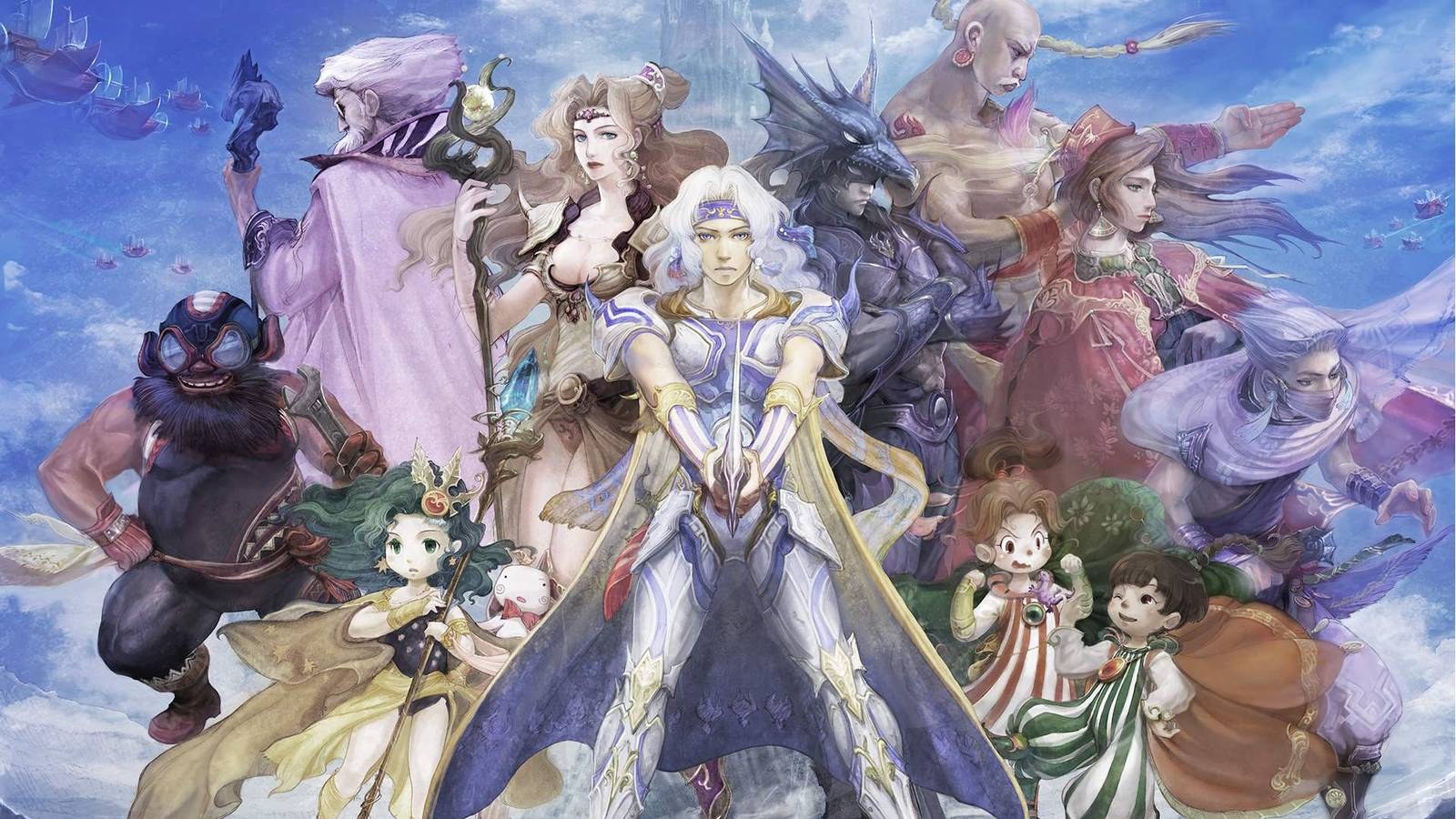
Final Fantasy 4
FF7 and FF10 are often celebrated for laying the foundations of “modern” Final Fantasy — but Final Fantasy 4 was the first to introduce many elements now essential to the RPG genre: dramatic storylines, rich character development, and a focus on emotional relationships between its core cast.
FF4 is a pulpy save-the-world adventure with sky-high stakes, plot twists, and romantic drama. While players can’t freely swap party members as in later installments, each has a clearly defined role — some of them imperfectly at first. Summoner Rydia can’t use fire magic for a substantial stretch after a fire destroyed her village; Cecil reverts to level 1 when he becomes a paladin; bard Edward is “terribly unsuited to any combat scenario and always, always sucks.”
Yes, FF4 is historically significant — but unlike the very early Final Fantasy games, it remains delightful today. The story is over-the-top in every way: there are no fewer than seven fake deaths. As one writer challenges: “I challenge you to show me another game where you fly the magic corpse of a dead whale to the moon. You can’t!”
Where to play: Android, iOS, Nintendo Switch, PS4, PS5, Windows PC, Xbox One, and Xbox Series X























Join the conversation