

Science fiction has long probed hard-hitting questions about reality, reaching its potential when exploring social issues through futuristic allegories, inspiring real research and warning against unchecked power. Yet for over a century film has also excelled at adapting the genre’s best novels, from Christopher Priest’s The Prestige to P.D. James’ Children of Men.
In some cases, a sci-fi movie adaptation can be spectacular while still feeling like a pale imitation of the source material—a gap rooted less in the film’s quality and more in nuances that only literature conveys. Here are five examples where going straight to the book is preferable.
Do Androids Dream of Electric Sheep? (1968) by Philip K. Dick
Ridley Scott’s Blade Runner (1982) is a foundational cyberpunk film and, despite being loosely based on it, a compelling read of Philip K. Dick’s Do Androids Dream of Electric Sheep?. The core premise holds: bounty hunter Rick Deckard must kill six escaped Nexus-6 androids while John Isidore—played by J.F. Sebastian in the film—aids them on the run.

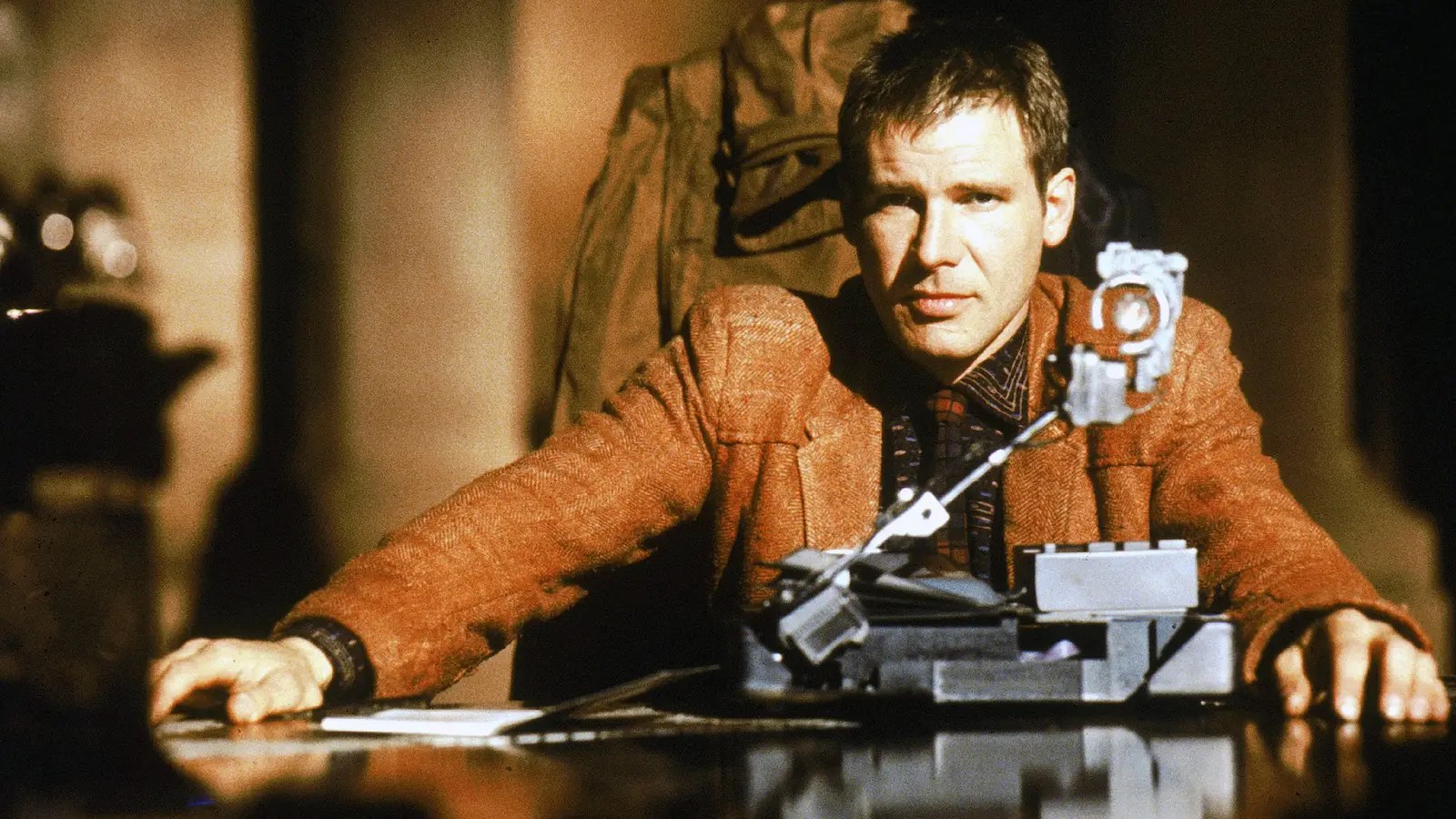
The 1982 film is a significantly stripped-down version, focused on Deckard (Harrison Ford) and his relationship with the replicants. Dick’s novel instead explores Mercerism, a religion using an “empathy box” to fuse worshippers with Wilbur Mercer, who suffers a Sisyphus-like punishment climbing a hill while being pelted with stones—a shared spectacle in a dystopian world.
The book also weaves intricate details like mood organs, which let users “tune in” to specific moods, and kipple—accumulating junk in a world on the verge of extinction. As brilliant as Blade Runner is, Dick’s novel offers a sharper examination of human-and-machine relations and whether empathy is being lost collectively.
Annihilation (2014) by Jeff VanderMeer
Alex Garland’s Annihilation understands the destabilizing nature of cosmic horror, yet takes great liberties adapting Jeff VanderMeer’s source material—a surreal mystery rather than an action-infused adventure built on simplified internal logic.
In the book, four unnamed women—psychologist, anthropologist, biologist and trained surveyor—enter Area X, their experience conveyed through a field journal. Everything about Area X is eerier in the novel, including a staircase descending into the earth that the team cannot agree “what” truly is.
I, Robot (1950) by Isaac Asimov
The 2004 Will Smith film I, Robot is generally well-liked but uses only the surface-level elements from Isaac Asimov’s short-story collection. Without a linear storyline, it differs drastically—so much so that there is no robot uprising in the stories at all.
The book carries more intellectual and philosophical weight than a mainstream Hollywood film, forming a fascinating study of robotics ethics. Connected through Dr. Susan Calvin, who tells these tales to a reporter in the 21st century, they explore robopsychology—the thought processes inside a brain powered by a central processing unit.
The adventures are not action-oriented; Asimov focuses on the Three Laws of Robotics and their case-by-case subversions. Robots here are neither malicious nor rebellious—Asimov avoided such stereotypes—instead being interesting despite limitations imposed by programming, with attention fixed on human error and our inflated sense of self.
Ender’s Game (1985) by Orson Scott Card
Gavin Hood’s Ender’s Game is a serviceable sci-fi film but not a good adaptation of Orson Scott Card’s novel, hampered by tone and characterization alongside the expected difficulty of condensing a layered classic.
Andrew “Ender” Wiggin—highly gifted yet constantly bullied, his potential constrained by external circumstances—is brought to life through an internal narrative revealing his fears, traumas and inner workings. The film struggles to explain why audiences should root for Ender or why he is a tormented prodigy rather than another “chosen one.”
Card’s prose builds world-building momentum using characters like Peter and Valentine to show how this society uses children as weapons in global politics. The book also unravels its big twist with greater efficacy, cementing devastating implications that the film fails to anchor—making Ender’s guilt our own and setting the stage for the sequel Speaker of the Dead.
Ready Player One (2011) by Ernest Cline
Ready Player One may not be a terrible sci-fi adaptation, but it is a questionable Steven Spielberg film. The 2018 blockbuster suffers from inconsistent messaging and a weak script while adapting source material itself packed with nostalgia-laden trivia.
Cline’s book features a smarter, more complex web of puzzles and a more lived-in dystopian setting. Challenges for the “gunters” (egg hunters) are more deeply rooted in nerd culture—solving one tier of a hunt through a Dungeons & Dragons module or a game of Joust.
Cline’s writing is obsessively passionate, urging readers to explore deep-cuts and overlooked media such as lost arcade games. That sincerity is absent from Spielberg’s version, which opts for more accessible, brand-centered references to avoid alienating audiences—diluting the message about nostalgia as a coping mechanism in a world too horrific to live in.
The book also has more to say about corporate greed and net neutrality, though it regrettably falls into exclusionary rhetoric and the unconscious misogyny that follows from it.























1 comment