

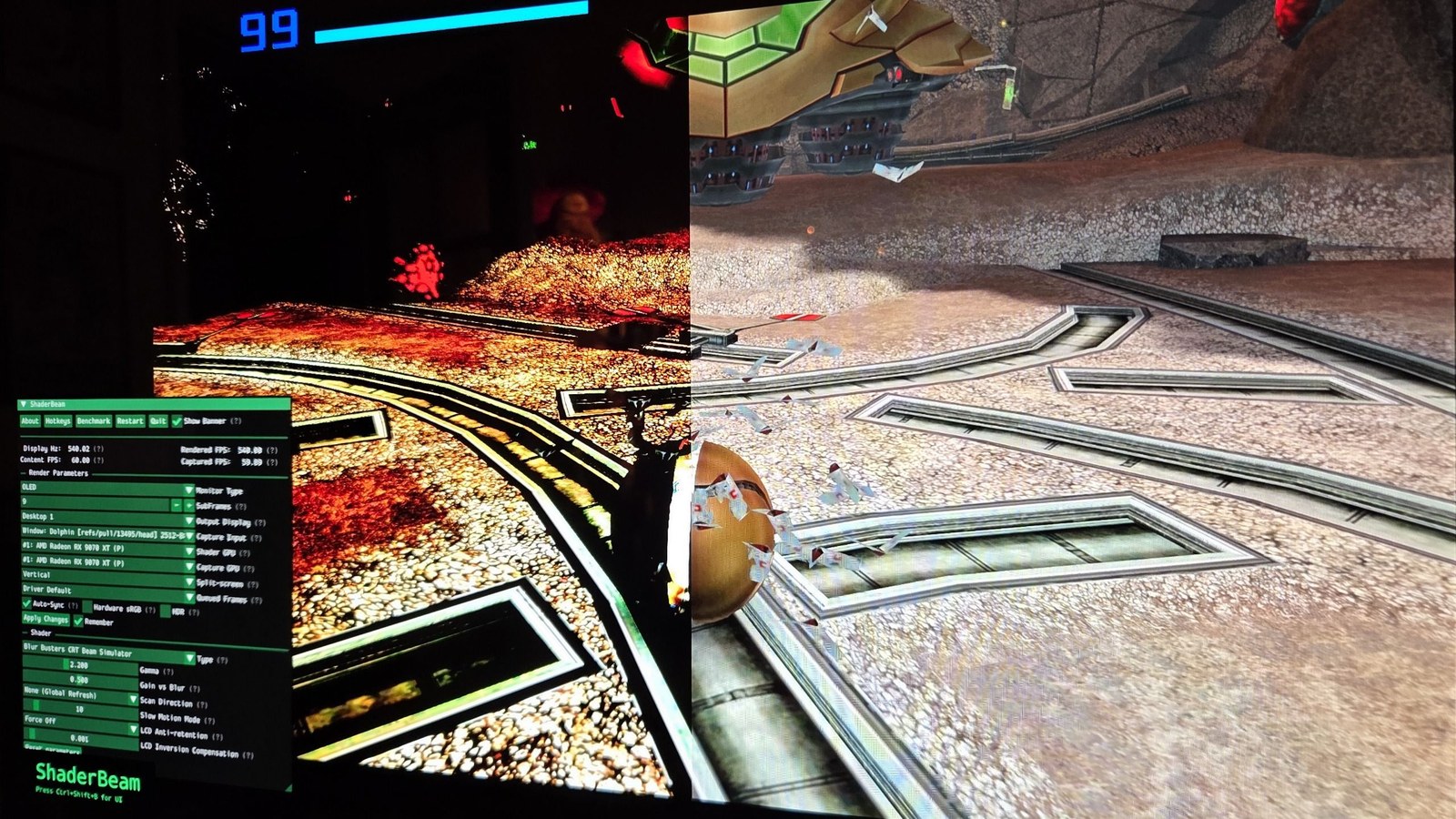
ShaderBeam involves little setup: launch its executable and press a hotkey to apply the shader over a game window. But that simplicity belies how hard the effect is to pull off without working at Microsoft, AMD or Nvidia.
“ShaderBeam tries to use whatever’s available, like screen capture and window transparency (even though these technologies weren’t designed with this use case in mind at all and provide no timing guarantees whatsoever),” Mausimus said. “It’s at the mercy of opaque scheduling algorithms built into the OS and GPU drivers, hoping it can eke out enough resources to maintain its timing.”
The ideal ShaderBeam setup involves disabling VRR, turning off features in graphics driver settings, unplugging secondary monitors, using a process-priority tool for higher priority, and even editing the registry. It includes splitting rendering responsibilities across two GPUs—if your processor has a built-in GPU, using it can help avoid desync between frame output rate and ShaderBeam’s simulation rate.

“By moving beam simulation to another GPU there is less contention for the primary GPU’s time and effectively better scheduling consistency; it does provide a much more stable experience,” Mausimus said. “The issue with single GPU isn’t lack of GPU power, rather its unpredictable distribution.”
If ShaderBeam “isn’t given enough GPU time by the OS to present a frame on time,” users will experience flashing—a problem discovered while pushing an Intel chip’s iGPU to output at 1440p at 540 Hz. Pushing through stuttering with emulators and shooters like Quake and Amid Evil led down the rabbit hole of display subframe timing, where monitor technology quickly becomes arcane.
This may sound like a borderline deranged amount of effort just to play something like Nintendo’s Metroid Prime 2: Echoes in the GameCube emulator Dolphin—the way it was first seen on CRT in a high school friend’s bedroom. Troubleshooting stutters, flicker and color banding for hours can make anyone feel like a mad scientist.
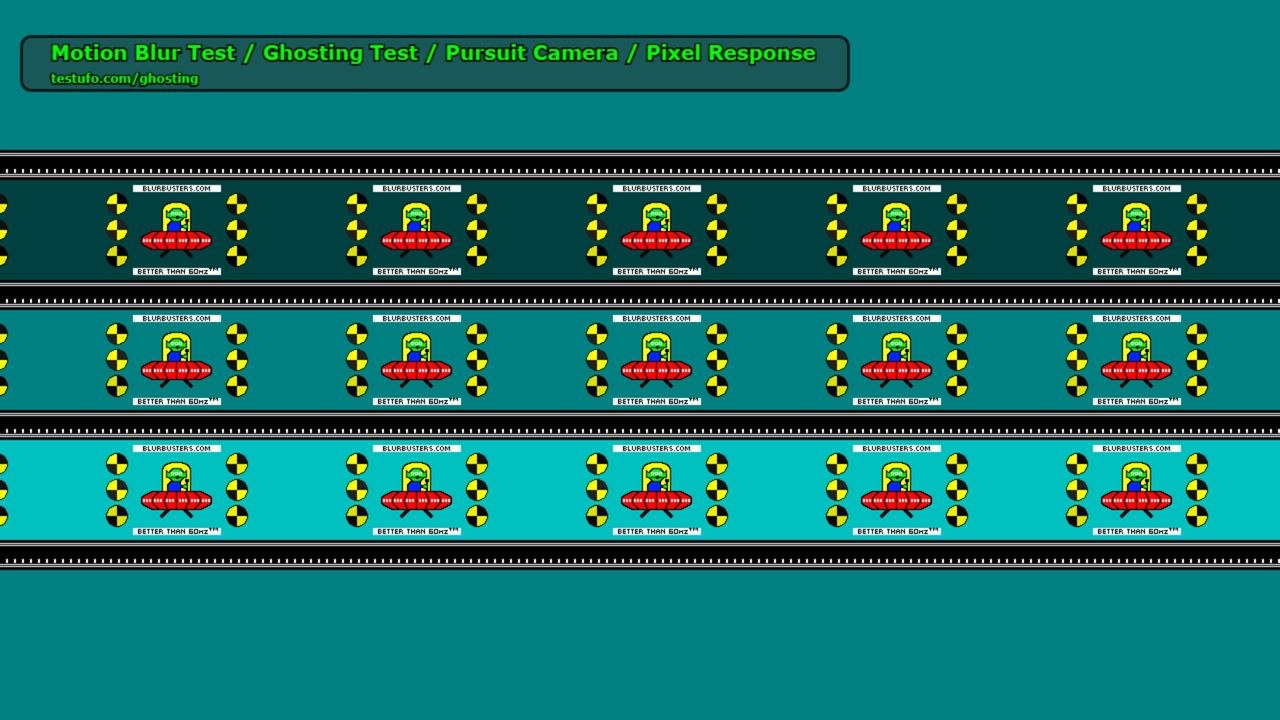
Even when everything is calibrated just right, games themselves can throw off timing—Unreal Engine 5’s penchant for stuttering will naturally disrupt the frame pacing of CRT simulation too.
But once moving details come into focus, the payoff becomes clear. “On moving objects (or the scene if you look around) the shader should allow you to see the individual pixels; normally they all just get blurred out,” Mausimus said, citing intricate Quake column textures as a prime example. Factorio is another good test case: with the shader, details remain visible even when the whole scene moves smoothly.
Hard locked
On top of a vast library of 60 Hz console games, several PC classics would benefit from CRT simulation—many capped at low frame rates despite their potential for clarity and smoothness.
The difference becomes uncanny once eyes pick up details that would normally be just a blur—as dramatic as switching to a higher refresh rate in a game previously controlled at 30 fps. But it’s frustratingly hard to describe or demonstrate, since capturing the effect on camera is tough and impossible to perceive without a 240 Hz+ display anyway.
Future vision
As impressive as ShaderBeam is, it ultimately requires a level of fiddling and compromise that doesn’t make sense for anyone right now. It intermittently restores what was left behind when CRTs were abandoned—but the real solution likely lies in new hardware, like Nvidia’s next-generation Pulsar monitors, or Microsoft digging into Windows to change what happens between an .exe file and the screen.
“Even if ShaderBeam’s makeshift workarounds never reach levels of consistency needed for wide adoption, the hope is that they will boost users’ interest in having this kind of technology properly supported by OS, GPU and display manufacturers,” Mausimus said.
Rejhon seems bullish about it eventually coming to pass—though these things take time. “In the future, when shader hooks are built into operating systems, as well as video-processing GPUs are integrated into the display of the 2030s, it will be much more user friendly,” he predicted. “This is part of the advocacy that is being encouraged by Blur Busters’.”
ShaderBeam’s goal of awakening PC gamers to the benefits of CRT simulation worked on at least one reporter—convinced we have to go back, even if it means dragging those in charge of graphics drivers along with us.























Join the conversation