

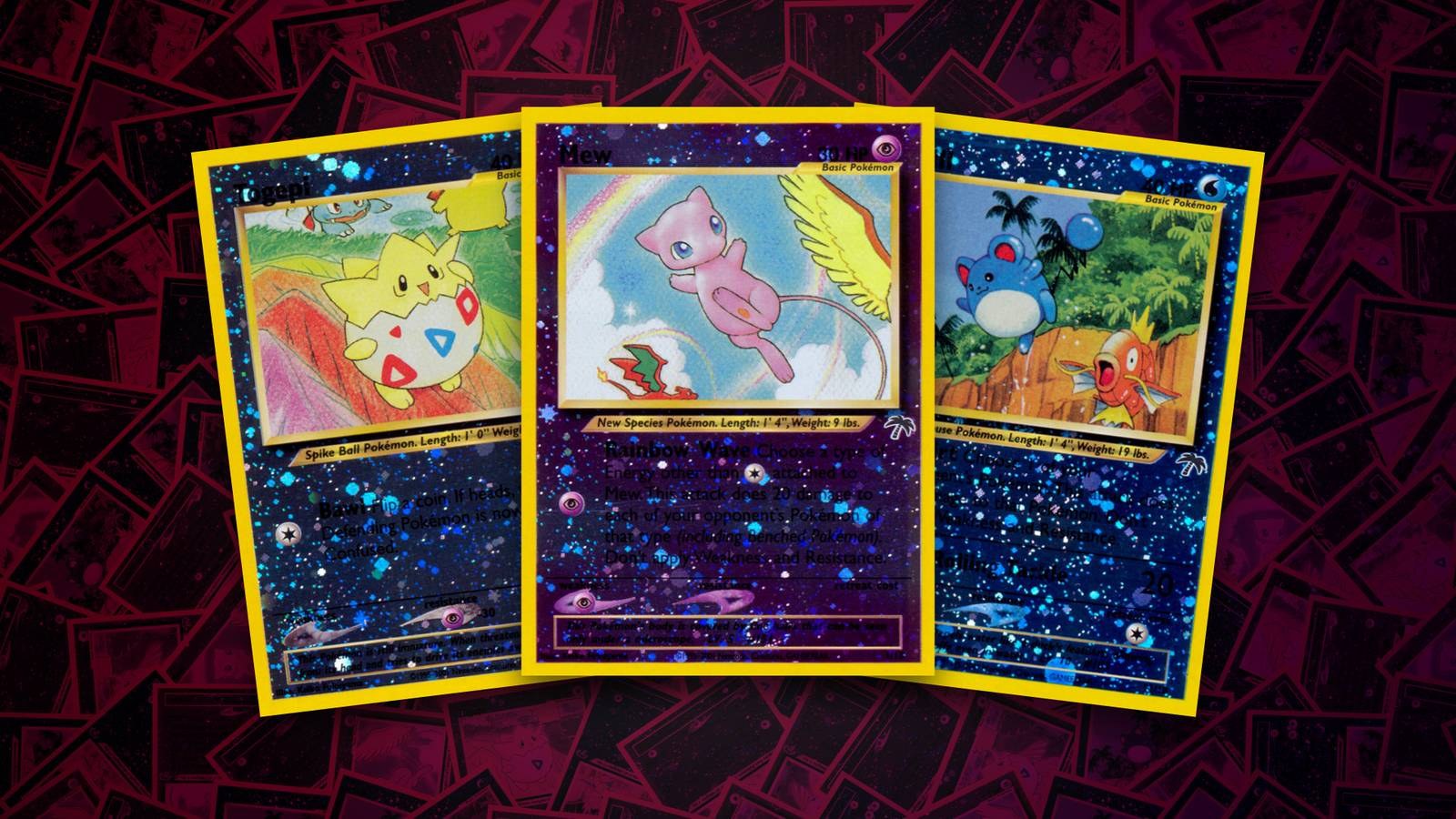
A trio of rare, two-decades-old Pokémon Trading Card Game cards has redefined what collectors are willing to pay for vintage memorabilia, with three graded examples from the 2001 English “Southern Islands” promotional set selling for nearly $1.2 million combined in a recent auction. The sales underscore both the enduring appeal of an unconventional card release and the increasingly serious investment appetite driving the secondary market for high-end collectibles.
The Southern Islands collection traces its origins back to 1999, when it first appeared in Japan alongside the second Pokémon movie. Divided into themed Tropical Island and Rainbow Island portfolios, the set of 18 cards was designed so that smaller three-card subsets would combine into a larger panoramic scene—a creative choice that remains one of its most distinctive features. When Wizards of the Coast brought the collection to English-speaking markets in 2001, it packaged all 18 cards together in a decorated folder complete with postcards and three booster packs, preserving the original island art style that had made the Japanese release so memorable.
An Artwork Built Across Multiple Cards
The interconnected artwork sits at the heart of Southern Islands’ enduring appeal. Prolific Pokémon TCG illustrator Naoyo Kimura illustrated the Tropical Island scenes, while Keiko Fukuyama handled Rainbow Island, with each individual card essentially serving as one piece of a much larger picture. The holos are particularly striking, with shimmering swirls and sparkling patterns dotting nearly the entire card rather than remaining confined to the artwork box, giving those already distinctive illustrations even more visual impact.

The set has always occupied an unusual corner of the Pokémon TCG landscape. It lacks the booster-pack nostalgia of Base Set or Neo-era expansions, instead building its identity around a tiny, predetermined collection, interconnected artworks, and a presentation unlike virtually anything else Wizards of the Coast released during its time with the game. More than two decades later, those qualities have aged remarkably well.
The $840,000 Mew That Led the Sale
Leading the charge was a PSA 10 Southern Islands Holo Mew #1, which commanded an astonishing $840,000. Showcasing its sheer collectability and widespread fan devotion, the card’s supremacy as the most valuable item from this set is underscored by that sky-high price tag. While Naoyo Kimura enjoys the far longer and more prolific illustrator career, Keiko Fukuyama’s work on the Southern Islands cards is arguably more memorable, defined by deeply saturated colors and an almost chibi-like art style—visible in Pidgeot’s softened features and dark eyeliner.
That style suits this eminently desirable Mew grail particularly well, which also features the always-popular Charizard in the bottom-left corner of the card’s art. With only 20 PSA 10 copies of Southern Islands Holo Mew in existence worldwide, seeing this card hit six digits seems about par for the course—especially in 2026, when everything from vintage grails to the most valuable cards from Pokémon TCG’s 30th Celebration has attracted serious collector attention.
Togepi and Marill Round Out a Record Auction
A PSA 10 Southern Islands Holo Togepi #4 followed with an equally impressive $168,000. While a far cry from the Mew’s price tag, it remains deeply remarkable for what is sometimes overlooked as a Baby Pokémon. The slab once again features the distinctive artwork of Keiko Fukuyama, who illustrated only 20 cards during her Pokémon TCG career. Rainbow Island accounted for several of them, while Fukuyama also contributed gorgeous e-Reader-era cards from deeply desirable sets like Expedition, Aquapolis, and Skyridge.
The set was rounded out by a PSA 10 Southern Islands Holo Marill #11, which also reached $168,000. Before ravenous Poké-fans knew this ‘mon’s name, it was billed unofficially as “Pikablu” due to its apparent resemblance to everyone’s favorite Electric Mouse Pokémon. That collected group of ‘mon is now a codified part of the franchise and an expected element of any new Pokémon video game. This staggering slab retains the beautiful “Reverse Cosmos Holo” foiling that typifies the Southern Islands Holos, and it stands as the only card in this group illustrated by Naoyo Kimura—whose iconic illustration for Aquapolis Lugia helped buoy the card to a record $360,000 result in this same auction.
The combined results place these cards firmly among the most sought-after items in the hobby. While none of them reach the heights of the second-most valuable Pokémon card of all time, which sold for $8.4 million recently, the Southern Islands holos have clearly cemented their status as grails that collectors will fight over.
A Collector Market on the Rise
The auction’s results reflect a broader surge in collector interest across the Pokémon TCG ecosystem throughout 2026. Vintage grails continue to command record prices, and even modern releases tied to milestone celebrations are drawing serious investment attention. The Southern Islands set—once an oddity within Wizards of the Coast’s catalog—has proven that its creative risks have paid off in lasting cultural and financial value.
For collectors and investors alike, these sales offer a compelling reminder that historical significance, scarcity, and aesthetic beauty can converge to create some of the most coveted items in gaming collectibles. As interest in the market shows no signs of cooling, enthusiasts will be watching closely to see which other forgotten gems might soon join this elite group.























1 comment