


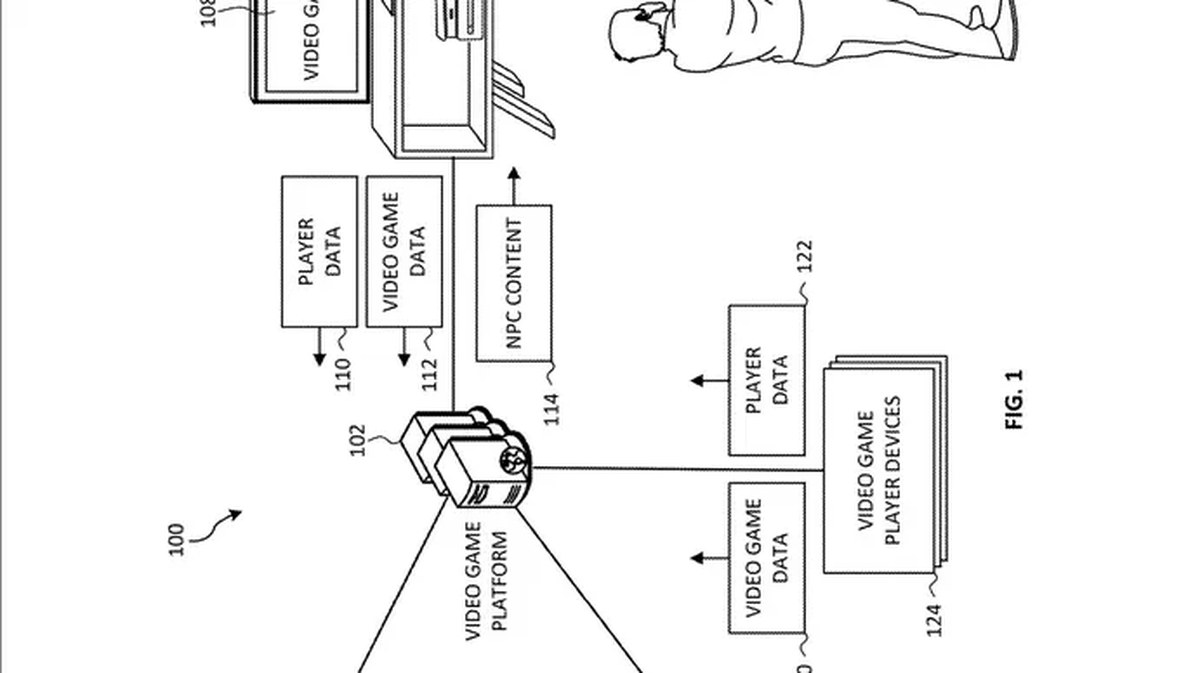
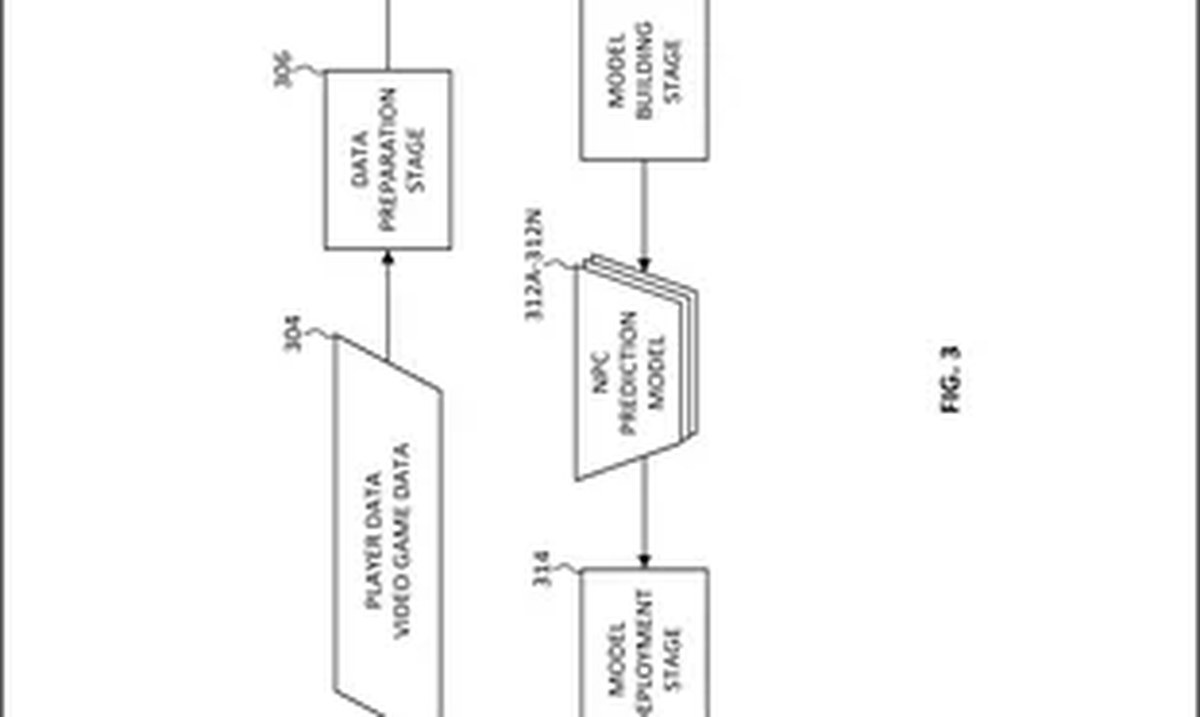
Sony has filed a new patent that would use artificial intelligence to train non-player characters based on data generated by players, marking another step in the company’s push toward machine-learning features for its next generation of consoles. The filing, titled “AI-adapted non-player character for video game system,” describes a process whereby gameplay data is collected and then used to modify NPCs—altering everything from their design to how they behave during challenging encounters such as boss fights. Sony says the technology aims to create more lifelike games without further bloating development time and budgets, which have already ballooned in recent years.
The patent arrives amid a broader industry scramble, with both Sony and Microsoft reportedly eager to weave AI features into upcoming hardware. However, this particular proposal goes well beyond what competitors have attempted so far. Unlike Nvidia’s ACE program, which relies on a large language model to script NPC dialogue, Sony’s system could reshape an entire character—its appearance, its tactics, and its responses to the player in real time.
Redefining What an NPC Can Be
The core premise of the patent is that modern game development struggles to produce believable characters because such work typically depends on extensive scripting, programming, and sophisticated systems for tracking, animating, and evolving NPC behavior. Sony argues that these processes demand costly rendering engines, simulation tools, and scalable infrastructure capable of supporting increasingly detailed virtual worlds.
“Developing such believable NPCs is challenging due to limitations of modern game development and often relies extensive scripting and programming. Additionally, NPC development often relies on sophisticated systems and extensive resources to track, animate, and evolve NPC behaviors.”
Sony patent filing
The company’s proposed solution leans heavily on AI to handle much of that heavy lifting. According to the document, “The techniques described herein overcome the foregoing challenges and others by providing an artificial intelligence (AI)-adapted NPC,” adding that video game systems can be improved as a result. But Sony insists the motivation is not simply to shortcut development—it believes player data itself will make characters better than ever before.
“Lifelike NPCs that behave based on behaviors exhibited by video game players and/or responsive to behaviors exhibited by video game players can be seamlessly integrated into video game systems and video game content thereby improving video game systems without the extensive scripting and hardware resources.”
Sony patent filing
The illustrations accompanying the patent, shown below, depict how such adaptive characters might function in practice.
A Broader Industry Trend
As with many patents Sony has filed at a rapid pace recently, there is no guarantee this system will ever reach a PlayStation 5—or more likely a PlayStation 6. Still, the underlying concept reflects years of experimentation across the game industry. Just last year, Inzoi used large language models alongside player input to shape how NPCs interacted with both players and one another.
The possibilities extend far beyond conversation trees. One could envision bosses in challenging titles like Elden Ring evolving to counter a player’s specific playstyle, or enemies in horror games stalking more effectively because they “know” how the player reacts to different stimuli. Such personalization could make encounters feel freshly threatening on each playthrough.

new patent, called “AI-adapted non-player character for video game system,”
Nvidia’s ACE program
Inzoi
Elden Ring
Security and Privacy Concerns
The prospect of smarter, adaptive NPCs raises notable questions about data security. If these AI models are processed in the cloud—as many such systems require—there is a real risk that sensitive player information could leak online. While advertisers may have little interest in learning how someone reacts to a giant monster swinging an axe, analysts warn this kind of behavioral data could ultimately be repurposed for “enhanced marketing” efforts.
This patent is hardly the first strange entry into Sony’s recent filing portfolio. Just weeks ago, the company patented a system that would use AI to detect problems with your console and deliver automated patches. It also secured protection for a controller featuring an NFC card reader that could bring tap-to-pay functionality to PlayStation hardware.
deliver vibe-coded patches
NFC card reader
The next generation of consoles is shaping up to be a strange one, at least on the patent front. Whether Sony’s adaptive NPC technology ever materializes remains uncertain, but it underscores how deeply machine learning is beginning to influence the way games are designed, developed, and played.























1 comment