

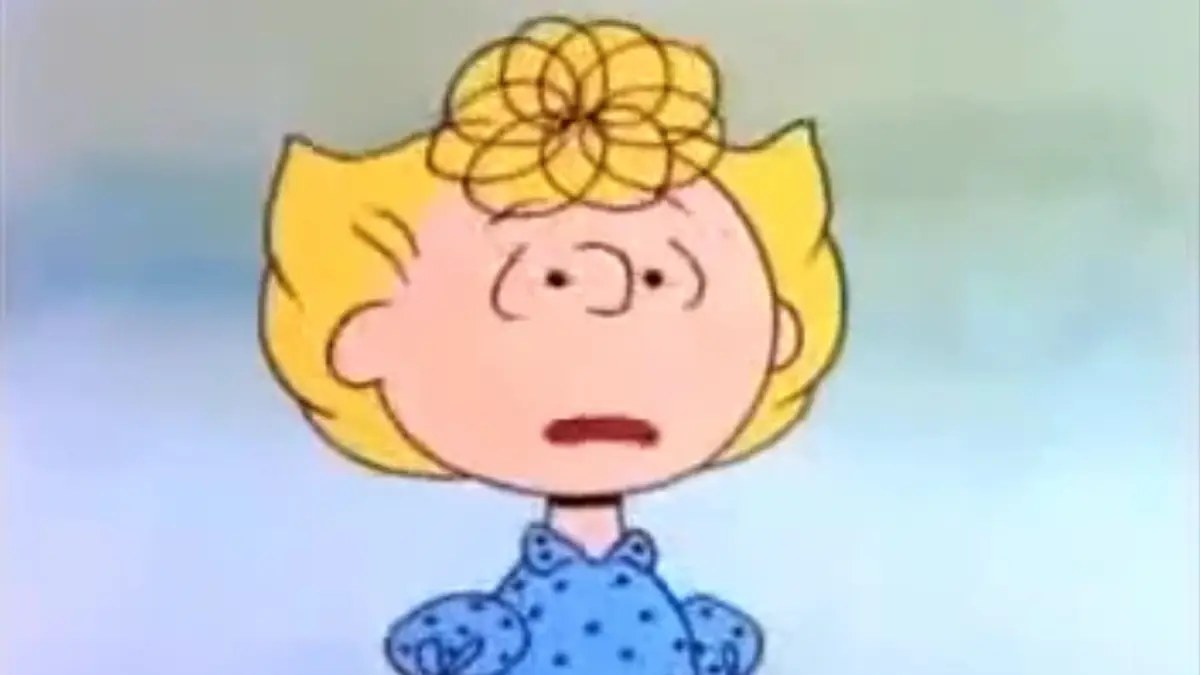
More than six decades after Charles M. Schulz first introduced Sally Brown to readers in his legendary Peanuts comic strip, one of her lines continues to resonate with audiences: “Happiness is your own library card,” which appeared on April 26, 1963. Now regarded as perhaps the most quotable line from the character’s entire run through the beloved syndicated feature, the quote endures as a defining statement about literacy and personal joy that has found new life across school walls, literacy campaigns, and social media feeds alike.
Sally Brown, Charlie Brown’s younger sister, emerged over nearly 50 years of daily strips as one of comics’ most vividly reluctant students. While much of the Peanuts gang approached their education with varying degrees of ease, Sally stood apart as a patron saint of unwilling learners—her antagonistic relationship with academia providing some of the strip’s most enduring comedic moments.
The Reluctant Scholar
In almost five decades of appearances, Charlie Brown rarely lost his temper despite a lifetime of misfortune landing squarely on his shoulders. His signature approach leaned toward world-weary acceptance, verging on Zen calm, leaving other characters to voice their frustrations. That role typically fell to Lucy or Linus, but Sally Brown carved out her own space by taking swings at the fundamental unfairnesses of childhood in her distinctive way.
When modern fans discuss Peanuts, Sally’s most remembered moments usually revolve around either her innocent windmill dunks aimed at Charlie Brown or her deeply one-sided crush on Linus. Yet a rereading of the strip reveals something that stands out even more today: her complicated and often combative relationship with schooling.
“It seems to me that a lot of the problems in this world are caused by people who criticize other people before they know what they’re talking about!”
Sally Brown, Peanuts (June 11, 1987)
This doesn’t mean Sally opposed learning itself. In fact, she was nearly as prone to suddenly demonstrating graduate-level Biblical scholarship as her brother-in-figure Linus. Rather, she embodied the child who did everything possible to wriggle out from under the burden of public schooling—becoming a representation for generations of readers who felt the same way.
A Strip That Predicted the Social Media Age
Rereading some of Sally’s greatest hits today reveals another strip that offers a useful moral for the internet generation, one Schulz could not have known would prove so applicable. In the June 11, 1987 installment, Sally finds herself in the wrong, though a decent lesson emerges from the situation.

The sequence begins with Sally starting a letter by writing “Deer.” Charlie Brown attempts to correct her spelling, but instead of heeding his advice, she continues the sentence by launching into what appears to be the opening line of a term paper about deer. As Charlie Brown retreats rapidly, Sally shouts off the correction above.
Once he has gone, however, Sally begins the letter anew and writes “Dear Grandma,” exactly as he had suggested—confirming that his spelling correction was indeed right all along.
The gag remains genuinely funny on its own merits, but it also functions as a timely reminder. In an era dominated by social media, where readers can dive headlong into incomplete conversations without fully grasping what is being said, Sally Brown serves as both cautionary tale and guide—even in her error. The nearly 50-year-old strip doubles as practical advice for avoiding embarrassing missteps online.
Sally Brown ranks among the great all-time poor students in Western comics canon. Over the course of her appearances, her attempts to escape schoolwork through bluffs, short cons, and clever turns of phrase became legendary, even if she never quite matched the sharpness of someone like Calvin from Calvin and Hobbes.
A Legacy That Endures
For anyone assembling a “best quotes” lineup for Sally Brown, “Happiness is your own library card” remains a safe lock for the number one spot. Its ready-made appeal has made it a favorite for school walls and literacy drives alike, cementing its status as her most quotable line in the entirety of the strip.
The quote’s survival across 63 years speaks to Schulz’s ability to distill complex emotions into simple, universal statements. What began as a single panel on an ordinary April day has transformed into cultural shorthand for the joy of reading and personal intellectual independence—a legacy that continues to connect with new generations of Peanuts fans well beyond the strip’s original run.






















1 comment