

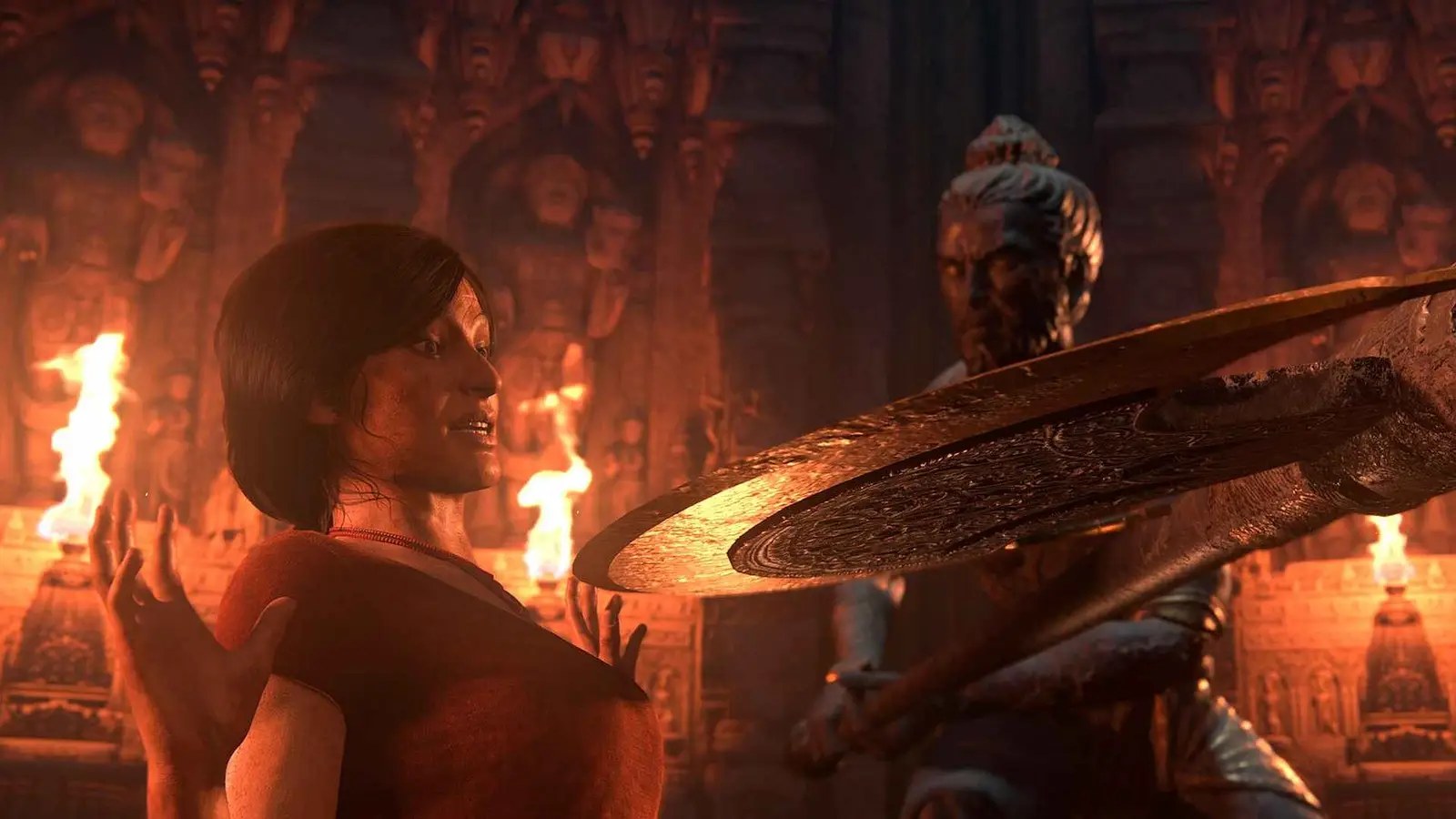
As reports emerge that Naughty Dog is preparing to revive its long-dormant bringing back Uncharted franchise, critics and longtime fans are revisiting one of the studio’s most underrated achievements. The argument has crystallized around 2017’s Uncharted: The Lost Legacy, a standalone spinoff widely regarded as the finest entry in the series — remarkable for achieving this distinction without its iconic protagonist, Nathan Drake.
The timing of these revival reports is notable. 2016’s Uncharted 4: A Thief’s End delivered what many considered a satisfying capstone to Drake’s saga, leaving observers wondering how the studio could possibly follow such a definitive conclusion. According to the reports, Naughty Dog has tapped Shaun Escayg to lead the franchise into its post-Drake era — an ambitious task for which Escayg is uniquely qualified, having already accomplished it once before.
A Standalone Triumph Built Without Drake
The Lost Legacy emerged in the immediate aftermath of Uncharted 4’s release as a self-contained expansion rather than a numbered sequel. It follows supporting characters Chloe Frazer (voiced by Claudia Black) and former antagonist Nadine Ross (Laura Bailey) on a treasure-hunting adventure defined by witty banter and spectacular action set-pieces.
The game was co-directed by Escayg alongside Kurt Margenau, the game director of Naughty Dog’s forthcoming project. Its ability to preserve the series’ signature formula while dropping its most iconic character is impressive in its own right. Yet what truly sets it apart is how The Lost Legacy transcends every other installment precisely because Drake is absent.
The game strips the series down to its core pillars and builds a complete experience around them by learning from the successes and failures of the past. It stands on the shoulders of every other Uncharted game — it just so happens that also means it towers above them.
Polygon analysis
The Power of Restraint
Scope may be the single most important factor in understanding why The Lost Legacy succeeds to such an extent. As a standalone expansion, its runtime runs roughly eight hours according to How Long to Beat — just about half the time required to complete Uncharted 4 at a brisk pace.
Those numbers might suggest that Uncharted 4 is a sprawling epic while The Lost Legacy is merely a light snack between meals. That couldn’t be further from reality. Uncharted 4, by contrast, functions more as an outlier than the norm. The original trilogy entries — Uncharted 1 and its successors — run roughly eight to ten hours each.
The Lost Legacy remains the shortest game in the franchise, yet it recontextualizes just how substantial it truly is. More importantly, it allows Naughty Dog to learn from one of Uncharted 4’s most significant missteps: pacing. By drawing out the adrenaline-pumping action across a longer canvas, Uncharted 4’s highs remain elevated while its lows feel considerably lower — sprawling environments built for their own sake and plot reveals you can anticipate from a mile away.

A Perfectly Calibrated Interlude
The game never forgets to let itself breathe. One of its finest sections takes place in the Western Ghats, a semi-open area that functions as a playable interlude between the story’s two acts — an improvement upon the often dreary vehicle sequences of Uncharted 4.
Chloe and Nadine find themselves amid a vast landscape dotted with towers scattered across the map. Players may approach these in any order, with optional puzzles and collectibles waiting to be discovered throughout. Crucially, this is the only level structured this way within The Lost Legacy. Its singularity makes it the perfect change of pace — invigorating without overstaying its welcome or growing tedious.
Solving the Protagonist Problem
The game also handles the absence of Drake with ease. Chloe Frazer proves equally roguishly charming as Drake, if not more so. Fans caught a taste of her in Uncharted 2, but The Lost Legacy reveals that she always possessed leading-lady potential — much of it attributable to Claudia Black’s electric performance, with Bailey expertly playing Nadine as the straight man within their dynamic.
Their evolution from begrudging partners who constantly butt heads into a true duo is a genuine delight. The narrative itself ranks among the more ambitious in the series, even addressing some perennial questions surrounding treasure-hunting stories.
Looking Ahead
As a follow-up to Uncharted 4, The Lost Legacy arrived visually gorgeous and mechanically sharp — qualities the earlier games could never have hoped for. Yet like the original trilogy, it understands the value of letting a story run exactly as long as it needs to be, and no minute more.
With Escayg now positioned to guide the franchise forward, The Lost Legacy stands as both proof that the studio can thrive without Drake and a benchmark for how future entries should aspire to measure up. Whether Naughty Dog’s revival honors this standard remains to be seen — but the template has never looked more clearly defined.























1 comment