

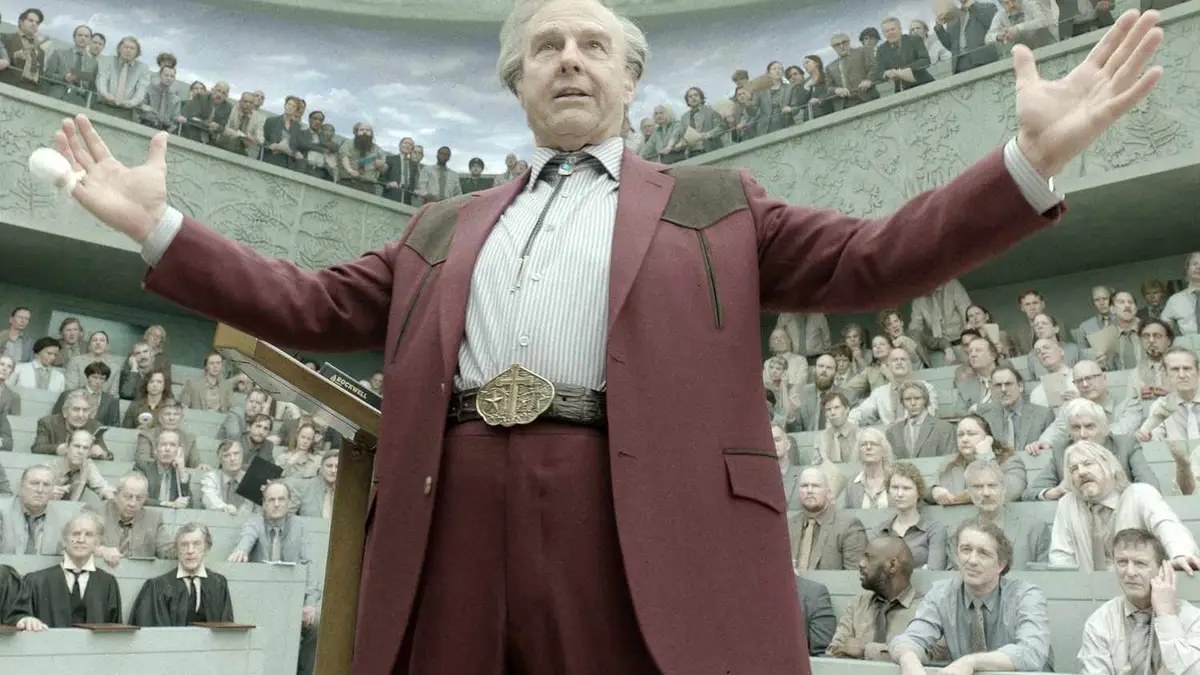
Director Alejandro Iñárritu’s ambitious new film Digger, starring Tom Cruise as an aging oil baron whose drilling operation triggers a global catastrophe, has arrived with a narrative structure built on three major reveals that fundamentally alter how audiences understand the story. The film marks a significant departure for its lead star—his first project in over a decade without recognizable intellectual property or fighter planes—and represents Iñárritu’s most audacious creative swing following his critically divisive high-brow films Birdman and The Revenant.
At its surface, Digger operates as a brutal condemnation of late-stage capitalism and man-made climate change. Beneath that premise lies what reviewers are calling a remarkably clever magic trick, with three big reveals that reshape the film’s meaning in different ways. Understanding all three is essential to grasping what Iñárritu was attempting with this complex meditation on finding meaning at the end of the world.
The First Reveal That Complicates Everything
About 30 minutes into Digger, audiences meet Rockwell Digger (Cruise), whose Greenland drilling operation accidentally dislodges a massive chunk of ice into the Atlantic Ocean, sending it hurtling toward Northern Europe. The U.S. President, played by John Goodman, and his cabinet arrive at Digger’s mansion to discuss their options—of which there are none. As Digger and President Compson step aside for a private conversation, Iñárritu executes his first trick: the majestic tree outside slowly tips over before them, and then a giant hand reaches out from behind the horizon to grab it.
The film reveals that nothing viewers have witnessed is real. They are actually watching actors in a final rehearsal for an elaborate new play starring an actor named Curtis (Cruise) as Digger Rockwell. After a brief reset, the rehearsal continues, with scenes from the play now intercut with behind-the-scenes drama as Curtis clashes with his director and confronts a personal family crisis.
The detail of a hurricane seems like a gesture at the dangers of man-made climate change that the main plotline is all about, but it doesn’t contribute much to an already high-stakes story. Revealing that Digger is actually just an awkward actor named Curtis undercuts Cruise’s entire performance.
Digger Review Analysis
The secondary storyline follows Curtis’ daughter flying home from Jamaica, who mentions a storm might delay her flight before it gets diverted to an unknown location. Curtis considers abandoning the play, but his wife convinces him to stay while she attempts to track down their missing daughter.
The Second Reveal That Redeems the Film
Throughout Digger, Curtis is constantly approached by Kenny, a mysterious figure played by Jesse Plemons lurking around the set and seemingly providing the money behind the entire production. Kenny reveals he runs some sort of intelligence company and offers to help find Curtis’ daughter, but his true role remains hidden until near the film’s end.
During a rehearsal where Digger, President Compson, and the vice president all board Air Force One to oversee the bombing of a second errant iceberg, Curtis completely loses his composure. The scene is deliberately ridiculous, with Vice President (Michael Stuhlbarg) skipping around on the plane shouting “Yippee” as rockets blast the city-sized iceberg into smaller chunks. Curtis complains that no president and vice president would ever be on a plane together for safety reasons, and that none of the three characters were anywhere near this event when it happened in real life.

This marks a crucial turning point: nearly two hours into the film, audiences learn that the events they’ve been watching aren’t merely a satirical play about climate change. They are a satirical reenactment of an apocalyptic event that actually occurred within the world of Digger.
I first saw this play, titled Fossil Fools, at a small theater in London where it was performed by three actors who took turns delivering monologues. It became a cult classic for its darkly comedic take on a real-life apocalyptic event. So I bought the rights to the play and funded an elaborate performance with the best actors and director I could find.
Kenny Rockwell, played by Jesse Plemons
Kenny explains he is actually Kenny Rockwell, the nephew of Digger as portrayed by a young boy in the play within the film. For him, the motivation traces back to his experience watching Fossil Fools for the first time. At the end of that performance, the entire theater erupted into applause and laughter despite the horrors they had witnessed. He wants to give people a reason to laugh in a world seemingly far worse than today’s.
This second reveal reorients the entire film, making sense of why Curtis is so uncomfortable with his performance. The play isn’t just an odd thought experiment; it’s an extremely dark reflection of reality. Iñárritu redeems Digger by giving that second layer of plot genuine meaning—a brutally dark reveal that redefines every scene shown up to that point.
The Final Reveal Looking Ahead
After Kenny’s pivotal speech, the rehearsal resumes and audiences watch Digger Rockwell’s final moments play out—exiled to an old oil rig in the now-summery Arctic with his family while the world burns around them. When Digger dies, the previously empty theater fills with a cheering crowd.
A siren blares as the theater doors open, revealing a smoggy world outside. Everyone in the audience simultaneously pulls out sleek, high-tech air-filter masks and slowly files out. Iñárritu cuts to the exterior of the theater, where a billboard announces the 25th anniversary performance of Fossil Fools before panning slowly to reveal a disturbing post-apocalyptic city: grey skies, flooded streets, and heavily armed soldiers patrolling every corner.
This striking image functions as both a preview of our own not-so-distant future and a final reminder that even when society collapses, humans will still need to find ways to entertain themselves and laugh through their misery. As for whether Digger is a musical—the answer is no—but given the play-within-a-movie premise, such an adaptation makes sense within the film’s universe.























Join the conversation