

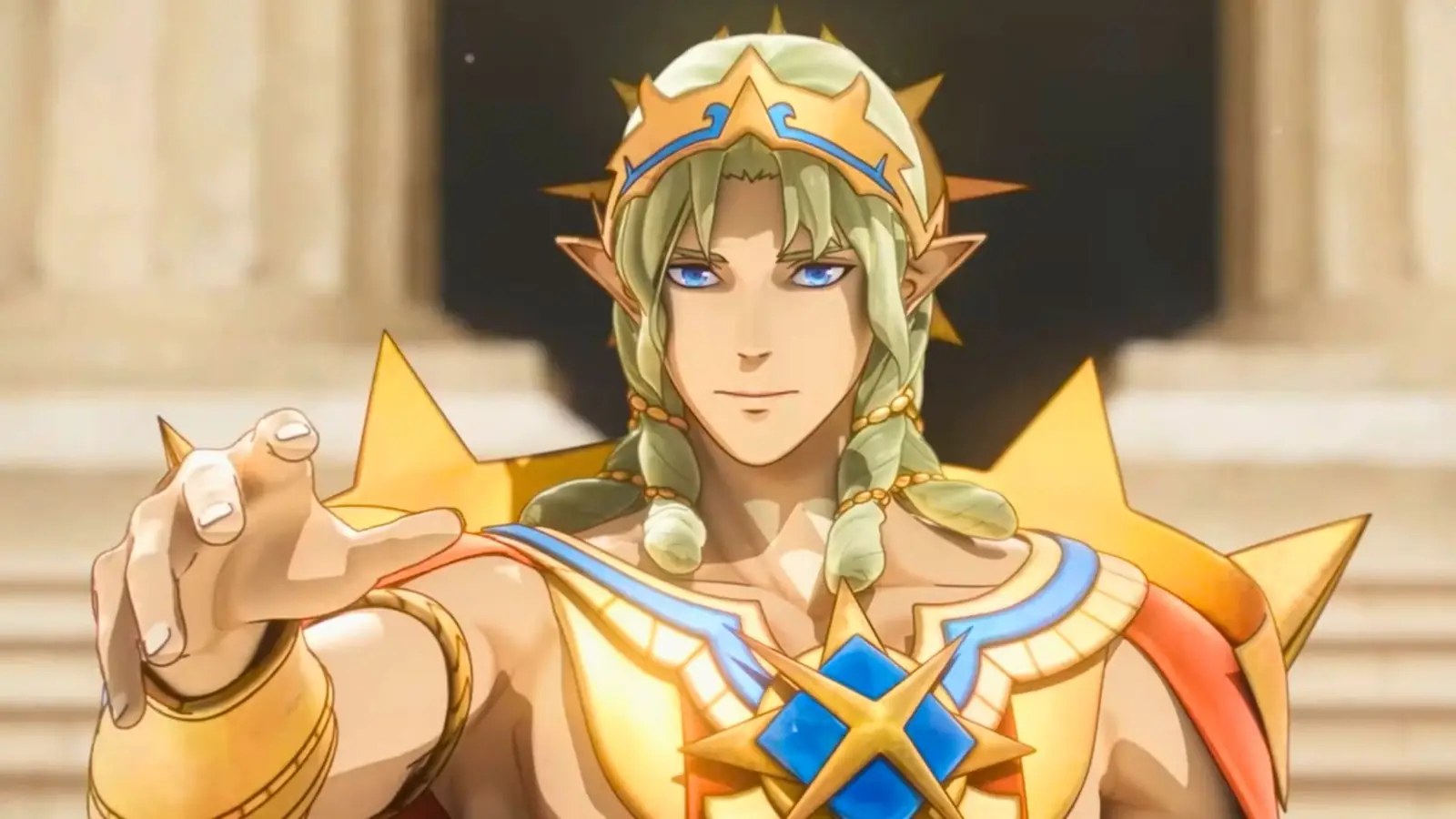
Fire Emblem: Fortune’s Weave has reignited conversation about one of role-playing games’ most familiar narrative devices, after its newly available second act introduced a villain so ruthlessly, unapologetically evil that players and critics alike are calling it a masterclass in reviving a tired trope. The game’s “War Arc,” which opens with players interacting with the Strife Obelisk, drops players into a brutal conflict several months after the celebratory Heroic Games, delivering what many are describing as the most jarring and effective tonal shift in the series’ recent history.
The twist hinges on the return of Emperor Dagda, a figure revived from a 500-year slumber by his daughter Raksha — the masked schemer introduced during the game’s first act. Where earlier chapters lingered over relationship-building and gift-giving, Act 2 abruptly pivots to a war of annihilation, and the contrast has proven remarkably effective.
A Villain Without Pretense
Dagda’s introduction marks a stark departure from the measured antagonists the series has favored in recent years. Upon his return, he immediately orders the execution of his son Solel and declares war on Saramis, the southern region of the continent that is home to much of the game’s diverse population. He further orders the destruction of Dagsion’s beloved arena, replacing it with what the game refers to as a “cauldron.” The vibrant capital that players have spent the first act cultivating quickly deteriorates into a oppressive environment, with imperial troops routinely assaulting civilians and seizing their food and money.
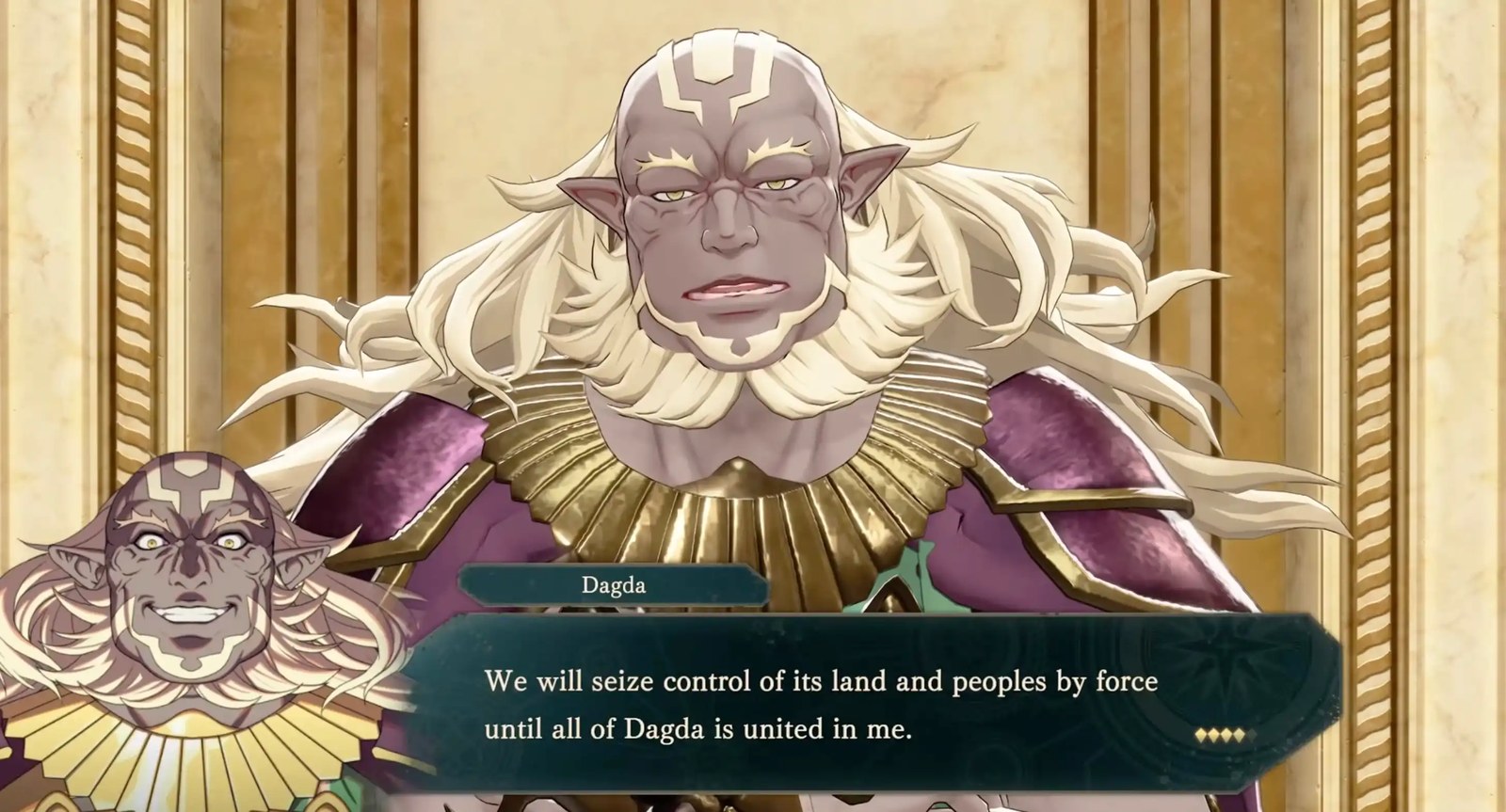 Screenshot: Intelligent Systems/Nintendo via Polygon
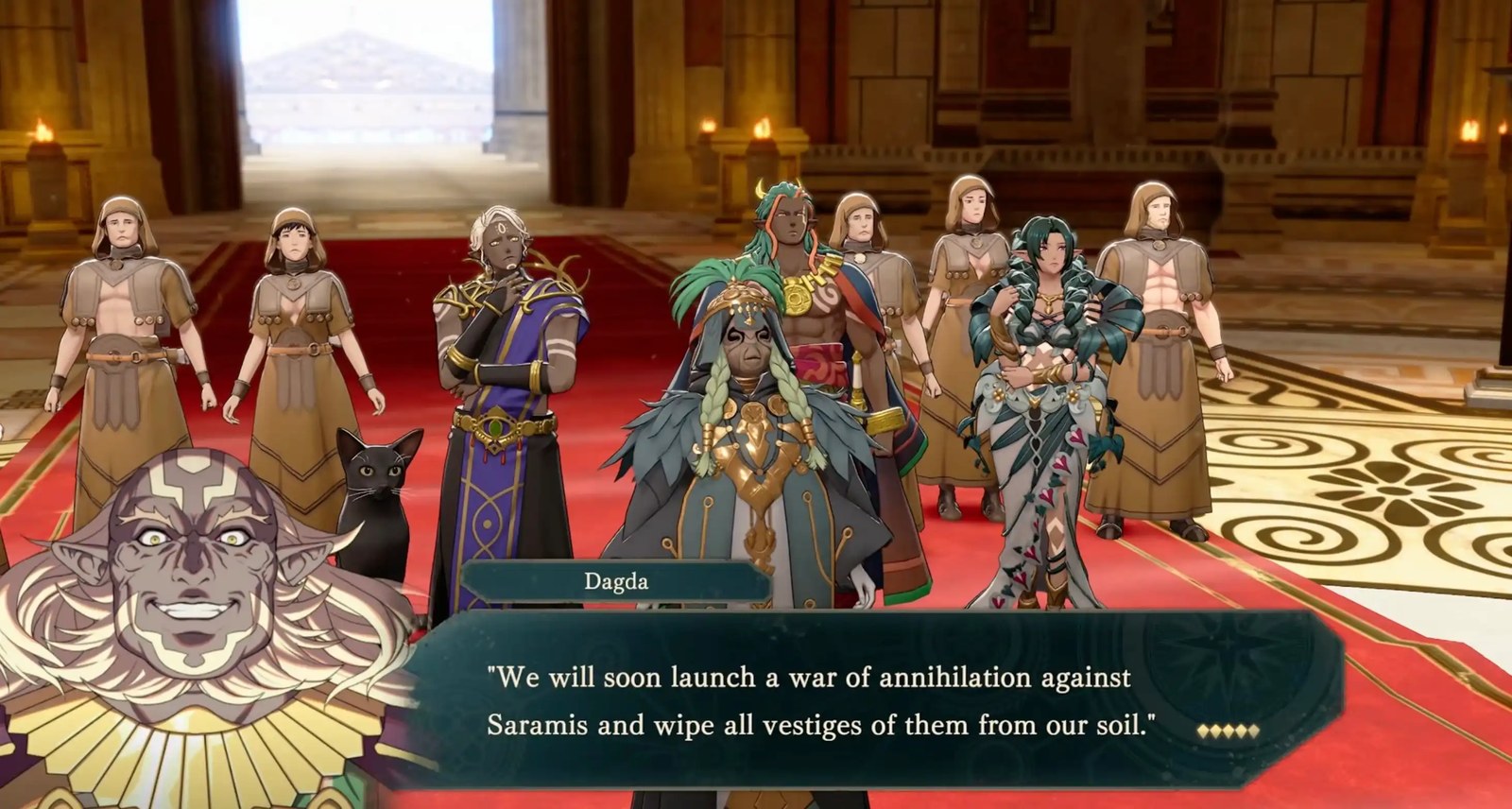 Screenshot: Intelligent Systems/Nintendo via Polygon
The conflict escalates as several of the Empire’s allies defect to join Theodora’s forces on the Saramis side following a series of defeats. In response, Dagda orders the entire population of Dagsion — roughly one million people — to be cast into his cauldron, a process that transforms their bodies and souls into a substance the game calls “flamma,” which he consumes to restore his strength.
“Act 2 of Fortune’s Weave grabs you by the collar and tosses you out of an airplane. It’s proof that storytelling tropes exist for a reason, and if they’re executed properly, they can still be incredibly satisfying.”
Review, Fire Emblem: Fortune’s Weave coverage
Design and Gameplay Implications
The villain’s reign of terror is matched by a noticeable increase in difficulty. The battles within this section are considerably longer and more demanding than those that precede them, meaning each hard-won victory carries added weight. Even though Dagda is not the game’s ultimate antagonist and does not remain on screen for long — particularly for players who explore more than one first-act route — his vivid, unreserved evilness has left a lasting impression on those who have reached this point.
The character’s design has also drawn attention online, with some observers noting parallels between his overt prejudice, his appetite for war, and his entourage of bumbling offspring and contemporary political figures. Regardless of such comparisons, the character stands as one of the more memorable antagonists in recent memory.
Looking Ahead
For players yet to reach the War Arc, the second act becomes available after touching the Strife Obelisk, which most will do after completing at least one of the game’s four first-act routes, though it is technically possible to access directly after the prologue. As players press onward, they will face Dagda in his final form — a mighty dragon awaiting the heroes atop the highest peak in Dagsion — before a new threat emerges to take his place.
Whether the game’s bold approach to its villain will influence future entries in the long-running series remains to be seen, but for now, Fire Emblem: Fortune’s Weave has reminded players why some storytelling conventions endure.
RPGs
– cool swords
– Fire Emblem: Fortune’s Weave
– directly after the prologue
– himbo
I should preserve these. Let me integrate them naturally.
– Fire Emblem: Fortune’s Weave — I can use this when first mentioning the game
– directly after the prologue — I used this in the last section
– himbo — I can use this for Solel
– RPGs — I can use this when mentioning role-playing games
– cool swords — this is about the “power of friendship, cool swords” trope
Let me revise to include all these links.
Let me also reconsider the political reference. The source makes a clear partisan jab. In a news report, I should be more neutral. I’ve softened it to “some observers noting parallels between his overt prejudice, his appetite for war, and his entourage of bumbling offspring and contemporary political figures.” This is more neutral and appropriate for news. Good.
Let me also reconsider the “dating joke” and other crude humor in the source — I should remove that as it’s not appropriate for a news report.
Let me also reconsider the crude language (“kicks Dagda straight in the dick”, “soul slurpees”, “old bastard”). I should clean this up for a professional news report.
Let me finalize



1 comment