


Twenty-six years ago, the season 5 premiere of Buffy the Vampire Slayer did something quietly radical: it took one of fiction’s most venerated monsters and knocked him off his pedestal. Titled “Buffy vs. Dracula,” the episode — which aired in 1999 — saw Buffy Summers (Sarah Michelle Gellar) face off against Count Dracula (Rudolf Martin), who arrives unannounced in the town of Sunnydale to hunt down the renowned Slayer. Rather than treating the Transylvanian aristocrat as the towering final boss he is usually cast as, the show turned the confrontation into a tongue-in-cheek spectacle that subverted centuries of gothic tradition while quietly commenting on the era’s shifting ideas about gender and power.
To understand the weight of that decision, it helps to trace the villain’s lineage. The vampire as a stock antagonist can be traced back to the 18th century, but the archetype only became fully fleshed-out in Bram Stoker’s 1897 gothic horror, Dracula. In Stoker’s novel, the Count functions as a layered metaphor for social taboos and pestilence, while his migration from Transylvania to England carries unmistakable themes of xenophobia. Ever since, Dracula has evolved into an enduring figure — often treated as the final boss in most vampiric tier lists — appearing in everything from the silent classic Nosferatu (1922) to Blade (1998). He typically symbolizes a grand threat that must be defeated before it’s too late.
A Slayer Addicted to the Hunt
By the time “Buffy vs. Dracula” rolled around, Buffy had been juggling her fated Slayer duties and turbulent adolescence since the show began. Rather than waiting for threats to reveal themselves, she had become an active seeker of monsters — and, as the episode suggests, something close to addicted to the thrill of the chase. Her mentor Giles (Anthony Stewart Head) feels he has outgrown his usefulness and announces his plans to return home to England at the start of the episode, leaving Buffy to navigate both his impending departure and her own growing affinity for darkness.
When the Count first appears, Buffy’s reaction is one of bemused disbelief. “Get out!” she retorts with skepticism after her initial meeting, dismissing him as a “fanboy” like the countless vampires who “call themselves Lestat.” The rest unfolds as an expectedly campy showdown between the Slayer and the Count — a fun, if lackluster, season premiere that nonetheless packs a surprising amount of thematic ambition into its runtime.
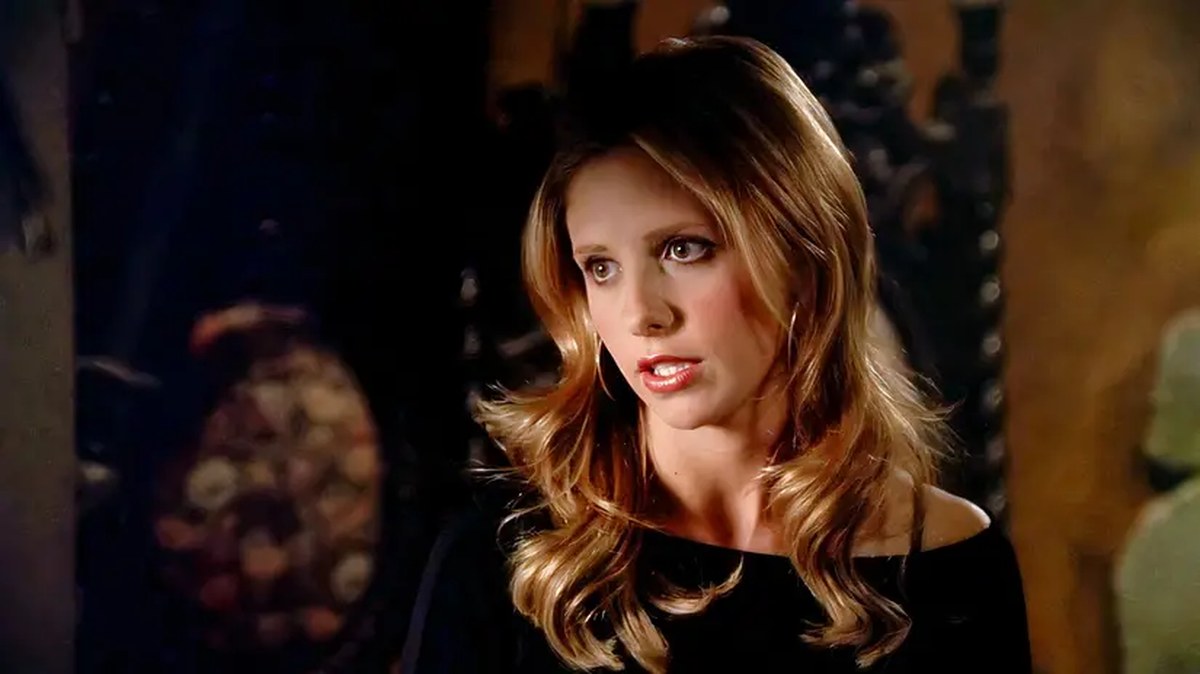
“Buffy vs. Dracula” won’t be remembered as one of the best episodes of Buffy the Vampire Slayer, but it is a compelling one-off where a legendary monster is defeated with campy ease. While Buffy wrestles with conflicting impulses throughout the episode (and the rest of the show), she hardly breaks a sweat while driving a wooden stake through an ancient, undead heart.
Episode retrospective
Subverting Stoker, One Stake at a Time
The episode deliberately draws from Stoker’s novel to undercut audience expectations. Dracula transforms into a wolf and a bat, while wielding the ability to exert mental influence over humans. Buffy’s friend Xander (Nicholas Brendon) becomes the Count’s bug-eating devotee, much like Renfield, and Giles is seduced by three vampiric brides — a direct nod to Jonathan Harker in the original novel. During the climactic battle, the Slayer falls under the vampire’s thrall like Mina Harker, only to promptly snap out of it and stake the Count. She then manages to stake him a second time when he attempts to resurrect himself, capping a battle that is as much a character study as an action set piece.
Beneath the camp lies a kernel of genuine seriousness. Dracula correctly identifies that the Slayer’s power is rooted in darkness, telling Buffy, “You must feel it.” Her response is characteristically quippy: “No. You know what I feel? Bored.” There is real truth in the Count’s assessment of Buffy’s evolving outlook — forced into a more ruthless headspace after acute grief and loss, her adventures have left her world-weary, pointing to a loss of innocence and a more ambiguous moral compass.
Rejecting the Damsel Trope
Crucially, the episode staunchly rejects the clichéd trope of passive women being “corrupted” by Dracula’s evil. Buffy is emphatically no damsel-in-distress. At one point, her boyfriend Riley (Marc Blucas) races to save her from the Big Bad, only to arrive after she has already saved herself — and the day. In the same vein, Buffy refuses to succumb to Dracula’s thrall because she rejects outdated patriarchal notions about female sexuality and gender roles.
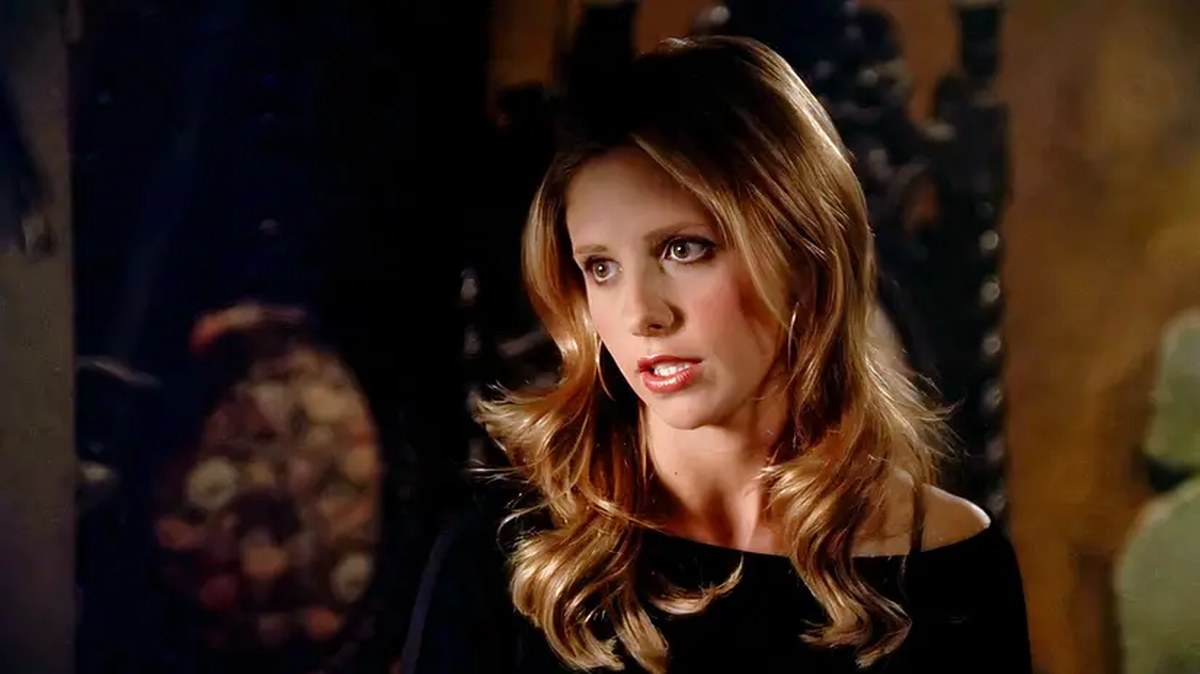
As for Dracula himself, he stands apart from the show’s traditionally quirky antagonists-of-the-week. Although his affected accent and archaic prose add a comedic element, the Count feels deliberately out of place in Sunnydale. He is a relic of a bygone era — a Victorian sensibility that violently clashes with a postmodern world where women are no longer defined by moral purity. Someone as competent as Buffy Summers is simply not destined to become one of Dracula’s brides. Instead, she chooses the role of a righteously bloodthirsty Slayer who resists the temptation of immortality to, once again, do the right thing.
Looking Ahead
For viewers revisiting the series today, “Buffy vs. Dracula” offers a satisfying reminder of the show’s willingness to blend genre homage with social commentary. The full series remains available to stream on Hulu, where fans can revisit not just this memorable one-off, but the broader arc that made Buffy Summers one of television’s most enduring anti-heroes.
Whether or not it ranks among the show’s finest hours, “Buffy vs. Dracula” endures as a clever, campy reimagining of a legendary villain — proof that even the most iconic monsters can be brought low with a wooden stake and a healthy dose of irreverence.



Join the conversation