The Blood Of Dawnwalker: A Darkly Compelling Action-RPG
[A captivating introduction to a game where every choice matters and even happiness is fleeting.]
The Blood of Dawnwalker isn’t just another action-RPG; it’s an experience that lingers long after the credits roll. Set in a dark, medieval valley ruled by vampires who demand blood and subservience, the game confronts you with stories that rarely end happily. While hoping for anyone to escape unscathed might seem naive, developer Rebel Wolves manages to give almost every story enough depth and nuance to keep even the most tragic events compelling.
A Valley of Endless Quests
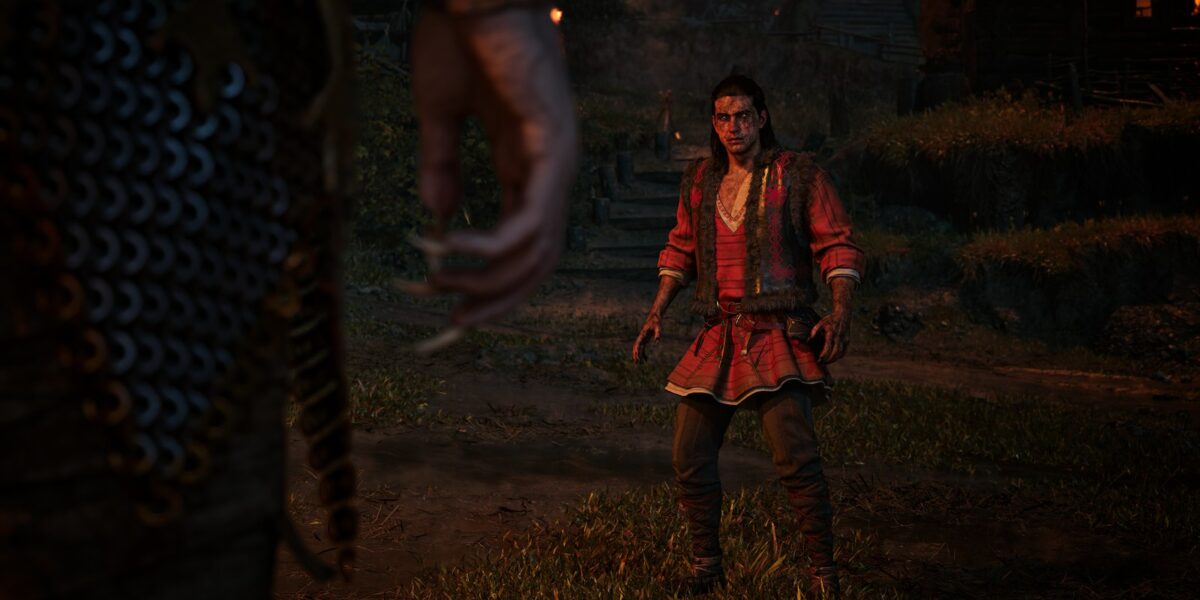
[A screenshot showcasing a character interacting with a villager in a dimly lit environment.]
Dawnwalker throws an absolutely staggering number of quests at you. Initially, they seem haphazardly constructed, lacking a clear throughline; instead, you craft your own narrative by tackling whatever tasks feel worthwhile. What’s truly remarkable is the quality of these quests, ranging from intricate stories of rebels fighting for freedom to brief glimpses into the lives of soldiers on the road before you inevitably hack them apart with your sword. The game excels at crafting compelling narratives, and it’d be easy to get completely lost in Dawnwalker, wanting to do everything it offers. The fact that you can’t is part of what makes it so captivating.
Time as a Ticking Clock
[A screenshot depicting the character looking out over a valley landscape.]
One of Dawnwalker’s most innovative features is its time-based system. You play as Coen, a human who loses his family to Brencis, the vampire sovereign. Realizing that Brencis plans a feast in 30 in-game days, you have that limited time to prepare, storm the castle, and free the captured humans. This involves strengthening yourself, gathering allies, and devising a plan before time runs out.
Time advances as you undertake or complete quests and activities. Each task consumes a certain amount of time, forcing you to weigh whether one quest is worth more than another. Delaying other activities while a quest is active can alter the situation or even lead to failure. While you have enough time to avoid micromanaging every hour, the constant awareness of the ticking clock gives everything you do in Dawnwalker a sense of urgency and importance. It also makes you consider whether to help a minor character or choose a quick but potentially harmful option.
Time dictates how you approach quests as well. After the tutorial, Coen is transformed into a vampire, but thanks to supernatural rules, he becomes a “Dawnwalker” – transforming at night but reverting to human in sunlight. During the day, human Coen can interact with shopkeepers and enter settlements, looking like anyone else; if he fights Brencis’s soldiers, he uses a sword. At night, Coen is more deadly but also more noticeable, attracting attention from enemies. An area might be public during the day and off-limits at night, changing how you approach problems. Some events only happen during the day or night, adding another layer of strategic depth.
The most ingenious use of time comes in Dawnwalker’s progression system. Leveling happens passively as you gain experience points for completing quests and defeating enemies, boosting your overall stats. However, unlocking new abilities in combat or enhancing elements like your life total and stamina bar requires more effort. To unlock skills for human Coen, you need to find and read books; for vampire Coen, you consume the blood of humans, animals, and other vampires. Unlocking perks costs points earned from leveling, as well as time.
This creates a constant trade-off: making yourself stronger risks delaying or failing quests. I often found myself holding onto perk points in Dawnwalker, waiting for the right moment to use them. This sometimes meant undertaking quests without maximizing my capabilities. This push and pull makes leveling up a deliberate decision about how it impacts Coen’s overall goal.
However, the leveling system falls short in what it offers. Coen has three skill trees from which you can purchase perks, each tied to a different aspect of his character: swordsmanship, vampire abilities, and witchcraft powers. The game presents many options, some of which can be upgraded multiple times, creating choice paralysis. You’re forced to think about which upgrades matter most and whether you’re leaning too heavily on one set of perks over others, potentially leaving yourself vulnerable at certain times.
The problem is that the trees are filled with upgrades that don’t always feel meaningful. The system incentivizes equipping a few active and passive abilities and never changing them, effectively making the unused ones dead spots on the tree. Since you need to find books to unlock many perks, you might be barred from using them forever or for so long that they become irrelevant.
This abundance of options can lead to disregarding many choices, not out of deliberate character building, but because of arbitrary quests throughout the game. I never fully developed his witchcraft abilities because they often required sacrificing health, and their books weren’t as readily available. I spent perk points on unused abilities, ultimately favoring sword skills.
While you unlock fun combat abilities, using only a few for extended periods weakens Dawnwalker somewhat, as you’re constantly fighting. Brencis’s soldiers dominate the valley, and while you can talk your way out of situations, combat is central to Dawnwalker’s gameplay, making the repetition of a few abilities stale.
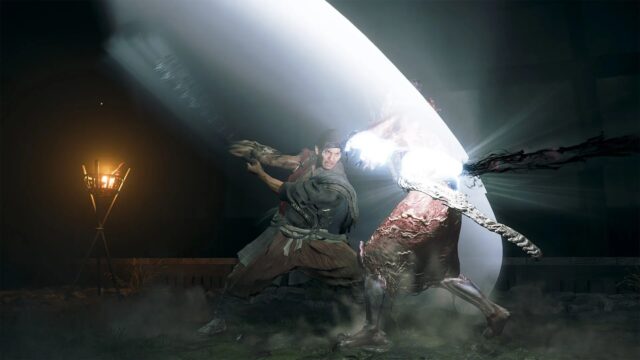
Dawnwalker’s combat is generally good, focusing on directional attacks. Coen swings his attacks in a particular direction based on where you hold the left analog stick, aiming to beat an enemy’s guard by avoiding their blocks. In practice, directional swings are often haphazard, but they also don’t matter much. The real strength of directional combat lies in defense: pushing the analog stick in the direction your opponent is swinging from and hitting the block button at the right time allows you to parry their blow and counterattack.
You manage stamina for attacks, dodges, and Coen’s “omniblock,” which deflects incoming blows. Blocking directionally uses no stamina and actually recovers it, allowing you to maintain a fast-paced fight. Enemies often attack in groups, requiring you to watch out for flanking maneuvers, which can be deflected away before returning to your main target.
It’s a great system that creates a dueling rhythm, with back-and-forth exchanges demanding quick reactions. The constant need to manage stamina and react to enemy attacks keeps fights exciting, even when facing groups of soldiers you’re about to defeat for the hundredth time.
However, the repetitive nature of combat can be frustrating, as both human and vampire Coen feel too similar in function despite their differences. As a vampire, Coen can fight with his claws, but they deflect blows from soldiers and monsters just like a sword does. The main differences lie in special abilities, which are often unblockable or interrupt enemy attacks. This reduces them to tactical deployments at key moments, rather than strategic choices. Even though human and vampire Coen are intended to feel different, one more calculated and the other more aggressive, they ultimately play similarly, especially over time.
Another difference is how you manage health. Vampire Coen has perks that increase survivability, including an ability to briefly chomp on an enemy’s neck to restore health early in the game. The vampire side also has powerful perks like passive health regeneration and bonuses when parrying or attacking with claws. By the end of the game, I felt functionally unkillable as a vampire, as my health often regenerated faster than enemies could damage me.
As a human, fights are more harrowing because your healing options are limited to eating food between fights and using items in quick slots during combat. You can’t refill your quick slots during combat, forcing you to manage them carefully, and food is less effective. This forces you to rely on medicines you can craft, making fights tougher but also incentivizing you to use your safer and more powerful vampire abilities.
Dawnwalker includes a granular difficulty system that you can adjust throughout the game. You can separately adjust combat difficulty, affecting parry windows and enemy damage, and RPG difficulty, governing Coen’s stamina costs and healing. At default settings, it was easy for the balance to get thrown off, so adjusting both was useful to maintain a challenging but fair experience.
Despite not always firing on all cylinders, Dawnwalker’s systems are intricate and deliberate, encouraging you to think about how you interact with them. It’s fun to carefully consider leveling up, which armor and weapon bonuses matter most, and what preparations you need for a fight. These elements give Dawnwalker’s RPG systems more depth than many games in the genre.
What truly holds everything together is the excellent writing that creates one of the deepest and most interesting game worlds I’ve encountered. The stories are compelling, and it’s easy to get lost in Dawnwalker, wanting to explore every corner of its world.
The voice acting is also strong throughout the game, making even mundane open-world content unexpectedly engaging. Brencis has three lieutenants who run his operations, recruiting soldiers, gathering blood, and keeping the masses docile. Disrupting these operations can lead to opportunities to kill them when they’re vulnerable, giving you a deep look into their characters. Even seemingly basic activities often have interesting stories attached, like finding a mother trying to convince her soldier son to desert, offering choices to reason with him, intimidate him, or bribe him.
The quests tied to each lieutenant are among the best in the game, providing opportunities to catch them when they’re vulnerable and giving you insights into their personalities. They also offer tough choices, like being approached by a vassal of one lieutenant who wants to help you win a duel by poisoning the blood he drinks, forcing you to decide whether to harm an innocent person. These choices have material consequences, creating small-scale dramas. Many quests in Dawnwalker stick with me days later, and I want to dive back in to follow the many plot threads I missed or cut short.
Dawnwalker also introduces a clever twist: the fact that you’re a vampire. Talking to people often reveals an option on your list of responses: “Give in to the hunger.” As your health gets lower and you get hungrier, this option becomes more prevalent, sometimes hopping around the list to trick you into selecting it. Other options might briefly change into the hunger option. If your health is low enough, you might not have a choice, and your murderous nature will take over.
This creates interesting consequences. Killing someone, either intentionally or accidentally, can wall off quests you needed that person to complete or alter their circumstances. At the very least, people who would have played a larger part in the story won’t be around later if they’re dead. This injects unexpected drama into a game where you’re already constantly choosing how to deal with people and what you’re willing to do to achieve your goals.
However, the “hunger” mechanic is easily circumvented. While I experienced Coen losing control during a Dawnwalker preview event, it never happened again in my review playthrough. The game provides guardrails to help you avoid being forced into that situation, whether it’s animals or people you can briefly feed on, health bar enhancements, or passive healing. This makes the “hunger” mechanic less impactful than intended.
The technical aspects of Dawnwalker are also a mixed bag. Object and texture pop-in is frequent, animations sometimes hitch in conversations, platforming sections can be frustrating due to Coen slipping off walls or falling through the ground, and hit boxes can be finicky in combat. These issues are mostly minor annoyances, but they happen often enough to be noticeable. Rebel Wolves has already patched out some of these issues and plans a Day One update to address them further.
Overall, The Blood of Dawnwalker is an ambitious and deeply interesting first game from Rebel Wolves. Not every idea lands perfectly, and not every aspect is pushed as far as it could be, but the potential of the game is vast, and there’s much to love. The excellent writing creates a compelling world that stays with you long after the credits roll. The Blood of Dawnwalker is the kind of RPG that feels great to get lost in, that digs into your mind, and which is worth savoring.
Review Verdict: Great
The Good:
– Fascinating quests with excellent writing and acting
– Time system encourages careful planning
– Freedom in how quests are completed, leading to interesting consequences
– Directional combat creates a tense dueling rhythm
– Small-scale dramas add depth to seemingly mundane activities
– Compelling story that stays with you
The Bad:
– Human and vampire combat can feel too similar
– Perk system has many options that are easy to ignore
– “Hunger” mechanic is less impactful than intended
– Technical issues distract from the experience
Featured In This Review:
Phil Hornshaw ran around The Blood of Dawnwalker’s valley for about 42 hours on PlayStation 5. Review code was provided by the publisher.






Comments
Be the first to comment.