

While most films that play with temporal mechanics freely bend or abandon the laws of physics to serve their narratives, a select handful of movies have earned lasting acclaim for grounding their time-travel premises in genuine science. From Christopher Nolan’s black hole-laden epic Interstellar to the low-budget mind-bender Primer, these five films stand apart by either meticulously researching quantum physics or building their entire stories around established scientific principles.
The distinction matters because the vast majority of time travel cinema simply ignores the mathematics involved. Writers and directors routinely include whichever temporal concepts advance their plot while discarding those that don’t. This approach works for entertainment, but it leaves countless logical inconsistencies in its wake—some so glaring they undermine even beloved franchises.
The Back to the Future Problem
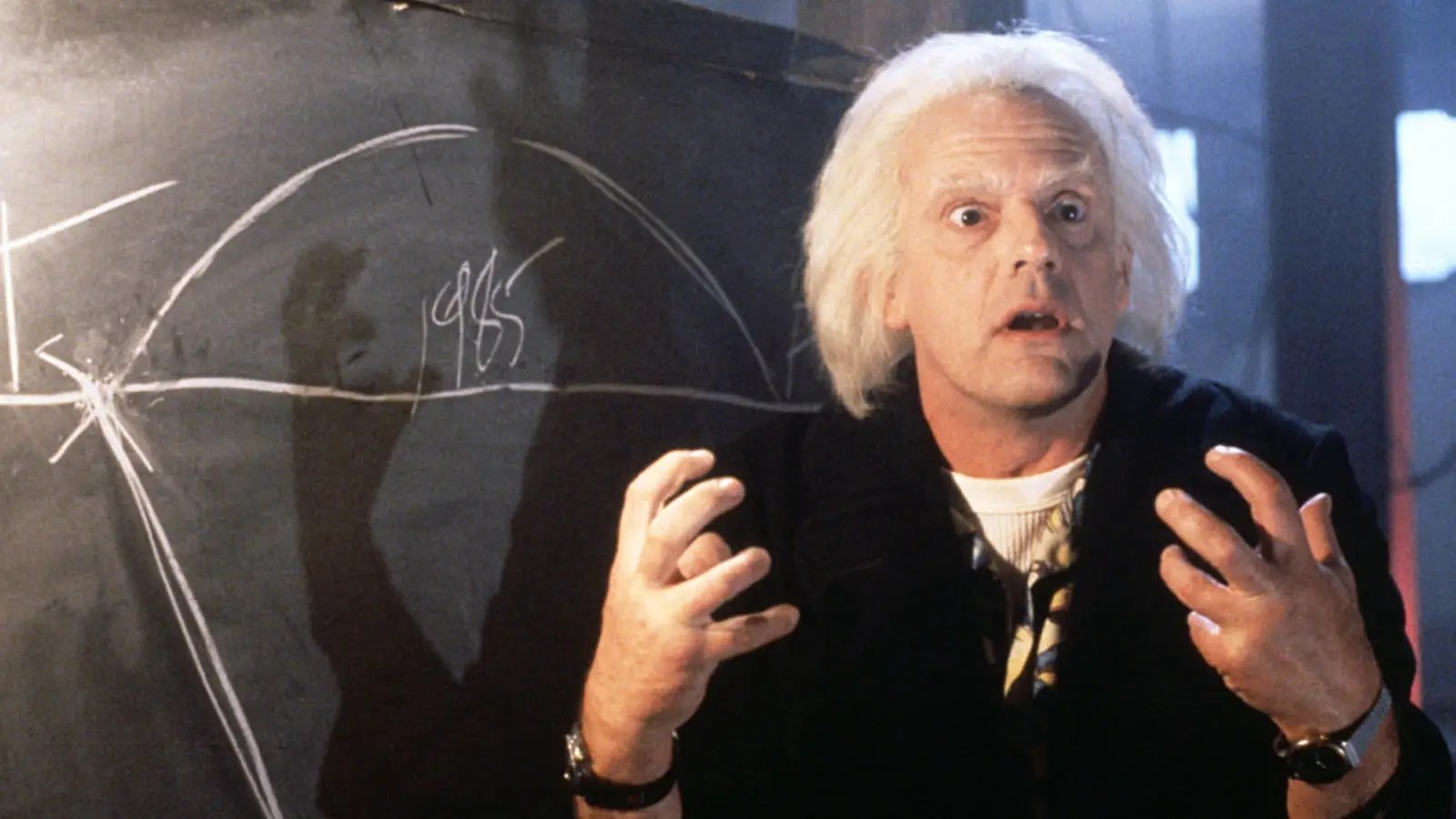
No example illustrates this problem better than Back to the Future Part II, one of the most cherished time travel franchises in cinema history. When Doc Brown takes Marty and Jennifer forward into the future, they discover they cannot meet their own children. The reason is that Marty and Jennifer would have been absent from the timeline for roughly 30 years during their past lives—a contradiction the films never properly address.
This is merely one instance of how even the most beloved time travel stories collapse under basic scientific scrutiny. Once you apply real-world physics to these narratives, much of them falls apart entirely. Yet a few filmmakers have proven that rigor and entertainment can coexist on screen.
Interstellar
Christopher Nolan’s 2014 science-fiction epic Interstellar stands as the most widely recognized film to explore quantum physics with such thoroughness. This depth stems largely from its development by theoretical physicist Kip Thorne, who worked alongside producer Lynda Obst and served as scientific consultant on production.
The film delves into concepts like black holes and time dilation before depicting time travel in its climactic final act. Astronaut Cooper, played by Matthew McConaughey, enters a black hole and discovers a “tesseract”—a structure built by future humans that represents time as physical space, allowing Cooper to communicate with his daughter across the past.
The tesseract is admittedly hand-waved through its creation by advanced future beings, but it nonetheless uses genuine science—namely our incomplete understanding of black holes—as a foundation for exploring how time travel might conceivably occur.
Planet of the Apes
Any depiction of time travel that sends characters forward rather than backward enjoys an inherent scientific advantage, since forward time travel is entirely possible. The catch is speed: you must move close to the speed of light. Time moves slower for objects traveling faster, an effect imperceptible on Earth but dramatic at relativistic velocities in space.
This phenomenon, known as time dilation, explains why satellites orbiting Earth experience time slightly differently than those below. An astronaut traveling near light speed would age far more slowly than everyone remaining on Earth—a concept Interstellar illustrates beautifully and Planet of the Apes relies upon implicitly.
In the original 1968 film, astronaut George Taylor (Charlton Heston) embarks on a space mission aboard a ship moving at near light speed before crash-landing on an unfamiliar world. He doesn’t realize until the finale that this planet is actually Earth itself, far into the future.
“Time travel forward is entirely possible; you just need to move fast enough.” The film’s ending hinges on straightforward time dilation rather than impossible backward travel.
[Scientific principle underlying Planet of the Apes]
If viewers focus solely on the original film, its science holds up—though later sequels did depict backward time travel, which remains widely considered impossible by many top scientific minds.
Avengers: Endgame
Including a Marvel blockbuster among scientifically rigorous films may seem surprising given that David Deutsch‘s theories underpin much of its temporal logic. Yet Avengers: Endgame earns credit for rejecting the most flawed trope in time travel cinema: traveling to the past to rewrite and “fix” the future.

The film’s Avengers journey backward only to retrieve items before returning to their present explicitly avoids altering history. As Hulk (Mark Ruffalo) explains, taking objects from the past doesn’t change events; instead, it branches off into new timelines where those items simply went missing.
This aligns with Many Worlds Interpretation, a scientifically recognized framework of quantum mechanics that physicist David Deutsch proposed. Under this model, altering the past wouldn’t rewrite existing history but spawn entirely new timelines—precisely what Endgame depicts.
The film grows hand-wavey regarding how Tony Stark (Robert Downey Jr.) constructs his Time-Space GPS, yet accessing time travel through the quantum realm—an area where in real life, time behaves radically differently and may not exist at all—signals a genuine nod to temporal uncertainty.
Primer
Unlike Endgame, which remains accessible to casual viewers, the low-budget 2004 film Primer demands complete attention. Written, directed by, and starring Shane Carruth—a mathematician and former software engineer—the film is often considered the most scientifically rigorous time travel movie ever made.
The story follows two engineers who accidentally discover backward time travel during a gravity experiment in their garage. They construct a box large enough to hold both of them, then exploit it recklessly—studying stock markets and traveling back to invest before prices rise.
Carruth imposes strict parameters: no one can return before the box’s creation, and traveling back an hour requires turning on the box, waiting a full hour inside, then emerging at the original start time. There are no portals; travelers must simply experience elapsed time, even when moving backward.
“Carruth based this version of time travel on a Feynman diagram, which describes how subatomic particles move forwards and backwards in time simultaneously.” He also used deliberately complex scientific dialogue to portray realistic engineer conversation.
[Shane Carruth’s approach to Primer]
The result is a mind-bending film that never breaks its own rules, yet remains open to interpretation and diagramming by fans over two decades later.
Predestination
In 1978, astronomer Carl Sagan wrote for The New York Times about how science fiction reveals universal truths through fictionalized scientific principles. Among the works he praised was Robert A. Heinlein’s 1959 short story “—All You Zombies—,” which explores a temporal paradox with remarkable precision.
The narrative follows an intersex individual who travels back to impregnate his younger self, revealing that the resulting child is ultimately the same person—the one who gave birth and the one who conducted the impregnation. No original timeline exists; their life forms an unaltering loop.
This concept—a “causal loop”—essentially explains why time travel paradoxes fail logic. If someone travels back to fix a problem and succeeds, they’d no longer need to return, causing the problem to resurface endlessly. Predestination faithfully adapts Heinlein’s story into its 2014 film form, starring Ethan Hawke and Sarah Snook as the same character at different ages.
Rather than offering a scientifically accurate depiction of time travel, the film serves as a rigorous demonstration of why such stories defy logic—proving that even deconstructing the genre can be grounded in real scientific reasoning.























Join the conversation