

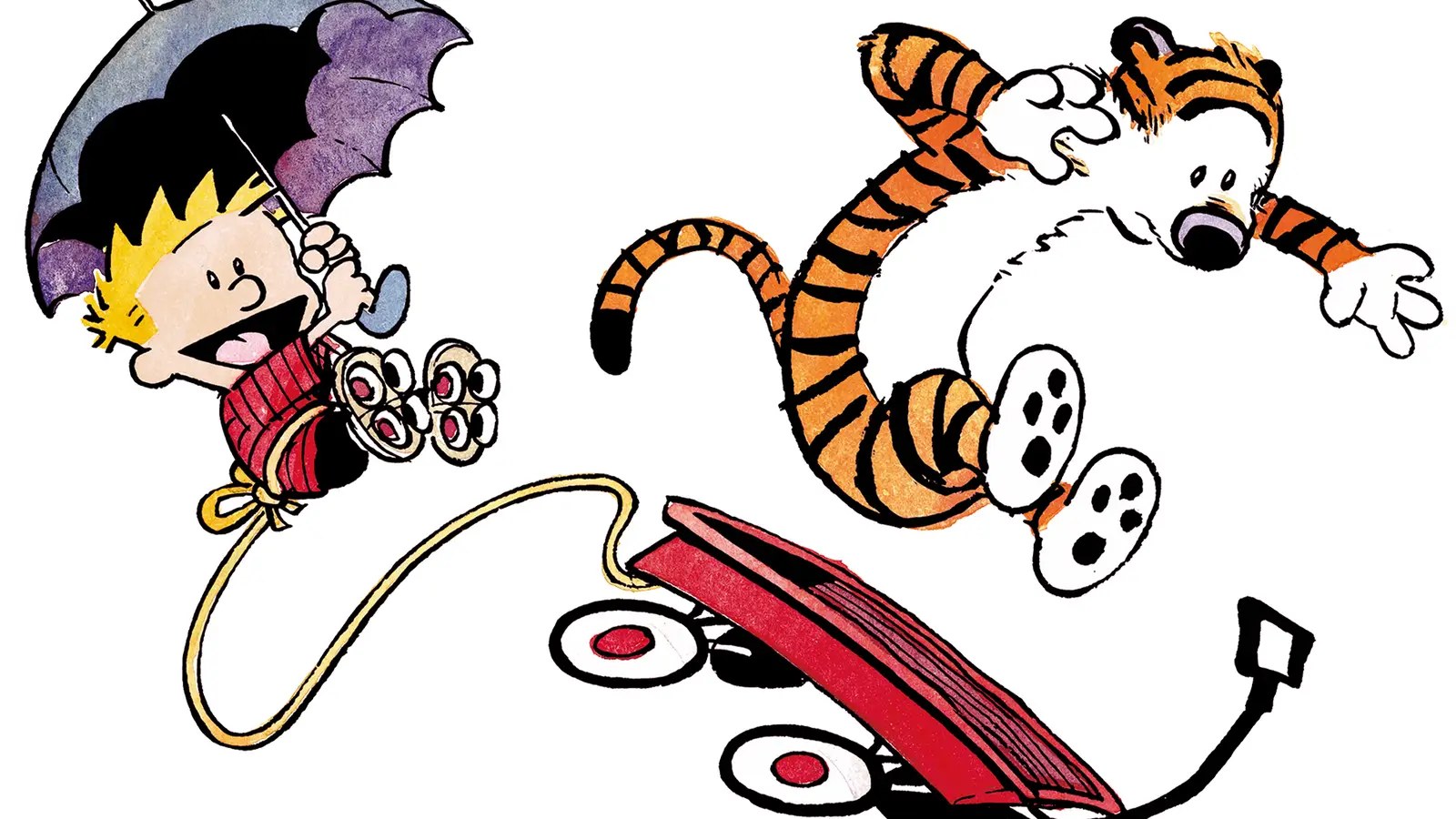
Thirty-seven years after Bill Watterson launched his celebrated comic strip Calvin and Hobbes, readers are still revisiting its most resonant moments, particularly the exchanges between young Calvin and his father. As a recent retrospective on the collection’s 10th anniversary highlights, the bond between the two remains one of the strip’s enduring strengths, with Dad delivering lines that feel increasingly relevant decades after they were first drawn.
The essay reminds readers that Watterson deliberately chose not to give Calvin’s parents actual names. While audiences occasionally catch a glimpse into their inner lives—through Dad’s cycling habit or Mom’s love of reading—both characters remain defined primarily by how they relate to the imaginative child at the center of everything. For all his precociousness, Calvin is still young enough that he might not realize his parents have real names, and more importantly, granting them ones would add nothing to the strip.
A Father Who Refuses to Be Praiseworthy
Watterson was meticulous about keeping Calvin’s parents from becoming ordinary dispensers of time-honored wisdom. Instead, every time Dad tells his son an entertaining lie about the world rather than the plain truth—such as insisting with a straight face that there is a guy operating a printing press inside every ATM—readers gain a keener insight into exactly how these two people produced a kid like Calvin. As the essay observes, some parents get the child they deserve.
This does not mean the parents are consistently wrong. They carry their own irrationalities and pet peeves, yet they land a point more often than not, especially when confronting Calvin’s furious inability to comprehend the world’s absurdities. With that in mind, two specific strips stand out as the finest moments of Calvin’s dad: one that feels more apt than ever heading into 2026, and another that is both sad and true.
Rage Against the Machine
In a strip dated December 7, 1993, Calvin’s dad briefly transforms into a mouthpiece for Watterson to air complaints about modern living. Sometimes these take the form of the most boomer-style grievances imaginable—such as lamenting that there are too many brands and types of peanut butter on store shelves—yet there is always some underlying truth buried in the madness.

If anything, this particular strip feels more relevant to the 21st century than its original 20th-century setting. When everything a person does or says online—or sometimes even offline—becomes fodder for a ravenous data-gathering system, there can be something pleasantly renegade about simply unplugging. Leaving your phone at home, reading physical books, and listening to old records are all ways of avoiding the data shadow that follows modern life, efforts that feel more worthwhile than ever.
“Bill Watterson saw it coming.”
Retrospective on Calvin and Hobbes
Adulthood Is an Ad-Lib
An earlier strip from May 10, 1989 arrives at the end of a short story arc in which Calvin’s family returns home to discover their house has been burglarized. Their television and jewelry are missing, but after a brief moment of panic, it turns out Hobbes is not—depending on who you choose to believe, either the burglars simply did not take him or he scared them off.
While Calvin himself is hardly bothered by the incident, his parents are, and they claim center stage for a rare, fleeting moment to discuss the aftermath. Part of that conversation touches on one of the terrible truths of adulthood that everyone must confront sooner or later: some of us may have more of a plan than others, but we are all making it up as we go.
Most of Calvin and Hobbes is naturally devoted to Calvin and his ongoing frustration with the world around him. It is not unusual for the strip to venture into territory that Calvin himself is not suited to cover, yet when it does, Watterson always handles the material with care. There is genuine truth in the burglary arc about vulnerability and adulthood, making it an underrated installment in the strip’s run.
Looking Ahead
The continued re-examination of these strips underscores why Calvin and Hobbes retains such a devoted following long after its original run concluded. As new readers discover Watterson’s work through anniversary collections and online retrospectives, lines delivered by his quietly brilliant father continue to resonate across generations—proof that the best moments of the strip were never bound by their original date of publication.























1 comment