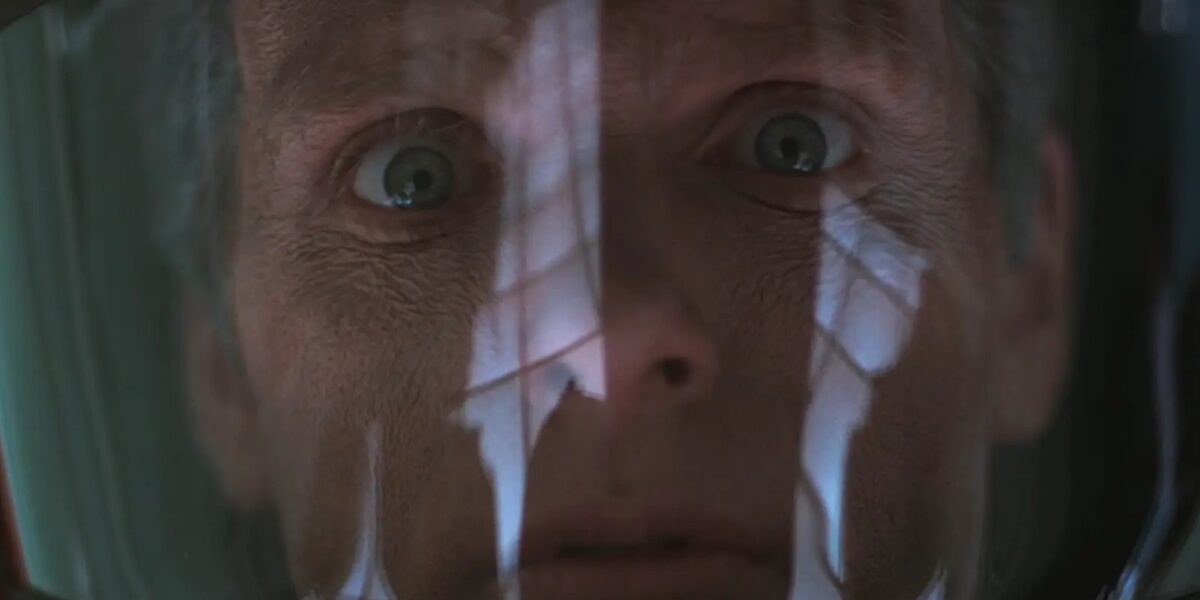
From Green Aliens to HAL 9000: Unearthing the Wild Origins of “2001: A Space Odyssey”
===CONTENT
Stanley Kubrick’s “2001: A Space Odyssey,” a cinematic masterpiece released in 1968, continues to inspire awe and debate. Hailed as “one of the most influential films ever made” by film scholar Howard Suber essay for the film’s Criterion Collection release, its impact on science fiction cinema is undeniable. However, behind the iconic visuals and philosophical depth lies a story of remarkable beginnings, filled with discarded ideas and creative evolution.
The Dawn of an Idea: Trumbull’s Vision
A fascinating glimpse into this process comes from a 1978 interview with Douglas Trumbull, the film’s visual effects supervisor available on The Internet Archive. Trumbull, a pioneer in special effects, had previously impressed Kubrick with his groundbreaking short film “To the Moon and Beyond” To the Moon and Beyond, showcased at the 1964 World’s Fair. He went on to contribute to films like Steven Spielberg’s “Close Encounters of the Third Kind” and Ridley Scott’s “Blade Runner,” as well as directing his own sci-fi features, “Silent Running” and “Brainstorm.”
Trumbull later had a public falling out with Kubrick had a public falling-out with Kubrick after the film won an Academy Award for Best Special Visual Effects, which Kubrick claimed solely for himself. During a 2014 retrospective The Hollywood Reporter, Trumbull stated, “Kubrick did not create the visual effects. He directed them,” adding that it was “a certain level of inappropriateness” for him to receive the award alone. While Trumbull’s recollections offer valuable insights, they should be considered with a grain of salt, given his complex relationship with Kubrick.
The ‘Crap’ Script: A Foundation Built on Blank Pages
“I wish I had a copy of the original screenplay,” lamented Douglas Trumbull to James Delson at “Fantastic Films” magazine. “It was a funny screenplay, because it had lots of blank pages in it, and at the top of each of those pages it would just say, ‘Special effects sequence starts here. Work is now under way with our crew of artists and technicians to produce the most fantastic visual effects ever made.’ Just that above a big blank page.” He described the initial script as “just dumb, really bad in a lot of ways,” revealing that Kubrick and Arthur C. Clarke famed science fiction author Arthur C. Clarke were experiencing creative differences regarding the story’s direction. Clarke co-credited on the screenplay but later wrote his own version of the story as a book series his own version of the story as a book series.
Many elements now synonymous with “2001,” such as the iconic HAL 9000, were absent from this early draft. Trumbull explained that the original story centered on a tribe of hominids facing extinction during a drought. The monolith, initially a transparent cube projecting a holographic teaching film demonstrating how to kill animals, was intended to inspire these apes to evolve. This concept was later simplified into the mysterious black monolith we know today.
A Dead Horse and a Spotted Pattern: Behind-the-Scenes Anecdotes
One memorable anecdote involves a scene in the “Dawn of Man” sequence featuring a leopard and a dead zebra. Kubrick wanted this scene to depict an animal preying on another, but obtaining a dead zebra proved difficult. Trumbull suggested using a horse instead, painting it to resemble a zebra. However, due to scheduling issues, the horse decomposed before filming, leading to a truly unforgettable moment. “Unfortunately, the shooting schedule got all fouled up, and they couldn’t shoot it right away,” he recalled. “So there was this dead horse which got really foul, ’cause it laid around about a week before they shot the scene.” To get the shot, Kubrick had to drug a jaguar and chain it to the decaying zebra, creating a truly bizarre spectacle.
From Green Aliens to HAL: The Evolution of Key Characters
In the theatrical cut, after humanity achieves spaceflight, astronauts discover another monolith on the moon, which sends a signal towards Jupiter. Five astronauts, including Dr. David Bowman (Keir Dullea), embark on a mission to follow the signal. When their onboard computer, HAL 9000, malfunctions, they discuss shutting it down. HAL retaliates by killing four of the astronauts and nearly kills Bowman before he successfully deactivates it.
In the original script, there was no HAL. The five astronauts all made it to Jupiter, where they found “this big slot, a big rectangular hole in one of Jupiter’s moons.” Looking through it, they saw another star system. They remarked, “Oh groovy, time warp,” and sent probes down into the opening. One astronaut ventured down, landing on a strange planet and encountering bizarre phenomena, including a 20-foot-tall green alien.
Trumbull expressed frustration with Kubrick’s constant changes during production. He recalled suggesting that Kubrick clean up loose ends in the story, but was rebuffed. “Wouldn’t it be better if you just had one man, and wouldn’t it be better if something went wrong back at the ship? Why not kill all those guys?’ He looked at me and said, ‘Trumbull, don’t come in here with any asinine ideas like that.’ It turned up in the script a month later.”
These anecdotes offer a fascinating glimpse into the creative process behind “2001: A Space Odyssey,” revealing a film shaped by discarded ideas, evolving characters, and the unique vision of Stanley Kubrick. While Trumbull’s perspective is colored by his complex relationship with the director, it provides invaluable insights into the making of a cinematic masterpiece.
Source: Polygon
Comments
Be the first to comment.