
The Genre Genesis: From Modern Titans to 2004 Pioneers
Physical guitar-controller tactile rhythm simulation (strumming a spring-loaded two-way strum bar with the right hand while depressing five color-coded fret buttons with the left hand on a 3/4-scale replica Gibson SG guitar to play note-for-note lead guitar riffs, solos, and chords along a downward-scrolling 3D "Note Highway"), paired with vertical motion-sensor "Star Power" tilts and Whammy Bar sustained pitch bending—from Guitar Hero II & III, Rock Band 1-4, Clone Hero, Fortnite Festival, Beat Saber, and modern rhythm games—trace their undisputed, billion-dollar cultural explosion to November 8, 2005 with Harmonix's crowning breakthrough, Guitar Hero.
Conceived by MIT graduates Alex Rigopulos and Eran Egozy alongside lead designer Rob Kay at Harmonix Music Systems in Boston, Massachusetts in partnership with peripheral manufacturer RedOctane in Sunnyvale, California, Guitar Hero completely took the world by storm. Winning the Innovation Award and Excellence in Audio at the 2006 Game Developers Choice Awards, the BAFTA Award for Best Audio, and holding a 91/100 on Metacritic, it transformed video games into the epicenter of rock music culture.
Platform Context & Gaming Environment
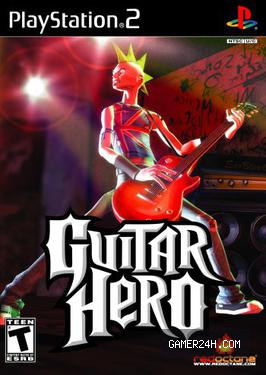
In Career Mode, players create a rock avatar (Axel Steel, Judy Nails, Clive Winston, Xavier Stone, Grim Ripper) and conquer 6 escalating live concert venues from gritty underground beginnings to arena superstardom:
- The Basement: Playing garage gigs for friends.
- The RedLine Shack: Grimy roadside dive bar.
- The Rock Out Club: Packed underground indie venue.
- The Garden: Historic theater concert.
- The Arena: 20,000-seat stadium with laser light shows.
- The Fest: Colossal outdoor stadium festival.
Popularity & Cultural Standing: Niche vs. Blockbuster
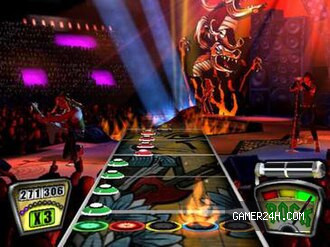
Guitar Hero was an astronomical mainstream pop-culture sensation that revitalized the entire rock music industry. Living rooms across the globe became concert stages, inspiring a massive multi-billion-dollar franchise and turning classic rock songs into universal anthems for millions of young gamers.
Gameplay Mechanics & Technical Innovations
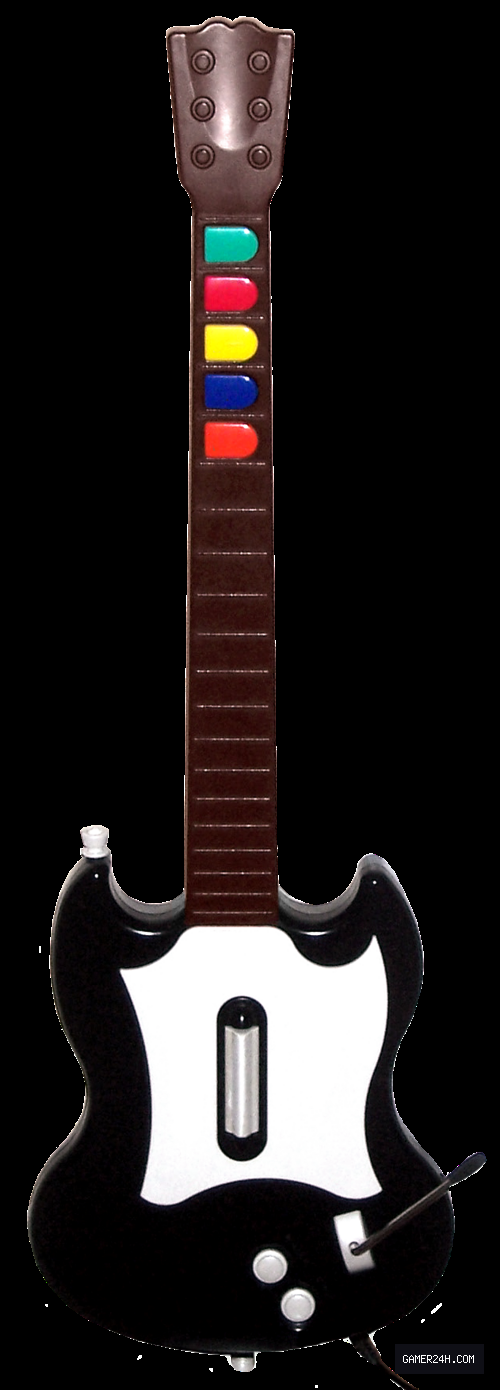
Guitar Hero established standard-setting rhythm mechanics:
- The Custom RedOctane Gibson SG Guitar Controller: A 3/4-scale replica Gibson SG guitar controller featuring 5 colored fret buttons (Green, Red, Yellow, Blue, Orange), a spring-loaded two-way Strum Bar, an analog Whammy Bar, and an internal tilt sensor accelerometer.
- The Cascading 3D Note Highway: Colored gem notes scroll down a 3D perspective highway toward the strike target line; players must hold down the corresponding fret button and strum in perfect synchronization with the master audio track.
- The "Star Power" Multiplier & Vertical Tilt Mechanic: Hitting glowing star-shaped note phrases fills the Star Power Meter; tilting the physical guitar neck vertically upward into the air activates Star Power, doubling the active score multiplier (up to 8x) and saving players from failing out during difficult solos.
- The Whammy Bar Pitch Bend & Star Power Extraction: Wiggling the metal whammy bar during sustained long notes realistically bends the audio pitch while extracting extra Star Power from held gems.
- Legendary 47-Song Rock Tracklist: Masterfully curated rock covers and master tracks: *"Iron Man"* (Black Sabbath), *"Bark at the Moon"* (Ozzy Osbourne), *"Killer Queen"* (Queen), *"More Than a Feeling"* (Boston), *"Cowboys from Hell"* (Pantera), *"Spanish Castle Magic"* (Jimi Hendrix), *"Ziggy Stardust"* (David Bowie), and *"Crossroads"* (Cream).
Historical Legacy & Archival Preservation
Guitar Hero is permanently enshrined in the World Video Game Hall of Fame and the Smithsonian as one of the most influential music and cultural milestones in entertainment history.