
The Genre Genesis: From Modern Titans to 2000 Pioneers
Dynamic visual timeline turn-based combat architecture (where turn order is represented along an active Initiative Point [IP] bar with distinct Wait, Command, and Act zones, allowing players to execute precise "Cancel" strikes that knock enemy actions completely backward on the timeline before their spells fire), modular Mana Egg elemental spell progression, and party campfire dinner conversational vignettes—from Child of Light, Octopath Traveler II, Grandia HD Collection, and modern tactical turn-based RPGs—trace their mechanical crown to August 3, 2000 with Game Arts' triumph, Grandia II.
Directed by Hidenobu Takahashi at Game Arts in Tokyo with a dynamic orchestral rock and acoustic guitar score composed by Noriyuki Iwadare, Grandia II was developed specifically to showcase the 3D polygon capabilities of the Sega Dreamcast. Earning an outstanding 90/100 on Metacritic and a 9.1/10 from GameSpot, its battle system is widely acclaimed by critics and RPG designers as one of the finest turn-based combat engines ever created.
Platform Context & Gaming Environment
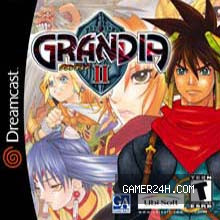
Centuries after the mythic Battle of Good and Evil between the benevolent deity Granas and the dark god Valmar left the world scarred by the colossal planetary canyon known as the Granacliffs, the narrative follows cynical mercenary (Geohound) Ryudo and his wisecracking falcon Skye. Hired by the Church of Granas to escort gentle songstress Elena to a purification ritual, the ceremony is violently corrupted. Elena becomes possessed by the Wings of Valmar, manifesting as the seductive, fire-wielding alter-ego Millenia. Ryudo journeys across the world to stop the revival of Valmar's scattered body parts (Tongue, Eye, Claws, Heart) by the corrupt Pope Zera.
Popularity & Cultural Standing: Niche vs. Blockbuster
Grandia II was a massive critical triumph on the Dreamcast, praised for its sharp dialogue, cynical-yet-heroic protagonist Ryudo (voiced by Cam Clarke), and the romantic dynamic between Ryudo, Elena, and Millenia. It remains an enduring JRPG classic that was later remastered on PC, PS2, and Nintendo Switch.
Gameplay Mechanics & Technical Innovations
Grandia II established the ultimate turn-based battle mechanics:
- The Legendary IP Timeline Battle Engine: Characters and enemies move along a linear circular Initiative Point (IP) bar; entering the COM (Command) zone pauses time to select actions, moving to the ACT zone to execute strikes.
- The Tactical "Cancel" Attack: Executing a Critical Attack on an enemy during their COM-to-ACT execution window immediately cancels their attack, knocking their icon far back on the timeline and completely nullifying their turn.
- Special Move (SP) & Magic Points (MP) Distinction: Executing instant character physical techniques (Ryudo's Tenseiken Slash, Millenia's Fallen Eagle) using SP, while casting elemental magic using MP.
- Modular Mana Eggs & Skill Books: Equipping and leveling up Mana Eggs (Chaos Egg, Holy Egg, Gravity Egg) and Skill Books with Magic Coins (MC) and Special Coins (SC) earned from battles, allowing players to assign custom spells and passive perks to any character.
Historical Legacy & Archival Preservation
Grandia II is permanently celebrated in video game history as the definitive golden benchmark of tactical, dynamic turn-based JRPG combat design.