For over three decades, Wizards of the Coast has been refining the art of game balance in Magic: The Gathering. While they’ve had plenty of time to identify problematic cards, some effects have slipped through the cracks. These cards, often banned within weeks or even days of their release, represent both design missteps and moments where players quickly exploited unforeseen interactions.
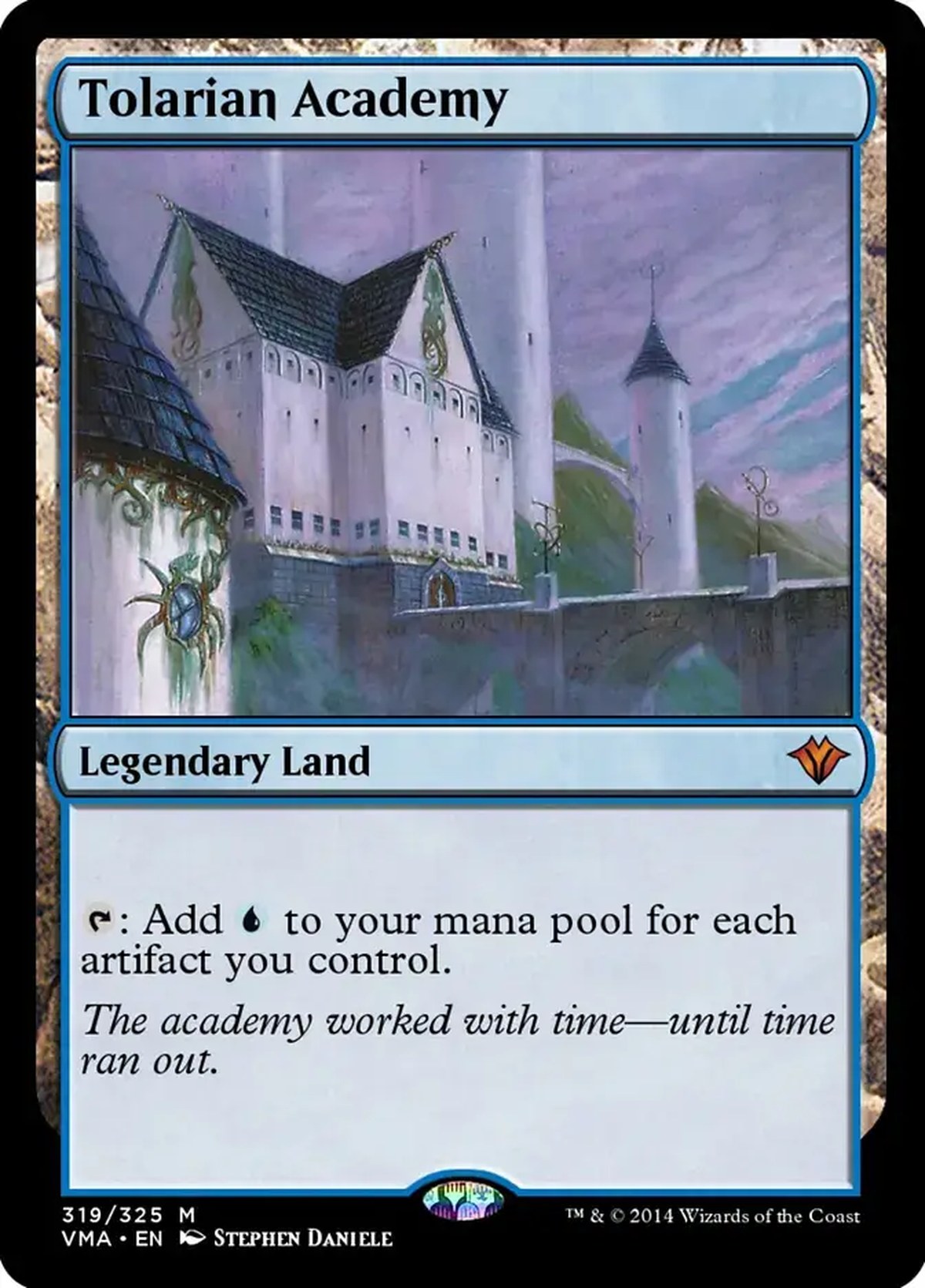
Tolarian Academy (Banned in 50 Days)
Released in Urza’s Saga, Tolarian Academy seemed innocuous at first. The blue land generated one mana for each artifact your opponent controlled. However, the existing card pool already contained a plethora of cheap artifacts and mana accelerants. Suddenly, the Academy wasn’t just generating a little extra mana; it was fueling explosive combos. Decks built around Tolarian Academy could win as early as turn two or three, using Mind Over Matter to repeatedly untap the land and Stroke of Genius to draw through the deck. Just 19 days after Urza’s Saga was released, Wizards banned Tolarian Academy alongside Windfall. This incident served as a crucial lesson in early Magic history, highlighting how even seemingly minor interactions can create devastatingly powerful strategies when combined with an existing ecosystem of cheap mana and card draw.
Oko, Thief of Crowns (Banned in 45 Days)
Oko is a prime example of a card that was intended to be flexible but quickly became oppressive. This planeswalker from Throne of Eldraine didn’t need complex combos; it simply did everything on its own. It generated Food, turned creatures and artifacts into harmless 3/3 Elks, gained loyalty quickly, attacked opposing strategies, and built an overwhelming board state. By the Mythic Championship Richmond, nearly 70% of decks contained Oko, and Food decks were still winning about 53% of their non-mirror matches. Wizards inevitably banned the aptly-named Thief of Crowns in Standard on November 18, 2019. This serves as a reminder that a card doesn’t have to produce an immediate kill to warrant a ban; sometimes, a card can simply warp the entire format around itself.
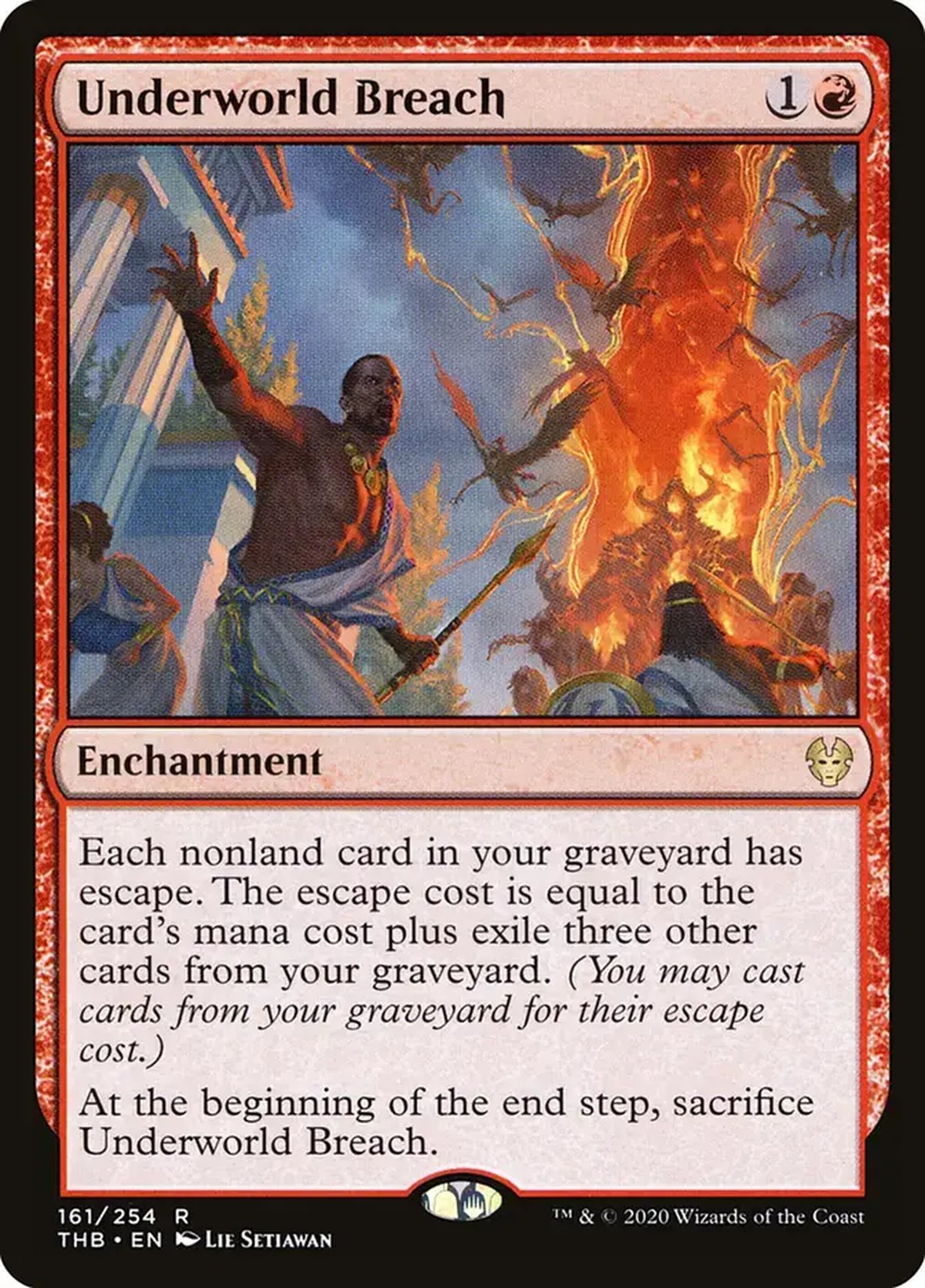
Underworld Breach (Banned in 45 Days)
Underworld Breach is the classic example of a card whose danger becomes apparent only when players start breaking it. This 2-mana red enchantment gave every card in the graveyard an additional lease on life, turning the graveyard into something resembling a second hand. The real problem arose when combined with cheap spells, mana generation, and cards that could mill or draw through the deck, like Brain Freeze, Grinding Station, Mox Amber, and Grapeshot. The result was a combo deck capable of generating enormous amounts of mana and repeatedly replaying the same cards until it could assemble a brutal kill. Wizards banned Underworld Breach in Legacy on March 9, 2020, just weeks after Theros Beyond Death was released. This highlights Magic’s recurring problem with the graveyard: once players can reuse cards for dramatically less than their original cost, seemingly reasonable effects can become engines with devastating consequences.
Lurrus of the Dream-Den (Banned in 31 Days)
Lurrus wasn’t just a powerful creature; it exposed a fundamental problem with Magic’s Companion mechanic. The restriction that every permanent card in your starting deck had to have a mana value of two or less was supposed to be a meaningful cost, but in formats like Legacy and Vintage, where incredibly efficient cheap permanents were already prevalent, it barely mattered. As a result, you could start every game with Lurrus effectively waiting outside your deck. Within weeks of Ikoria’s release, Lurrus had become ubiquitous. Wizards banned it in Legacy and Vintage on May 18, 2020, citing win rates above 55% and the fact that the card’s deck-building restriction wasn’t an actual cost in those formats. The real story is that Lurrus helped convince Wizards that the Companion mechanic itself needed fixing. The rules were subsequently changed so that companion cards had to be paid for before being put into your hand, fundamentally altering how the entire mechanic worked.
Winota, Joiner of Forces (Banned in 31 Days)
Winota’s problem was simple: she turned cheap creatures into beefed-up monsters far too efficiently. Her triggered ability allows you to look at the top six cards of your library if you swing with a non-human creature, then you can put a human card on the board that’s tapped, attacking, and is indestructible until end of turn. The deck-building trick was to fill your library with inexpensive non-humans that could swing, letting Winota put powerful humans directly onto the battlefield. In the right shell, the resulting board could snowball almost immediately, with each new creature making the next attack even more threatening and devastating. Wizards banned Winota in Brawl on May 4, 6 days after release, alongside Drannith Magistrate (another particularly infamous card in most formats). The Brawl ban revealed how dramatically a card’s power could change when placed in a singleton format where Winota’s commander status gave the deck reliable access to its engine.
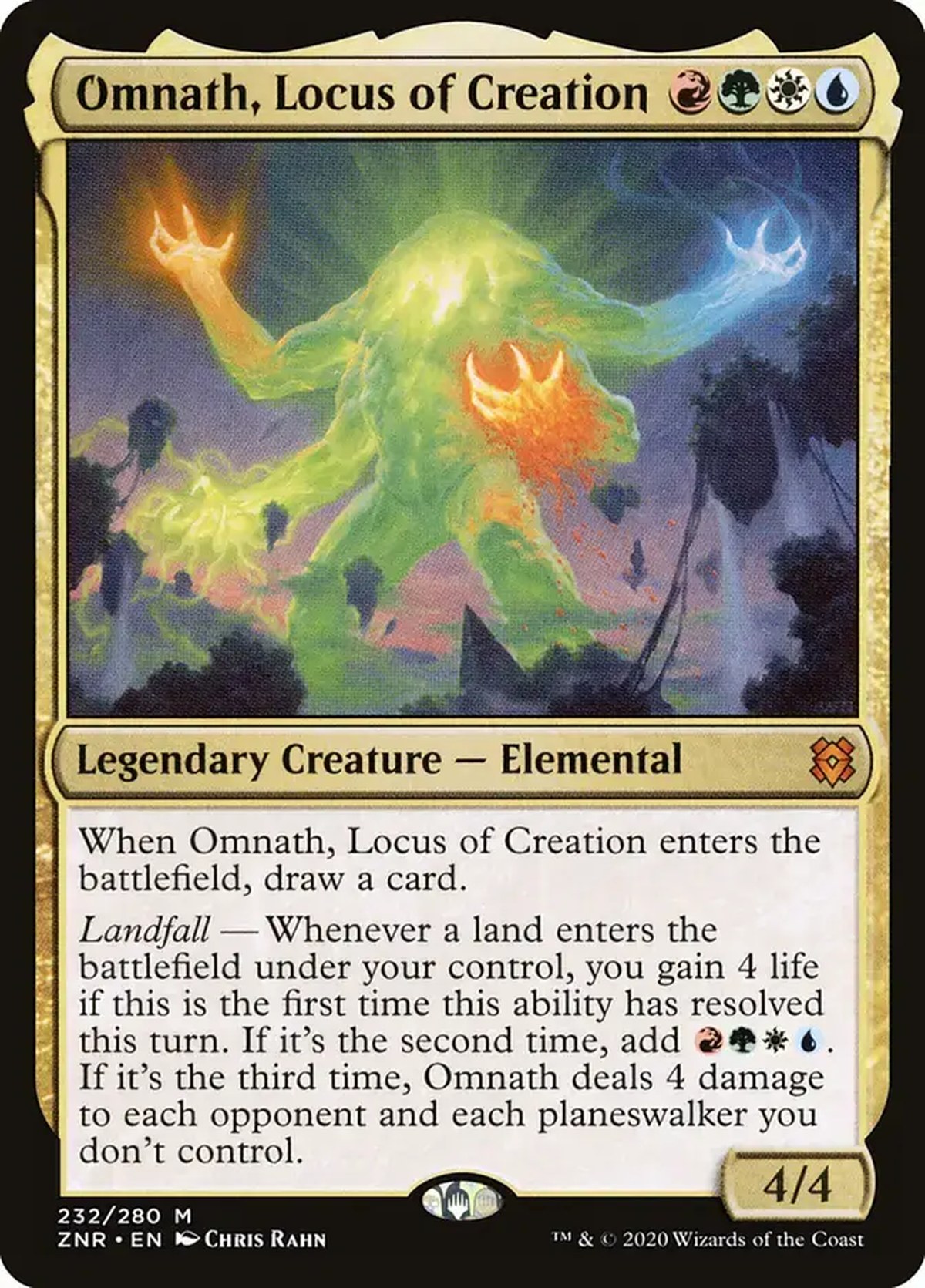
Omnath, Locus of Creation (Banned in 17 Days)
Omnath may be the purest example of Wizards realizing that a brand-new Standard environment had gone catastrophically wrong. Released with Zendikar Rising on September 25, 2020, Omnath immediately became the centerpiece of absurdly powerful ramp decks. Its Landfall ability rewarded players for making their third land drop with four life and four mana, while another landfall trigger dinged opponents and planeswalkers for 4 damage. Simply playing lands – something a Magic deck already needs to do in order to function – generated extra mana, life, and damage all in one go. The resulting Standard environment became so warped that Wizards banned Omnath on October 12, just 17 days after release. This incident illustrated how a card can quickly warp an entire environment.
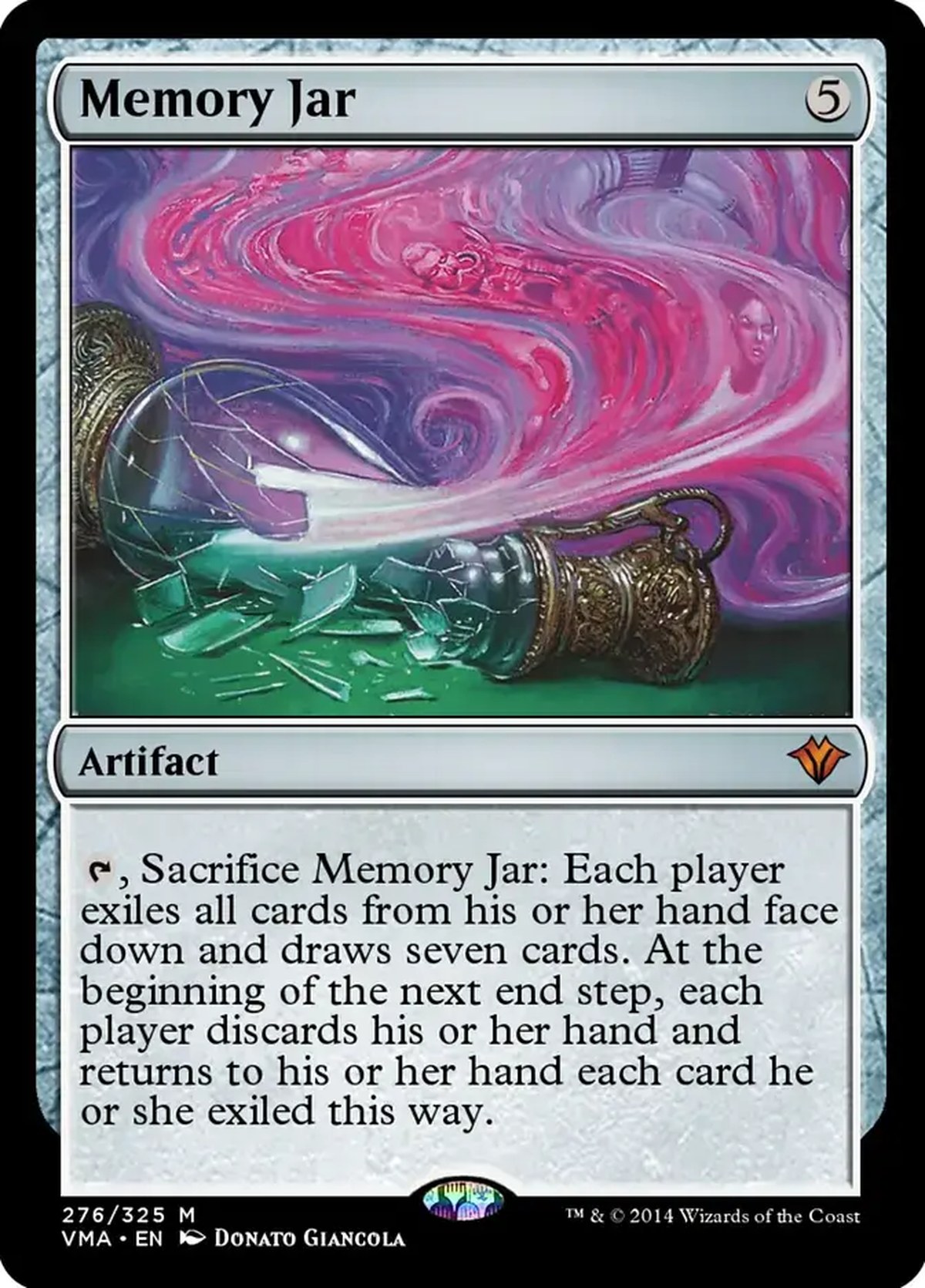
Memory Jar (Banned in 14 Days)
Memory Jar is where the phrase “they really didn’t waste any time” becomes literal. Released in Scourge on May 3, 2003, the card was caught in Magic’s old Type 1/Type 1.5 rules structure almost immediately. On June 1, just 29 days later, Wizards restricted the card in Type 1; because Type 1.5’s banned list was tied to Type 1’s restrictions, that effectively put Mind’s Desire off-limits there as well. The card combined a powerful free-spell effect with the Storm mechanic, meaning every spell cast before it created another copy. In a deck capable of chaining cheap spells together, one Memory Jar could suddenly become a cascade of free spells. It remains one of the game’s most famous examples of a card whose interaction with a mechanic was simply too explosive to leave unchecked.
Tibalt’s Trickery (Banned in 10 Days)
Tibalt’s Trickery is perhaps the funniest card on this list because it looks like a terrible counterspell. You could counter a spell, but then your opponent has to flip cards from the top of their library until they found something else to cast. It’s a worse version of Chaos Warp. Why would you want that? The answer was deceptively obvious: counter your own spells! Players quickly discovered that Tibalt’s Trickery could be used as a bizarre combo engine by using a cheap spell to counter it before using the random replacement effect to cheat enormous cards like Emrakul, the Aeons Torn, onto the battlefield. Wizards banned Trickery in Modern just 10 days after Kaldheim’s release. In one analysis, an optimized version could theoretically achieve a turn-three Emrakul in more than 90% of games under the modeled conditions.
Lutri, the Spellchaser (Banned Before Release)
Lutri is where the phrase “they really didn’t waste any time” becomes literal. Released in Scourge on May 3, 2003, the card was caught in Magic’s old Type 1/Type 1.5 rules structure almost immediately. On June 1, just 29 days later, Wizards restricted the card in Type 1; because Type 1.5’s banned list was tied to Type 1’s restrictions, that effectively put Mind’s Desire off-limits there as well. The card combined a powerful free-spell effect with the Storm mechanic, meaning every spell cast before it created another copy. In a deck capable of chaining cheap spells together, one Memory Jar could suddenly become a cascade of free spells. It remains one of the game’s most famous examples of a card whose interaction with a mechanic was simply too explosive to leave unchecked.





Comments
Be the first to comment.