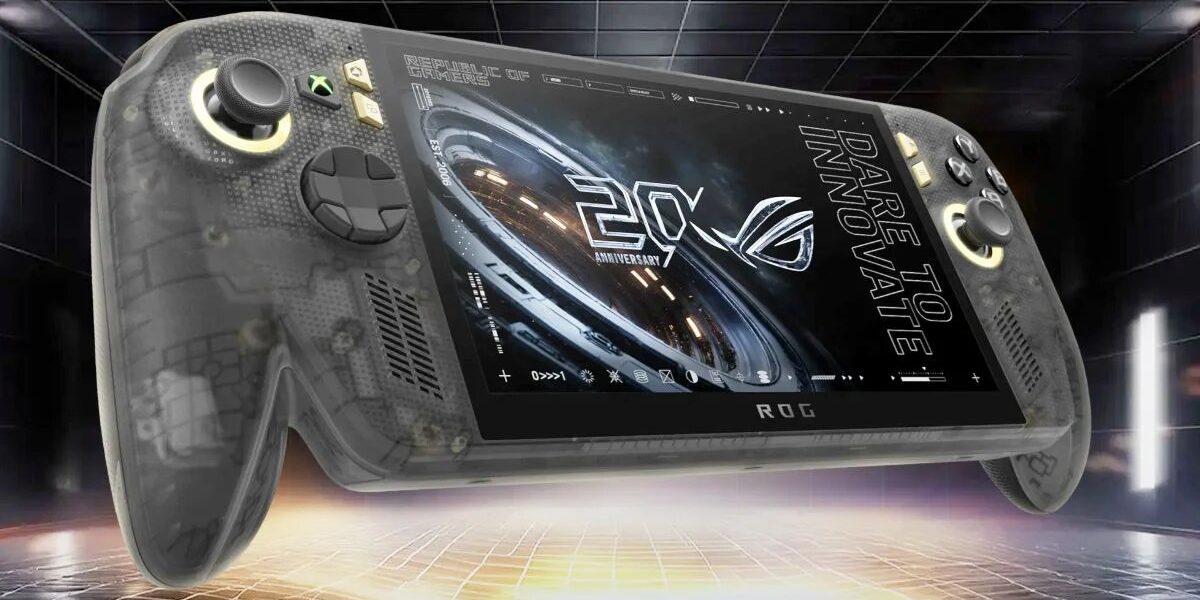
[Get ready for a visual feast and a potential game-changer in the handheld gaming world! ROG has just unveiled the Xbox Ally X20, bringing an OLED display to its already intriguing device. But is this enough to justify the price tag?]
When the original Asus ROG Xbox Ally launched last year, it promised a powerful PC gaming experience on the go. However, software quirks and performance limitations held it back from truly reaching its potential. Now, with the arrival of the Xbox Ally X20, featuring a vibrant OLED screen, things are about to get interesting. Priced at $1300, this iteration aims to address some of those initial shortcomings.
A Visual Upgrade: The Allure of OLED
A year ago, a $1300 price tag for the original Ally felt steep. But considering the current market landscape, where RAM shortages have driven up prices across the board for gaming hardware, and knowing that Nintendo is stubbornly refusing to give us an OLED Switch, the Xbox Ally X20 starts to look like a more palatable proposition. Beyond the stunning OLED display, ROG has also implemented TMR joysticks and a redesigned D-pad for improved control. The device boasts a semi-transparent black casing accented with gold detailing, adding a touch of premium flair.
The inclusion of an OLED screen is a significant upgrade, offering deeper blacks, more vibrant colors, and overall better image quality compared to the original Ally’s LCD panel. This makes for a much more immersive gaming experience, especially in visually rich titles. While the internal hardware remains largely unchanged from the previous model, the visual improvement alone could be enough to sway some gamers.
The Competition Heats Up
In the realm of PC gaming handhelds with OLED displays, the Xbox Ally X20 faces stiff competition. The Lenovo Legion Go 2, also featuring an OLED screen and detachable controllers, offers a slightly higher RAM configuration but comes at a price of $1350. Then there’s the Steam Deck OLED model, which initially launched at $650 and has now climbed to $950. While the Steam Deck offers a more streamlined console experience, it lags behind the Ally X20 in terms of raw hardware power.
Is It Worth The Investment?
The Xbox Ally X20 isn’t without its compromises. It still runs Windows, which can be clunky and resource-intensive compared to dedicated gaming operating systems. However, as prices across the board continue to rise, these shortcomings become less critical. Suddenly, that premium handheld experience doesn’t seem quite so out of reach.
One of the Ally X20’s biggest strengths remains its ability to seamlessly blend the vast game library of Xbox Game Pass with the flexibility of the Steam ecosystem. This makes it a compelling option for gamers who want access to both subscription services and individual PC titles. However, if you’re not already invested in the Microsoft ecosystem, this might not be the handheld for you.
Ultimately, the success of the Xbox Ally X20 hinges on Microsoft’s ability to refine the Windows experience for gaming. If they can deliver a more optimized and user-friendly operating system that truly unlocks the hardware’s potential, the Xbox Ally X20 could very well become the ultimate PC gaming handheld.






Comments
Be the first to comment.