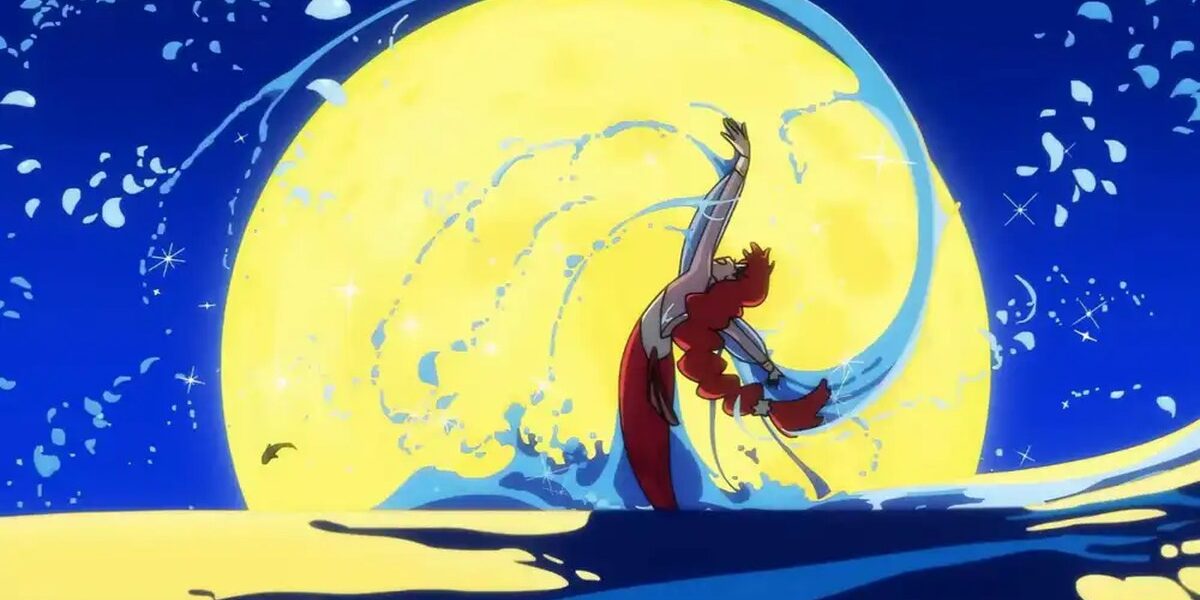
There’s a certain magic that older anime holds, a quality that transcends mere animation and feels almost like looking at living illustrations. It’s this feeling that immediately drew me to “Goodbye, Lara,” the new Crunchyroll series that reimagines Hans Christian Andersen’s “The Little Mermaid” with a distinctly modern Japanese sensibility.
A Familiar Tale, Reimagined
Director Takushi Koide takes the globally recognized story of The Little Mermaid and grounds it in the specific landscape of Shiga Prefecture and Lake Biwa. This isn’t just another retelling; it’s a deep dive into what love means, set against the backdrop of contemporary Japan. Lara, resurrected after two centuries, is given a second chance to understand this elusive emotion.
Koide, drawing on his experience with series like “Yuri Kuma Arashi” and “Revue Starlight,” brings a unique perspective to this classic tale. He wanted to crash the familiar story into something intensely local, creating a visual language that feels both nostalgic and refreshingly new.
The Art of Animation: A Tactile Experience
What truly sets “Goodbye, Lara” apart is its commitment to a visually tactile experience. While most of the series is digitally animated, there’s an undeniable quality that evokes the feel of traditional anime. The thick outlines around characters, the saturated colors, and the way the series frames its subjects against expansive landscapes all contribute to this effect.
The animation itself is deliberate. Underwater, Lara’s hair and fins are constantly in motion, while seaweed and other elements drift around her. Even small details, like floating shards of a broken mirror and Lara’s tears moving through the water, are given life. It’s not just about what’s behind Lara; it’s about how the world moves with her.
Movement Over Spectacle
The series excels at showcasing its artistry through movement rather than relying on flashy spectacle. A boxing sequence in Episode 3, handled almost entirely by animator Hidehiko Sawada, is a prime example. Using “a ton of drawings,” the scene feels raw and physical, allowing viewers to feel each individual movement.
There’s a difference between technically impressive animation and animation that feels truly alive. “Goodbye, Lara” understands this distinction, prioritizing the human touch behind every frame. It’s not about recreating the production methods of older anime; it’s about capturing the essence of what makes those shows so beloved.
The Magic of Cel Animation
The opening sequence is a brilliant example of how “Goodbye, Lara” blends old and new. While most of the series is digitally animated, the spectacular opening incorporates actual analog cel animation. This isn’t just a nostalgic nod; it’s a deliberate choice to highlight the unique texture and feel of traditional animation.
This subtle yet powerful technique emphasizes that the magic isn’s in the technology itself, but in the undeniable presence of the human hand behind it. Director Koide described the production as something the team wanted to create “by hand,” emphasizing their commitment to a personal touch.
A New Generation’s Appreciation
Just as Yoshitaka Amano and his collaborators discussed with me recently, traditional animation might feel new to younger audiences surrounded by digital imagery. The key is not about the specific technology used, but that the image begins with a human hand. “Goodbye, Lara” embodies this idea, reminding us why those classic shows have left such a lasting impression.
“Goodbye, Lara” takes an old myth, draws it with a distinctly contemporary hand, and makes it feel as refreshing and memorable as some of the all-time greats. It’s a must-watch for anyone who appreciates animation that prioritizes artistry and emotion.
Stream “Goodbye, Lara” now on Crunchyroll.




Comments
Be the first to comment.