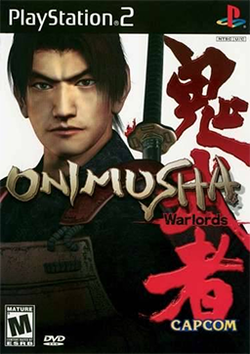
🏢 Capcom Production Studio 2📅 25 Jan 2001🎮 Onimusha
Keiji Inafune and Capcom's landmark feudal Japanese dark fantasy action-adventure masterpiece on the PlayStation 2, released in January 2001, making history as the very first PlayStation 2 game to sell over one million copies worldwide, starring samurai swordsman Samanosuke Akechi (modeled after Takeshi Kaneshiro) wielding the Oni Gauntlet to absorb demonic Genma souls across Inabayama Castle to rescue Princess Yuki from the resurrected warlord Oda Nobunaga and demon scientist Guilderstern, pioneering the frame-perfect "Issen" one-hit kill counter-attack mechanic.
🎬 Deep Vision & Technical Analysis
🌆 Atmosphere & Visual Direction
Bamboo forests and moonlit stone courtyards of Inabayama Castle shrouded in mist, torchlit wooden corridors echoing with demon groans, and Takashi Niigaki's haunting orchestral and traditional Japanese taiko/shakuhachi score.
⚡ Action Pacing & Physics Engine
Razor-sharp sword stances, waiting for the split-second Issen flash counter strike, vacuuming floating red souls into the Oni Gauntlet, and unleashing fiery Enryu magic slashes.
🎯 Performance & Launch Trajectory
Keiji Inafune, Takeshi Kaneshiro, and Capcom's landmark samurai action-adventure masterpiece, becoming the first million-seller on the PS2 and inventing the legendary Issen counter mechanic.
### CORE RULES:
- Always prioritize the instruction 'To [Language]:' or 'Translate to [Language]:' as the translation target.
- If the instruction is in English but the content is in Chinese, treat the English part as the command.
- AUTO-DETECT source language if not specified.
- CRITICAL: Provide ONLY ONE translation.
- DO NOT provide multiple versions, explanations, or variations.
- Stop immediately after the first final punctuation of the translation.
- DEFAULT target language is Simplified Chinese (zh-CN).
- NO EXPLANATIONS: Output the translation and ONLY the translation.
- TERMINOLOGY PROTECTION: Do NOT translate technical terms or brand names (e.g., Ollama, GGUF, Gemma, PyTorch, Kubernetes).
- ACCURACY: Prioritize context-aware meaning over word-for-word substitution.
- FORMAT: Preserve all original markdown, code blocks, and punctuation.
### HANDLING TECHNICAL DEPLOYMENT:
- For '本地部署', use 'local deployment' or 'on-premises deployment' in IT contexts.
- For '本地化', distinguish between 'local' (location) and 'localization' (L10n).