

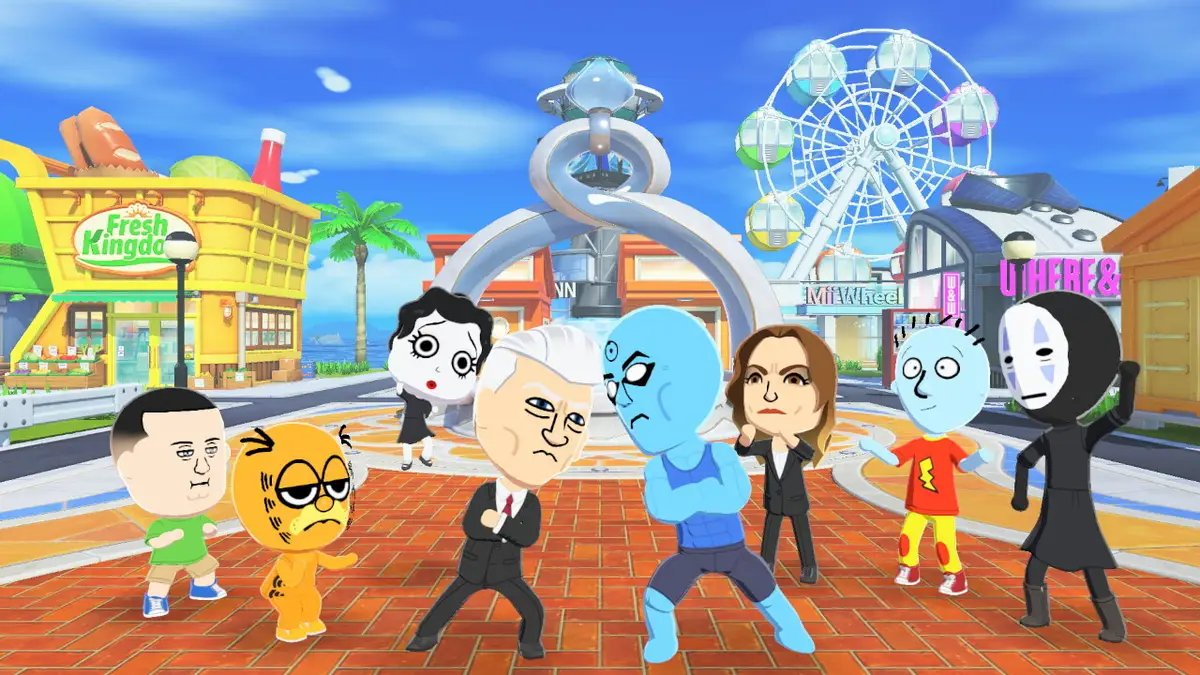
In a world saturated with sophisticated AI and hyper-realistic simulations, Nintendo’s Tomodachi Life: Living the Dream offers a refreshingly simple yet endlessly entertaining escape. It’s not just a game; it’s a portal to a time when digital interaction felt more playful and less… calculated. Remember SmarterChild on AIM? That innocent chatbot was ripe for torment, and Tomodachi Life captures that same spirit of mischievous fun.
A World of Miis and Mayhem
Tomodachi Life: Living the Dream is a sequel to the beloved Nintendo 3DS cult classic. It places you in charge of an island paradise populated by adorable Miis. There’s no grand objective, no final boss battle. Instead, your role is that of a benevolent (or not-so-benevolent) overseer, manipulating events and introducing chaos into the lives of these digital denizens. It’s a delightful clash between human ingenuity and the limitations of a programmed world.
The game draws parallels to The Sims, but with a distinctly Nintendo flavor. You create your own cast of characters using an enhanced version of the Wii’s Mii Maker, terraform the island, decorate it, and watch as these pint-sized personalities form relationships, dream, love, break up, and even have children. You provide the occasional gift or personality quirk, but mostly you sit back and enjoy the show.

At its core, Tomodachi Life offers a simple joy in watching emergent stories unfold. I’ve witnessed my digital avatar fall in love with a Mii version of my girlfriend, leading to a whirlwind romance that culminated in a proposal – all within 10 hours of playtime. This was interspersed with moments of pure absurdity, like the couple being chased down the street by a giant soda can.
While not as deep as The Sims, Tomodachi Life grants you an extraordinary level of directorial control. The usual limitations of the Mii creator are lifted, allowing you to draw directly onto your characters’ faces. This ranges from simple clown makeup to painstakingly recreating iconic figures like Garfield, whose stripes and whiskers I managed to replicate with surprising accuracy.
This freedom is where much of the game’s charm lies. Watching a surprisingly accurate David Lynch interact with Spirited Away’s No-Face is a visual gag that never gets old. Nintendo’s Miis, though 20 years old, remain expressive caricatures capable of eliciting laughter.
Customization Unleashed
Living the Dream takes this customization to the next level. Not only can you pixel-by-pixel customize your Miis, but you can also personalize every object in the game. While there are nearly 10,000 items to collect, you can also create your own objects from scratch. I introduced Charli XCX into my town and recreated her iconic Brat album cover, treating it as an electronic music album. To perfectly capture Garfield, I created custom orange clothing and drew his stripes onto them.
Every funny screenshot is a victory against the machine. The game allows you to draw wallpapers, floors, lawn ornaments, and even the exterior of your Mii’s house. This level of control in the hands of modern “shitposters” is both exhilarating and slightly terrifying – hence the lack of online sharing or easy screenshot capabilities.
Beyond characters and props, Tomodachi Life lets you craft a unique language. Your Miis occasionally ask for conversation topics or catchphrases, and anything you type becomes part of their permanent lexicon. This transforms the game into a giant Mad Lib, where your words are slotted into pre-written lines.
This is where the true chaos and comedy erupt. I’itemize, my island residents constantly discuss their love for “cocaine,” Luigi Mangione is swooned over by name, and Elizabeth Holmes dreamt of being showered in blood. These moments aren’t orchestrated; they emerge from the interaction between your words and the game’s engine.
Sometimes the results are nonsensical, other times they’re comedic gold. I once gave Todd Howard a “role-playing game” item, and he expressed disappointment that it wasn’s a very good fit for him – a joke so perfectly timed it felt scripted.
The AI Parallel
In an era of generative AI, Tomodachi Life might seem like a primitive ancestor. It shares the surface-level appeal of prompting an AI and watching it generate something unexpected. However, the key difference lies in the limitations. Unlike the precision of modern AI, Tomodachi Life is about hacking the machine, getting it to do things it wasn’t explicitly designed for.
This limitation is what makes it so enjoyable. It’s not about controlling the outcome; it’s about playing with the system and discovering its quirks. This childlike joy, a desire to outsmart the machine, is something big tech has tried to replicate but often falls short. Tomodachi Life reminds us that sometimes the most fun comes from embracing imperfection.
Tomodachi Life: Living the Dream will be released on April 16th for Nintendo Switch and Nintendo Switch 2. The game was reviewed on Nintendo Switch 2 using a prerelease download code provided by Nintendo. You can find additional information about Polygon’s ethics policy here.
Source: Polygon























Join the conversation