

About this game
Introduction: The Next Chapter for Resident Evil 5
Resident Evil 5, released in 2009, marked a significant departure for the franchise. While retaining core elements of survival horror, it boldly embraced action and cooperative gameplay, aiming to broaden its appeal while potentially alienating some long-time fans. Developed by Capcom, this installment introduced players to Chris Redfield, now an agent with the BSAA (Bioterrorism Security Assessment Alliance), as he investigates a new bioterrorist threat in Kijuju, Africa. The game’s narrative weaves together themes of corporate conspiracy, personal redemption, and the ever-present danger posed by Albert Wesker. The shift towards action was a calculated risk, aiming to modernize the franchise for a wider audience while still delivering the signature Resident Evil thrills.
Visual Direction and Graphics Engineering
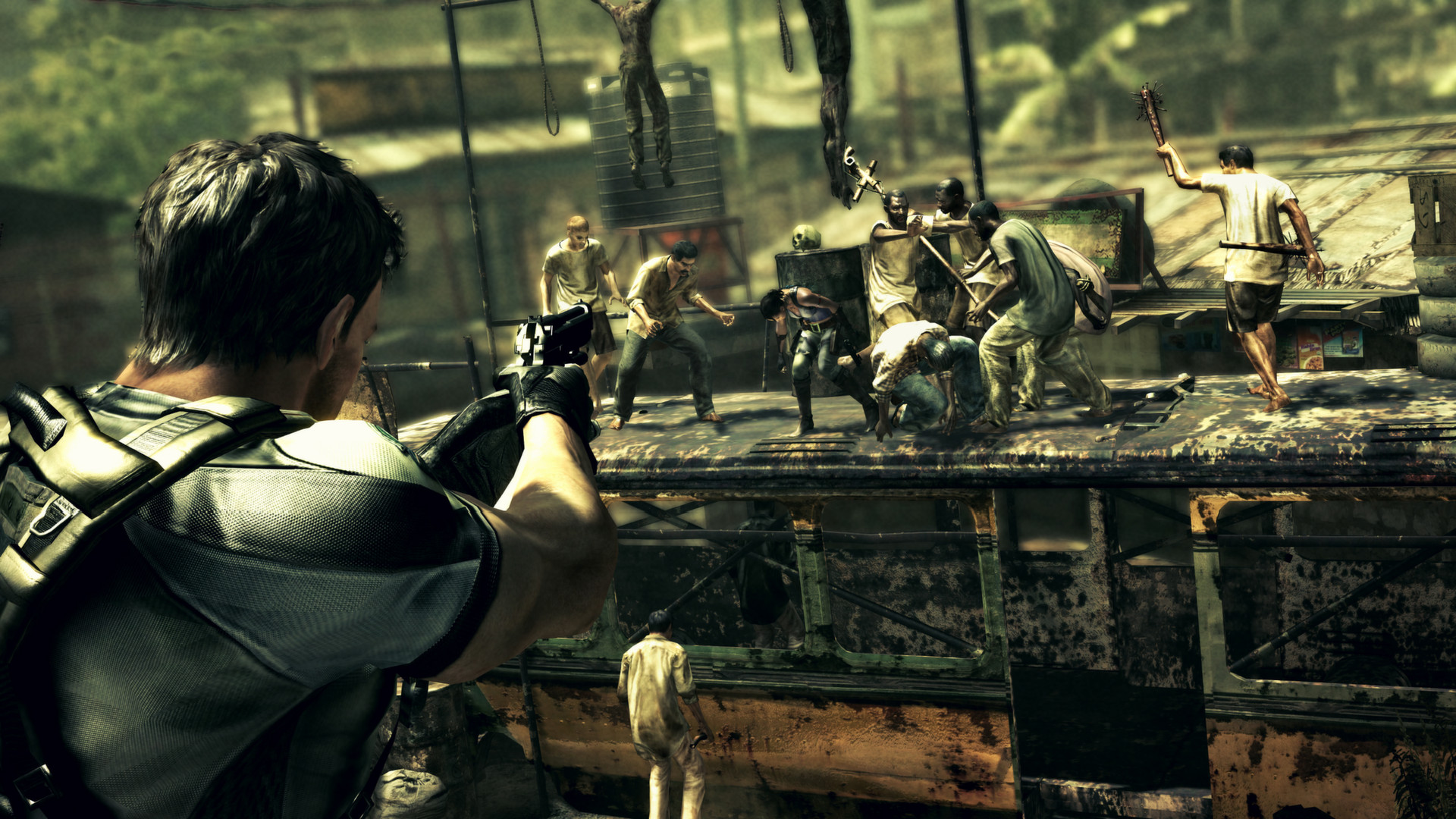
Resident Evil 5 leveraged the MT Framework engine, showcasing impressive visuals for its time on the PlayStation 3 and Xbox 360. The game’s environments are richly detailed, from the lush African landscapes to the dilapidated villages and underground facilities. Character models were brought to life through extensive motion capture, adding a layer of realism to the action sequences. While the graphics might not hold up perfectly by today’s standards, the visual design effectively conveys the atmosphere of danger and desperation that permeates the game. The lighting effects, in particular, play a crucial role in creating suspenseful moments, casting long shadows and highlighting key areas.
Gameplay Mechanics and Core Systems
The most significant change in Resident Evil 5 was its focus on cooperative gameplay. Players could team up with either a second human player or Sheva Alomar, Chris Redfield’s AI partner. This introduced new strategic elements, requiring players to coordinate attacks, manage resources, and cover each other from enemy threats. The game retained the over-the-shoulder camera perspective of Resident Evil 4 but streamlined the controls for more fluid action. New weapons and abilities were added, allowing for a wider range of combat styles. While some criticized the reliance on quick-time events, they contributed to the overall sense of urgency and excitement.
Level Design and World Atmosphere
The level design in Resident Evil 5 is diverse, ranging from open environments to claustrophobic corridors. The African setting provides a unique backdrop for the game’s narrative, with its vibrant landscapes contrasting sharply with the decaying infrastructure and hidden laboratories. Each location is meticulously crafted to evoke a specific mood, whether it’s the tension of exploring an abandoned village or the dread of descending into a subterranean complex. The level design encourages exploration and rewards players who take the time to uncover secrets and collect resources.
Narrative Depth and Character Profiles
The story in Resident Evil 5 revolves around Chris Redfield’s investigation into a new strain of Las Plagas, the parasitic organism that plagued Raccoon City years earlier. He is joined by Sheva Alomar, a fellow BSAA agent who provides both combat support and narrative exposition. The game delves into Chris’s past, revealing connections to previous events in the Resident Evil universe. While some characters may feel somewhat underdeveloped, the overarching plot provides enough intrigue to keep players engaged. The return of Albert Wesker as a primary antagonist adds another layer of complexity to the story.
Sound Design and Acoustic Realism
The sound design in Resident Evil 5 is crucial to creating an immersive experience. From the guttural roars of the infected enemies to the subtle creaks and groans of the environment, every sound effect contributes to the sense of tension and danger. The soundtrack effectively blends orchestral scores with electronic elements, enhancing the atmosphere during both action sequences and quieter moments. The voice acting is generally well-executed, bringing the characters to life and conveying their emotions.
Release Expectations and Community Hype
Resident Evil 5 generated significant hype leading up to its release. Fans were eager to see how Capcom would evolve the franchise while retaining its core identity. The introduction of cooperative gameplay was a major talking point, as it represented a bold departure from previous installments. The game’s visuals and action-oriented approach also contributed to the anticipation surrounding its launch. While some concerns were raised about the potential for the game to stray too far from its survival horror roots, the overall sentiment was one of excitement and curiosity.
Conclusion: The Future of Resident Evil 5
Resident Evil 5 remains a controversial entry in the franchise. Its shift towards action alienated some purists, while others embraced its more accessible gameplay. The game’s cooperative mode added a new dimension to the experience, encouraging teamwork and strategic coordination. While not without its flaws, Resident Evil 5 represents an important chapter in the series’ evolution, demonstrating Capcom’s willingness to experiment and push boundaries. The legacy of this title continues to influence the direction of future Resident Evil games. [[INJECT_VIDEO]]

Source: Wikipedia
Join the conversation