
The Genre Genesis: From Modern Titans to 2001 Pioneers
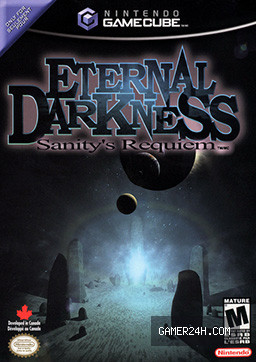
Fourth-wall-breaking psychological horror simulation (monitoring an active "Sanity Meter" that depletes upon witnessing cosmic eldritch horrors, triggering terrifying meta-hallucinations that simulate fake TV volume muted displays, fake "Memory Card Deleted" error screens, simulated blue screens of death, bleeding walls, character head decapitations while walking, and inverted camera angles), paired with millennia-spanning multi-generational historical narrative anthologies—from Alan Wake 2, Inscryption, Undertale, Doki Doki Literature Club, The Medium, and modern psychological meta-horror games—trace their legendary patented foundation to June 24, 2002 with Silicon Knights' crowning triumph, Eternal Darkness: Sanity's Requiem.
Conceived and directed by Denis Dyack at Canadian studio Silicon Knights in St. Catharines, Ontario in close collaboration with Nintendo with a chilling atmospheric score by Steve Henifin, Eternal Darkness made history by becoming Nintendo's very first M-rated (Mature) self-published title. Earning an extraordinary 92/100 on Metacritic and winning Character and Story of the Year at the 6th Interactive Achievement Awards (D.I.C.E.), its patented Sanity Effects remain legendary in video game history.
Platform Context & Gaming Environment
In 2000, university student Alex Roivas travels to her family's Rhode Island mansion following the horrific, unsolved decapitation murder of her grandfather, Edward Roivas. Discovering the flesh-bound Tome of Eternal Darkness hidden inside a secret study, Alex reads through the memoirs of 12 playable historical figures spanning 2,000 years of human history: Roman centurion Pious Augustus (26 BC), Persian swordsman Karim (565 AD), Franciscan monk Paul Luther (1485 AD), Franciscan cartographer Roberto Bianchi (1460 AD), colonial doctor Maximillian Roivas (1760 AD), and WWI Canadian field journalist Peter Jacob (1916 AD), uncovering the cosmic war between the three primordial Ancients: Chattur'gha (Red / Physical Might), Ulyaoth (Blue / Magical Power), and Xel'lotath (Green / Insanity Madness).
Popularity & Cultural Standing: Niche vs. Blockbuster
Eternal Darkness: Sanity's Requiem was an immense critical sensation that achieved permanent cult royalty. Nintendo officially patented the Sanity Meter game mechanic in 2005 (US Patent #6,935,954), cementing its status as one of the most innovative and daring game design achievements in Nintendo history.
Gameplay Mechanics & Technical Innovations
Eternal Darkness established standard-setting psychological horror mechanics:
- The Patented Fourth-Wall Sanity Effects Engine: When the green Sanity Meter depletes, the game triggers over 30 mind-bending psychological hallucinations:
- Meta System Pranks: Simulating fake TV volume bars turning down, sudden fake green video input screens, and popping up fake *"Formatting Memory Card... ALL DATA DELETED"* system warnings.
- Bodily Hallucinations: The character's head suddenly falling off and reciting Shakespearean poetry while walking; character limbs detaching or exploding; walking on the ceiling.
- Audio Paranoia: Simulating whispering voices in the player's ears, weeping women, doors knocking, and simulated insect flies crawling across the physical TV screen glass.
- Dynamic 3-Tier Runed Magick Spellcrafting: Combining ancient Runes (Nethlek, Antorbok, Bankorok, Chattur'gha, Ulyaoth, Xel'lotath, Mantorok) into 3-point, 5-point, and 7-point spell circles to forge custom spells: *Enchant Item*, *Recover Health/Sanity*, *Dispel Magick*, *Magical Attack*, and *Shield*.
- Targeted Anatomical Limb Decapitation Combat: Holding R brings up a localized targeting reticle allowing players to chop off specific limbs: cutting off sword arms stops enemy attacks, slicing off heads blinds cosmic horrors to force them into chaotic friendly fire, and torso strikes deliver lethal finishers.
Historical Legacy & Archival Preservation
Eternal Darkness: Sanity's Requiem is permanently enshrined in the World Video Game Hall of Fame as the absolute pinnacle of cosmic Lovecraftian horror and fourth-wall-breaking game design.