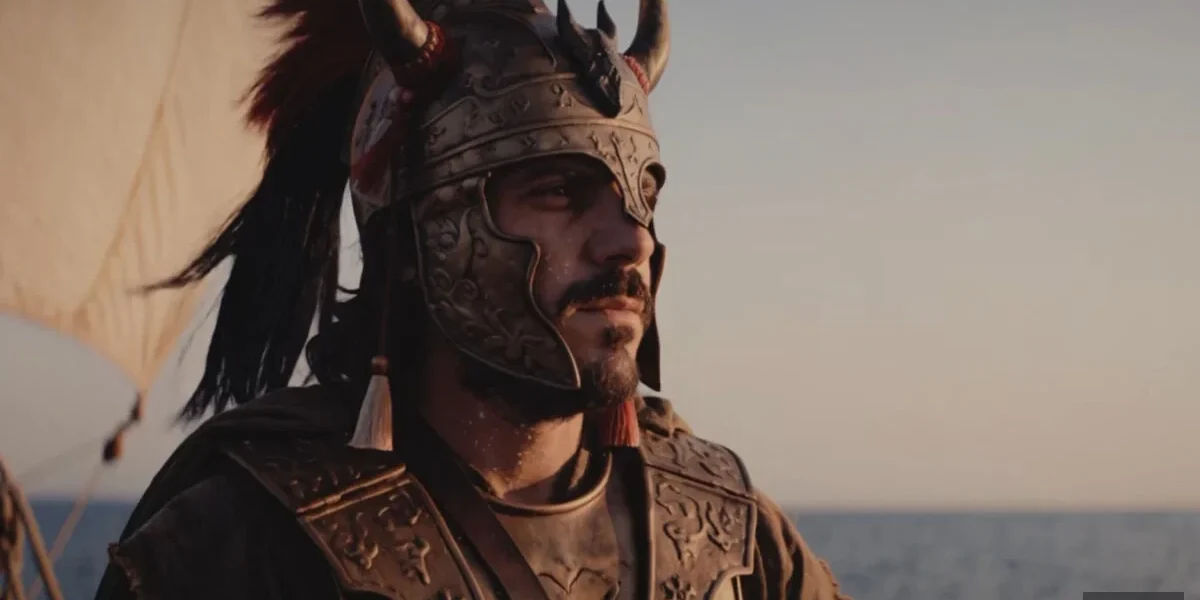
GenAI cinema is steadily gaining realism. Each new achievement pushes the technology closer to the uncanny valley, making it increasingly convincing at first glance. While still far from flawlessly reproducing anything beyond a slick trailer, the progress is undeniable. Ash Koosha, the AI‑savvy mind behind last year’s Tribeca entry Dreams of Violets, is undeterred and is co‑creating a 135‑minute “Odyssey”‑style film he plans to sell directly to audiences later this year.
According to limited reports from Tribeca, Dreams of Violets was not a cinematic triumph. Yet it showcased ingenuity by sidestepping the major constraints of AI‑generated video, notably the software’s lack of object permanence. As highlighted by P.J. Ace’s January mock “live‑action” Zelda trailer, current AI cannot retain memory of previously rendered faces, making the token cost for even a modest degree of continuity prohibitively high. Consequently, Fountain 0’s Dreams of Violets—a film ostensibly depicting the hardships of Iranians under a regime—was assembled as a series of vignette‑style, dreamlike interludes to circumvent this limitation, and it ran for only 74 minutes.
The Hollywood Reporter reports that Koosha has returned with Odysseus: The Fall, a 135‑minute epic that appears to ride the wave of anticipation surrounding Christopher Nolan’s upcoming The Odyssey. Koosha proudly notes that his production cost was a mid‑five‑figure budget, a stark contrast to the $250 million reportedly spent on Nolan’s project. The disparity—$50 000 versus $250 million—underscores the dramatic cost savings possible with AI‑driven filmmaking.
While the film’s visual quality may at first seem impressive, it is clear that the AI-generated imagery still struggles with consistency. A closer look reveals that Odysseus’s appearance shifts noticeably between scenes, and there are noticeable flaws when characters run or interact. The rock‑throwing figures, in particular, change shape and hue abruptly across cuts. These issues suggest that the full‑length version may be less polished. The film is slated for release later this summer, and viewers will need to pay $9.99 to rent it through the Fountain O website.
In the world of generative‑AI ventures, the spotlight rarely falls on the finished product; instead, it shines on the underlying technology. “Odysseus: The Fall” is less a story born of an auteur’s passion than a living demo of the software Fountain 0 hopes to license to others. Dylan Beattie, speaking at a recent conference, illustrated this point by likening AI developers to builders: “Those who are all‑in on AI are still selling the technology. Picture a machine that can erect a house in six hours instead of six weeks. Would you chase investors for that machine, or would you simply start building and selling a flood of houses?”
❓ Frequently Asked Questions (FAQ)
What is the 135‑minute AI film "Odyssey" that Ash Koosha is creating?
Ash Koosha, the creator of last year’s Tribeca entry "Dreams of Violets," is co‑creating a 135‑minute "Odyssey"‑style film titled "Odysseus: The Fall." The project is an AI‑generated cinematic experience that Koosha plans to sell directly to audiences later this year, aiming to push the boundaries of GenAI cinema toward the uncanny valley.
How does AI technology currently handle continuity and object permanence in long‑form films?
Current AI video generation struggles with object permanence, meaning it cannot reliably remember previously rendered faces or objects across scenes. This limitation forces creators like Koosha to structure their films as vignette‑style, dreamlike interludes to avoid costly continuity errors, as seen in his earlier 74‑minute film "Dreams of Violets."
How does the budget of Koosha’s AI film compare to a major Hollywood production like Christopher Nolan’s "The Odyssey"?
Koosha’s production cost for "Odysseus: The Fall" was a mid‑five‑figure budget, a stark contrast to the reported $250 million spent on Nolan’s upcoming "The Odyssey." This highlights the low financial barrier for creating large‑scale AI‑generated films compared to traditional Hollywood blockbusters.
News Source: Kotaku






Comments
Be the first to comment.