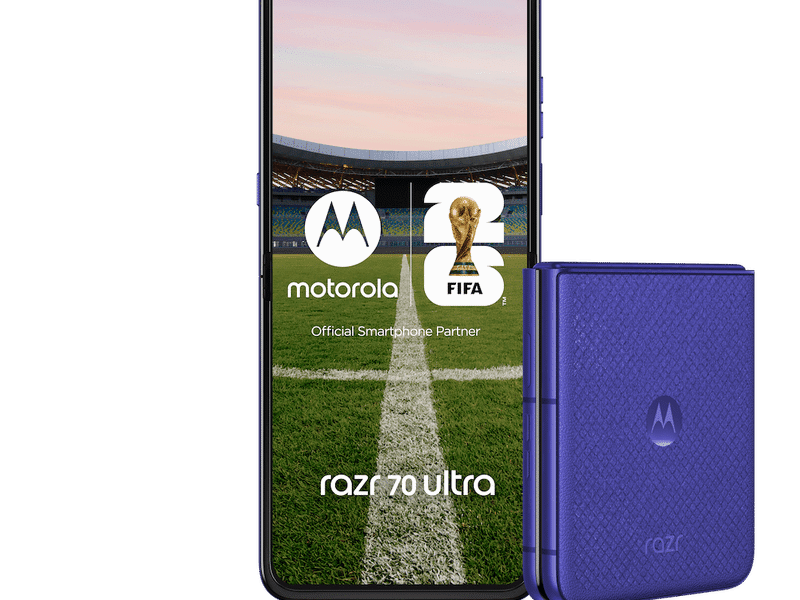
We recently put the Motorola Razr 70 Ultra to the test, the 2026 iteration of a foldable that carries a storied name. Razr is undeniably a legendary brand; back in the early 2000s, owning a Motorola Razr V3 was the pinnacle of cool. My wife still misses her old one, and Motorola’s decision to revive the name in the foldable market was a bold gamble. Let’s see if this new generation lives up to its heritage.
To position itself as a premium device, the Razr 70 Ultra arrives in a sleek, minimalist box that echoes its competitor, the Apple iPhone. Inside you’ll find the phone, a USB‑C cable, a rigid case protector composed of two plastic pieces, a powerful 68‑W TurboPower charger, and a SIM tray pin. Earbuds are notably absent.
Motorola has been tinkering with foldables for about six years. Each iteration has addressed long‑standing criticisms—screens that didn’t close fully, doubts over panel durability, and battery life concerns.
With the Razr 70 Ultra, those issues seem to have been overcome. Every component fits together flawlessly. The robust aluminum frame delivers exceptional rigidity and a premium feel. The rear is finished with Gorilla Glass Ceramic, one of the toughest materials on the market today.
The device’s closed front showcases two primary cameras, complemented by a generous 4‑inch pOLED external display. This panel lets users glance at the time or weather at a glance, and even reply to a WhatsApp message without pulling out their phone. The unit is fully sealed and impeccably crafted, a testament to Lenovo’s dedication to display technology. New hinges combine stainless steel and titanium for enhanced durability, while the device retains its IP48 rating—withstanding particles larger than 1 mm and immersion in up to 1.5 m of water for 30 minutes—a remarkable feat for a phone of this form factor.
Holding the phone closed in the palm feels like a delight—addictive, especially coming from devices whose average screen exceeds six inches. It vanishes entirely when tucked into a trouser pocket, yet the real magic unfolds when it opens. The internal 7‑inch AMOLED screen boasts a staggering 165 Hz refresh rate, HDR10+ support, and a 1224 × 2992 pixel resolution, yielding a 22:9 aspect ratio and a Mohs 4 hardness protection. The bezel is so thin that almost the entire front is display, interrupted only by a small front‑camera hole. Contrast ratios are superb, animations flow smoothly, and the experience comfortably eclipses all direct competitors.
Physically, the handset matches the dimensions of its predecessor, measuring 171.5 × 74 × 7.2 mm when unfolded, and tipping the scales at 199 g. The fingerprint sensor is integrated into the side power button, delivering swift, responsive, and highly accurate recognition.
Interestingly, this year Motorola sticks with the same generation SoC but pushes its clocks higher. The powerful Snapdragon 8 Elite features an eight‑core Oryon V2 layout, with two Phoenix L cores clocked at 4.47 GHz and six Phoenix M cores at 3.53 GHz. This isn’t a drawback; daily performance shines, powered by stock Android 16. Motorola’s signature premium experience remains intact, with apps running seamlessly across the ecosystem, supported by a robust 16 GB of RAM. The only caveat is that under heavy load the device does warm up slightly—noticeable but not uncomfortable.
<div class="g
The Razr 70 Ultra’s visual prowess is anchored by the Adreno 830 GPU, delivering blistering performance across every workload. Paired with a 165‑Hz display, the device surpasses typical benchmarks, offering a fluid and immersive experience. In our stringent testing bunker, we pushed it with titles such as Asphalt 9, Call of Duty Mobile, PUBG, Fallout Shelter, and the artistic Monument Valley 1 & 2. The gaming session was flawless, with frame rates consistently above 60 FPS and no stutter.
On the photography side, the Razr 70 Ultra presents a well‑balanced dual‑lens system. The primary sensor is a 50‑megapixel unit with optical image stabilization, while Motorola opts for a 50‑megapixel ultra‑wide sensor instead of a traditional telephoto. The package is rounded off by a 50‑megapixel front‑facing selfie camera equipped with Quad‑Bayer technology.
The images captured are outstanding, demonstrating effective HDR usage and precise color balance that prevents oversaturation. The ultra‑wide lens maintains impressive detail and dynamic range, and at night, the Night Vision mode turns the sensor into a true marvel, producing images with chromatic accuracy that closely mimic human vision. The ultra‑wide’s low‑light performance also impresses with its overall detail.
The internal selfie camera is formidable, yet a playful duality emerges: you can fold the device and use the 4‑inch external display as a mirror, enabling selfies with the 50‑MP main camera. Even without folding, the front camera delivers stellar performance in low light, ensuring consistent results day or night. In total, the Razr 70 Ultra boasts three fully capable cameras ready for any moment.
For video enthusiasts, the Razr 70 Ultra delivers up to 8K at 30 fps with its primary sensor, while the remaining lenses support 4K at 120 fps. It ships with H.264 by default but can seamlessly switch to the more efficient H.265, preventing bloated file sizes at high resolutions. The rear cameras also support Dolby Vision recording, and image stabilization can be toggled on or off across all sensors. The ultra‑wide unit adds a handy horizon‑lock feature to keep moving shots level.
Motorola has equipped the device with a massive 512 GB of internal flash storage—a veritable powerhouse for everyday use. The downside? The phone no longer includes a microSD slot, so once the internal memory is exhausted, there is no physical way to expand it.
On battery life, the Razr 70 Ultra receives a significant upgrade over its predecessors. It houses a 5,000‑mAh cell, and paired with a low‑power AMOLED display, it delivers two full days of typical usage. If you binge‑watch videos all day, the battery lasts roughly 15 hours. The included 68W charger can juice the phone from 0 to 100% in about 45 minutes, and reaching 80% takes just half an hour. It also supports 15W Qi wireless charging, which is highly convenient. Connectivity is comprehensive, featuring dual‑ or triple‑band Wi‑Fi 7, Bluetooth 5.4, and an NFC chip.
Purchasing a foldable is a statement of intent. Those who chase this format do so for compactness or to make a disruptive statement. The Razr 70 Ultra exceeds both expectations, backed by high‑performance hardware.
❓ Frequently Asked Questions (FAQ)
Does the Motorola Razr 70 Ultra come with earbuds in the box?
No, the Razr 70 Ultra does not include earbuds; the package contains the phone, a USB‑C cable, a rigid case protector, a 68‑W TurboPower charger, and a SIM tray pin.
What is the charging capability of the Razr 70 Ultra?
The device ships with a 68‑W TurboPower charger, enabling fast charging comparable to other high‑power foldable solutions on the market.
How has Motorola improved the foldable design in the Razr 70 Ultra?
Motorola has addressed previous issues such as incomplete screen closure, panel durability, and battery life. The Razr 70 Ultra features a robust aluminum frame, Gorilla Glass Ceramic rear, and a design that ensures the components fit together flawlessly, delivering a premium feel and improved durability.
News Source: Irrompibles





Comments
Be the first to comment.