

About this game
The Genre Genesis: From Modern Titans to 1997 Pioneers
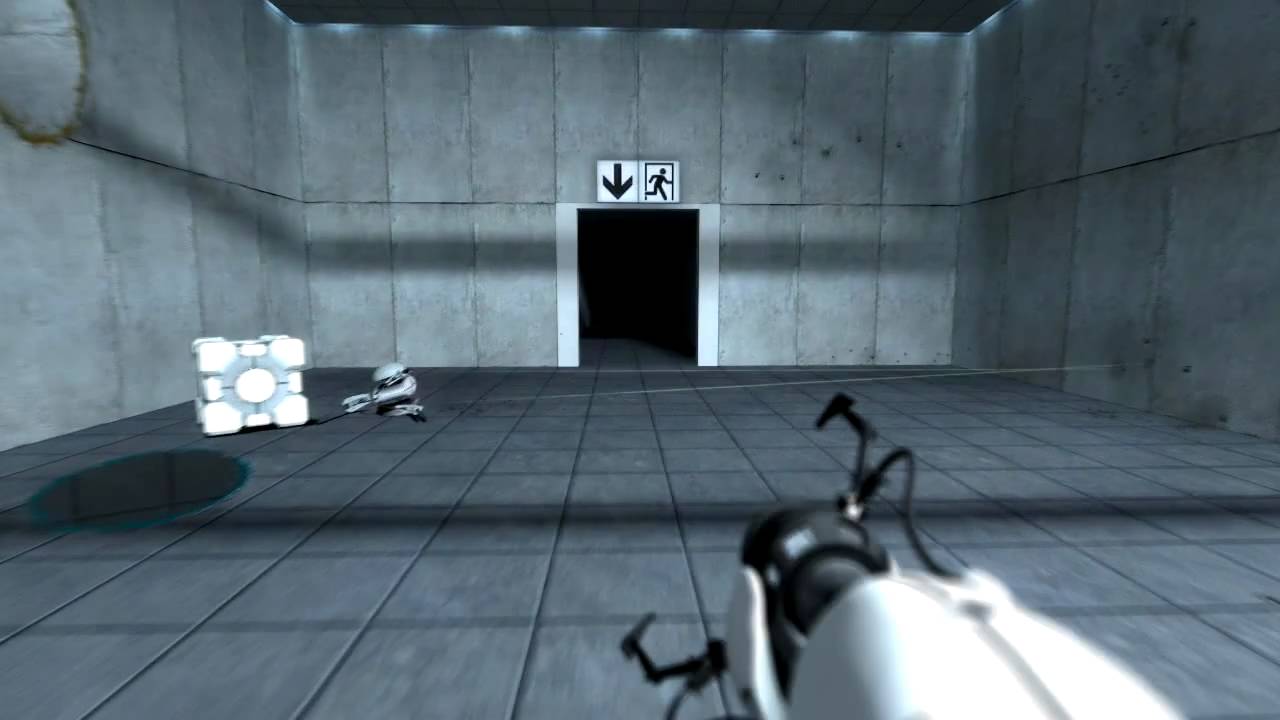
First-person spatial wormhole portal manipulation (placing linked Blue and Orange portals on planar surfaces to instantaneously connect two points in 3D space), conservation of momentum physics (“Speedy thing goes in, speedy thing comes out”), passive-aggressive villainous artificial intelligence dialogue narration (Ellen McLain as GLaDOS), companion object attachment psychology (The Weighted Companion Cube), and darkly satirical corporate research facility worldbuilding—from Portal 2, The Talos Principle, Splitgate, Superliminal, Antichamber, and Viewfinder to modern spatial puzzle games—trace their undisputed royal foundation to October 10, 2007 with Valve’s monumental Portal.
Conceived and designed by DigiPen graduate Kim Swift and her team (creators of Narbacular Drop, hired by Gabe Newell at Valve), written by comedic geniuses Erik Wolpaw and Chet Faliszek, and starring opera singer Ellen McLain as GLaDOS with the legendary closing theme song “Still Alive” composed by Jonathan Coulton, Portal was an earth-shattering cultural phenomenon: released as part of The Orange Box, it won over 30 Game of the Year awards and is universally revered as a masterclass in puzzle design.
Platform Context & Gaming Environment: The Test Chambers of Aperture Science
Portal followed test subject Chell, who awakens in a glass relaxation vault inside the sprawling underground research facility of Aperture Science. Armed with the Aperture Science Handheld Portal Device (The Portal Gun), Chell is guided through 19 increasingly deadly puzzle test chambers by the passive-aggressive, sociopathic AI GLaDOS (Genetic Lifeform and Disk Operating System), who promises cake and grief counseling upon completion. When GLaDOS attempts to incinerate Chell at the end of Test Chamber 19, Chell escapes into the maintenance shafts behind the walls to shut GLaDOS down.
Popularity & Cultural Standing: The Cultural Phenomenon
Portal was an astronomical commercial and critical blockbuster worldwide, sweeping every major industry accolade (90% on Metacritic, 2007 Game of the Year from GDC, Game Developers Choice Awards, and Joystiq). Phrases like “The Cake is a Lie” and the song “Still Alive” became permanent international pop culture icons.
Gameplay Mechanics & Technical Innovations
Portal established the definitive grammar of spatial physics puzzle design:
- The Dual-Portal Mechanics: Fire a Blue Portal and an Orange Portal onto any flat non-metallic surface to create an instantaneous physical gateway through space!
- Conservation of Momentum (Flinging): Jump into a portal from a high ledge; as you fall, your downward kinetic velocity is conserved and flung outward through the exit portal, launching Chell across massive chemical acid chasms!
- Interactive Test Chamber Elements:
- Weighted Storage Cubes: Place on heavy red button floor switches!
- High-Energy Pellets: Direct glowing plasma balls into receptacles using portals!
- Aperture Science Sentry Turrets: Knock over polite talking turrets (“Target lost…”) with portals and cubes!
- The Weighted Companion Cube: Carry your beloved heart-stamped companion cube through Test Chamber 17 before being forced to euthanize it in the incinerator!
- The Climactic GLaDOS Boss Battle: Destroy GLaDOS by detaching her personality morality cores (Curiosity Core, Cake Core, Anger Core) and tossing them into the emergency incinerator!
Historical Legacy & Archival Preservation
Portal is permanently enshrined in the Museum of Modern Art (MoMA) and the World Video Game Hall of Fame as an immortal pinnacle of video game design and interactive humor.
Gallery

Join the conversation